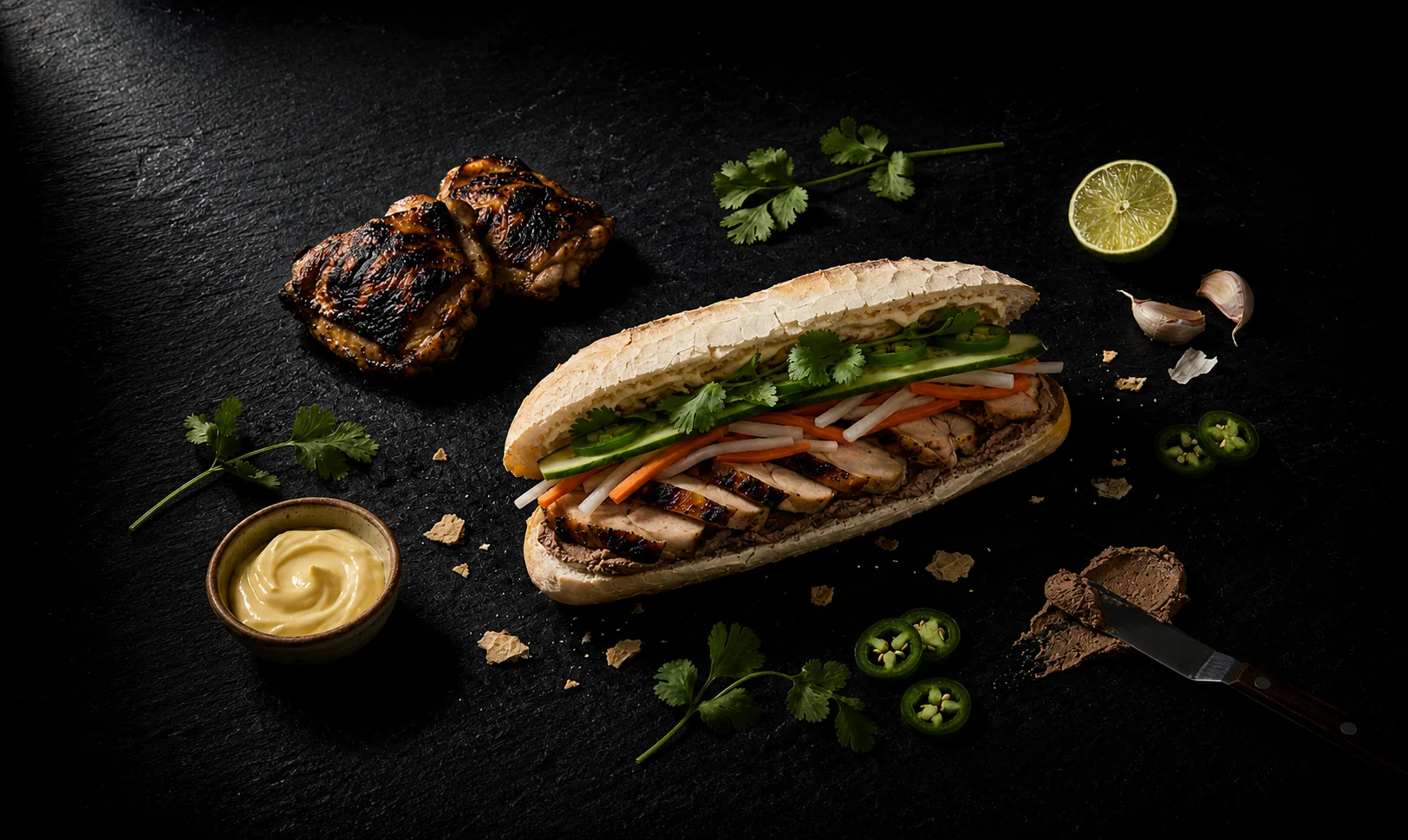
Ingredients
Equipment
Method
Marinate the Chicken
- Combine fish sauce, black pepper, lime juice, and garlic in a bowl. Add the chicken thighs and turn to coat completely. Cover and refrigerate for 1 hour. Overnight produces a deeper result. The fish sauce penetrates the meat during the marinating time and seasons it all the way through, not just on the surface.
- Remove the chicken from the refrigerator 15 minutes before cooking. Cold chicken straight from the refrigerator hits the hot pan and drops the surface temperature, which prevents proper charring and extends cooking time unevenly.
Grill the Chicken
- Heat a cast iron skillet over high heat until smoking. Brush with neutral oil.
- Place the chicken thighs skin side down. Do not move them. Cook for 7 to 8 minutes until the skin is deeply charred and the fat has fully rendered. Reduce to medium heat. Flipping too early pulls the skin from the meat and traps unrendered fat underneath.
- Flip and cook over medium heat for a further 8 to 10 minutes until the internal temperature reaches 82°C (180°F). Chicken thighs have more collagen than breast meat. The collagen converts to gelatin at higher temperatures and produces a juicier, more tender result than pulling the meat at the minimum safe temperature of 74°C (165°F).
- Remove from heat and rest for 10 minutes. Resting allows the juices to redistribute through the meat. Chicken sliced immediately loses moisture on the cutting board.
- Remove the bone and slice the chicken thinly against the grain. Each slice should show the charred skin on one edge and the moist interior across the cut surface.
Assemble
- Split each baguette lengthwise, cutting three-quarters of the way through. Do not cut completely. The hinge holds the sandwich together.
- Spread the pâté across the bottom half of each baguette. Cover the full surface. The pâté provides the savory base that the clean char of the chicken builds on.
- Spread the Vietnamese mayonnaise across the top half of each baguette.
- Layer the sliced chicken across the pâté. Arrange the slices to cover the full length of the bread.
- Add the đồ chua directly on top of the chicken. Drain it thoroughly. The acidity cuts through the richness of the rendered chicken fat.
- Add cucumber strips along the length of the sandwich.
- Add a small bundle of cilantro. Do not chop it. Whole sprigs only.
- Lay jalapeño slices across the top. Three drops of Maggi Seasoning Sauce along the length. No more. Close the sandwich, press down firmly with your palm, and serve immediately.
Notes
On the chicken cut: Bone-in skin-on thighs are essential for this recipe. The bone conducts heat into the thickest part of the meat and prevents the edges from overcooking before the center is done. The skin renders its fat into the meat during cooking and keeps it moist. Boneless skinless thighs cook faster but produce a drier result. Chicken breast produces a dry, chalky texture at the temperatures needed for proper charring. Do not use it.
On the marinade: Four ingredients is not a shortcut. It is the point. The Hanoi approach strips everything back to what the protein actually needs. Fish sauce seasons deeply. Black pepper adds heat that builds slowly. Lime juice cuts the intensity of the fish sauce and adds brightness. Garlic adds savory depth. Each ingredient has a function. Nothing is decorative.
On marinating time: One hour is the minimum. The fish sauce needs time to penetrate the muscle fiber. Less than one hour and the seasoning stays on the surface. Overnight is better.
On rendering the skin: The skin must be fully rendered before flipping. A fully rendered skin is flat against the meat, deeply golden, and pulls cleanly from the pan surface. If the skin sticks when you attempt to flip, it is not ready. Leave it another 2 minutes and try again.
On the char: The black edges on the chicken are not burnt. They are the flavor. The fish sauce sugars and proteins caramelize at high heat and produce the char. Do not try to avoid it.
On make-ahead: The marinated chicken can be refrigerated for up to 24 hours before cooking. The cooked chicken keeps refrigerated for up to 3 days. Reheat in a hot pan for 2 minutes per side before slicing and assembling.