THE EVOLUTION
The bánh mì sandwich is one of the most documented examples of culinary colonialism reversed. It began as an instrument of French imperial culture and ended as a street food that outlasted the empire that introduced it.
This is its history.
[ THE FRENCH IMPORT: 1859-1954 ]
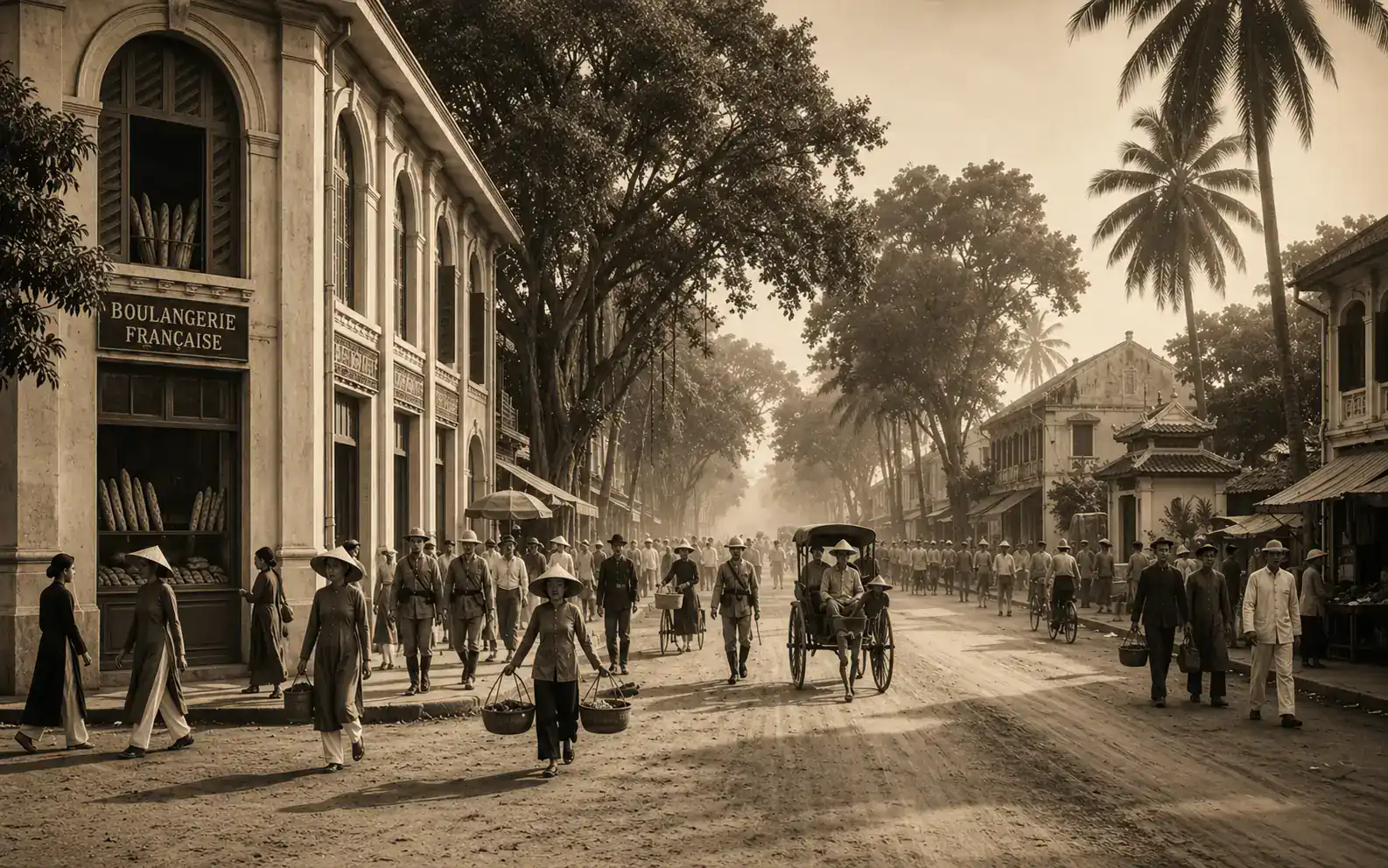
France took Saigon in 1859. Within decades, the colonial administration had reshaped the city’s food supply to serve French tastes. Wheat flour was imported. Bakeries were established. The baguette arrived not as a gift but as infrastructure. A product of colonial food policy designed to feed administrators, soldiers, and settlers.
The Vietnamese did not eat baguettes at first. Bread was European food. Expensive and foreign. It was served in French cafés and colonial restaurants, eaten with butter and pâté by people who had no intention of staying.
But bread requires bakers. And the French needed local labor to produce it.
Vietnamese bakers learned the craft in French kitchens. The fermentation. The shaping. The scoring. The steam. They learned it as employees. What they did with that knowledge after 1954 is the actual story.
[ THE REINVENTION: 1954-1975 ]
When the French left Indochina in 1954, they left behind bakeries, equipment, and a population that knew how to use both.
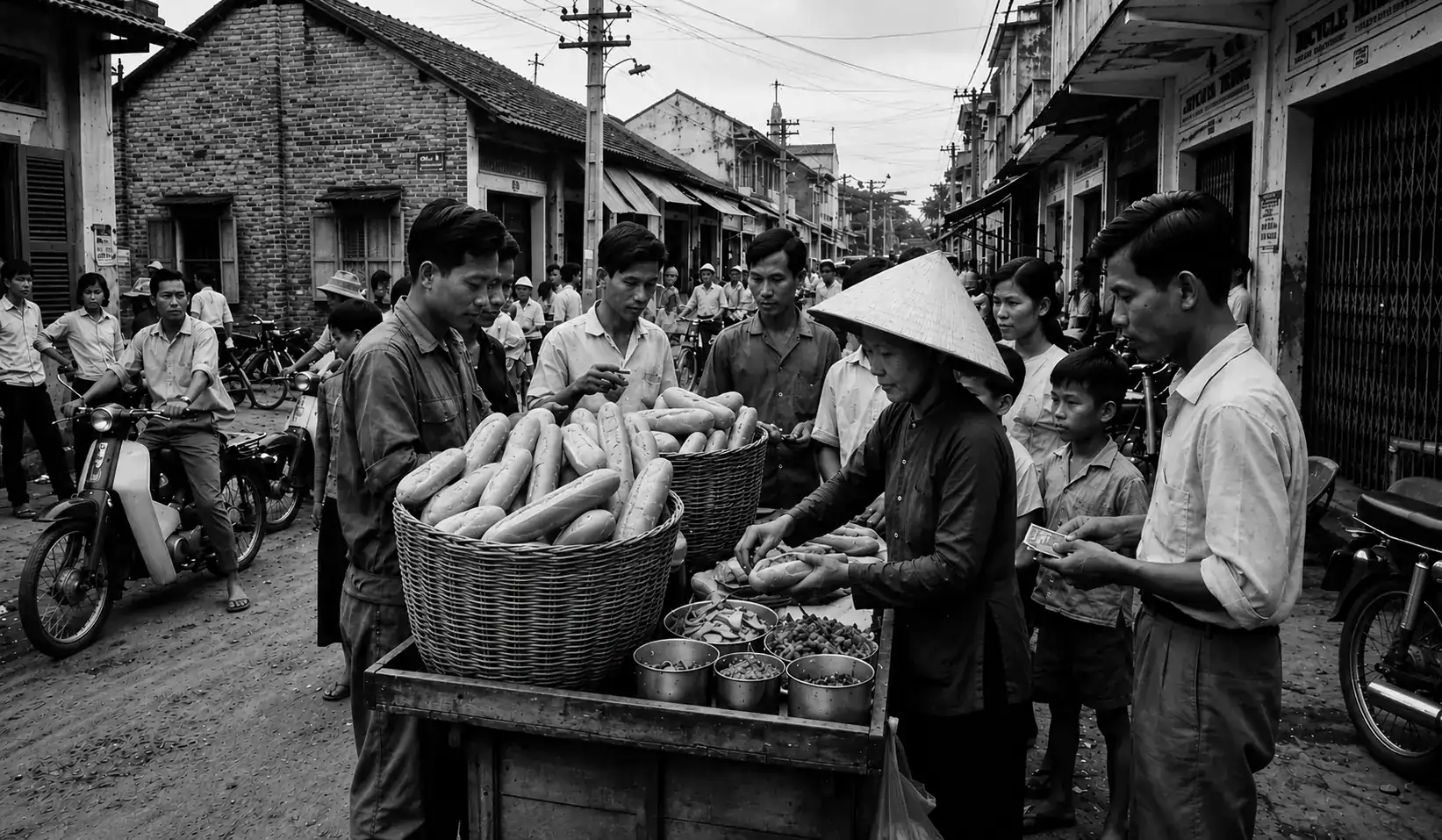
Vietnamese bakers in Hà Nội and Sài Gòn did not try to copy the French baguette. They took it apart and rebuilt it from scratch. Less wheat. More rice flour. The crust came out thinner and more brittle. The crumb lighter. The bread itself smaller, sized for one person, not a dinner table.
Then the filling changed.
Butter and pâté stayed. Everything else went. The bánh mì became a complete meal sold from wooden carts on the street, not a side dish served in a café. Cold cuts went in. Pickled daikon and carrot replaced French cornichons. Fresh cilantro replaced dried herbs. Mayonnaise replaced formal sauces. Jalapeño added heat that French baking had never thought to include.
This was not fusion food. Fusion implies a meeting of equals. What happened here was a complete takeover. Vietnamese cooks took a French object and made it unrecognizable to the people who introduced it. The baguette became a vessel. What went inside it had nothing to do with France.
[ BÁNH MÌ GOES GLOBAL: 1975-PRESENT ]
Saigon fell on April 30, 1975. In the years that followed, more than a million Vietnamese refugees left the country by boat, by land, and by any means available. They settled in the United States, France, Australia, and Canada. They brought almost nothing with them.
They brought the food.
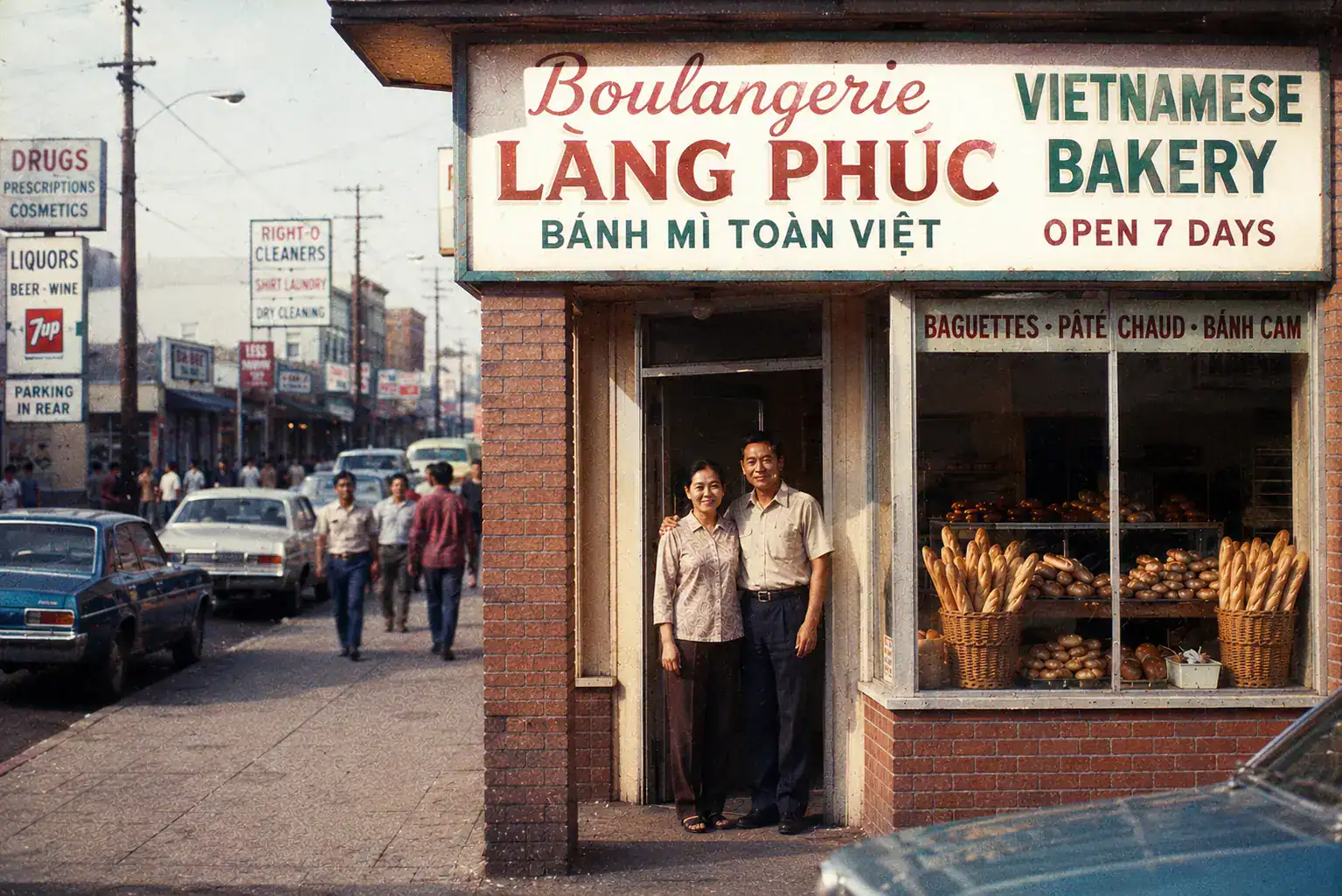
The first Vietnamese bakeries opened in Little Saigon in Westminster, California in the late 1970s. Then San Jose. Then Houston. Then New Orleans. The bánh mì cost less than a dollar. It fed construction workers, factory workers, and families rebuilding their lives from nothing. It was fast, filling, and completely unlike anything else on an American street at the time.
The food press ignored it for decades.
Then in 2002, the New York Times wrote about bánh mì shops in New York. Food writers started paying attention. By 2010, the sandwich had spread beyond Vietnamese restaurants entirely. Chefs in Paris, London, and Sydney were building their own versions. Duck confit. Soft shell crab. Slow-roasted pork. The bánh mì had become something rare in food culture. A format so well engineered that other cuisines could borrow it and make it their own.
That is what a great dish does. It travels. It adapts. It survives every kitchen it enters.
But adaptation only works when you understand the original. The fat barrier that keeps the bread from going soggy. The acid ratio in the pickle brine. The specific bread with its shattering crust. The herb finish that lifts everything. These are not suggestions. They are the architecture.
Get the architecture right and the sandwich can go anywhere. That is what this site is built to document. The original. The evolution. And everything the bánh mì is still becoming.
[ WHAT MAKES A BÁNH MÌ A BÁNH MÌ ]
Every great dish has a logic. The bánh mì has five.
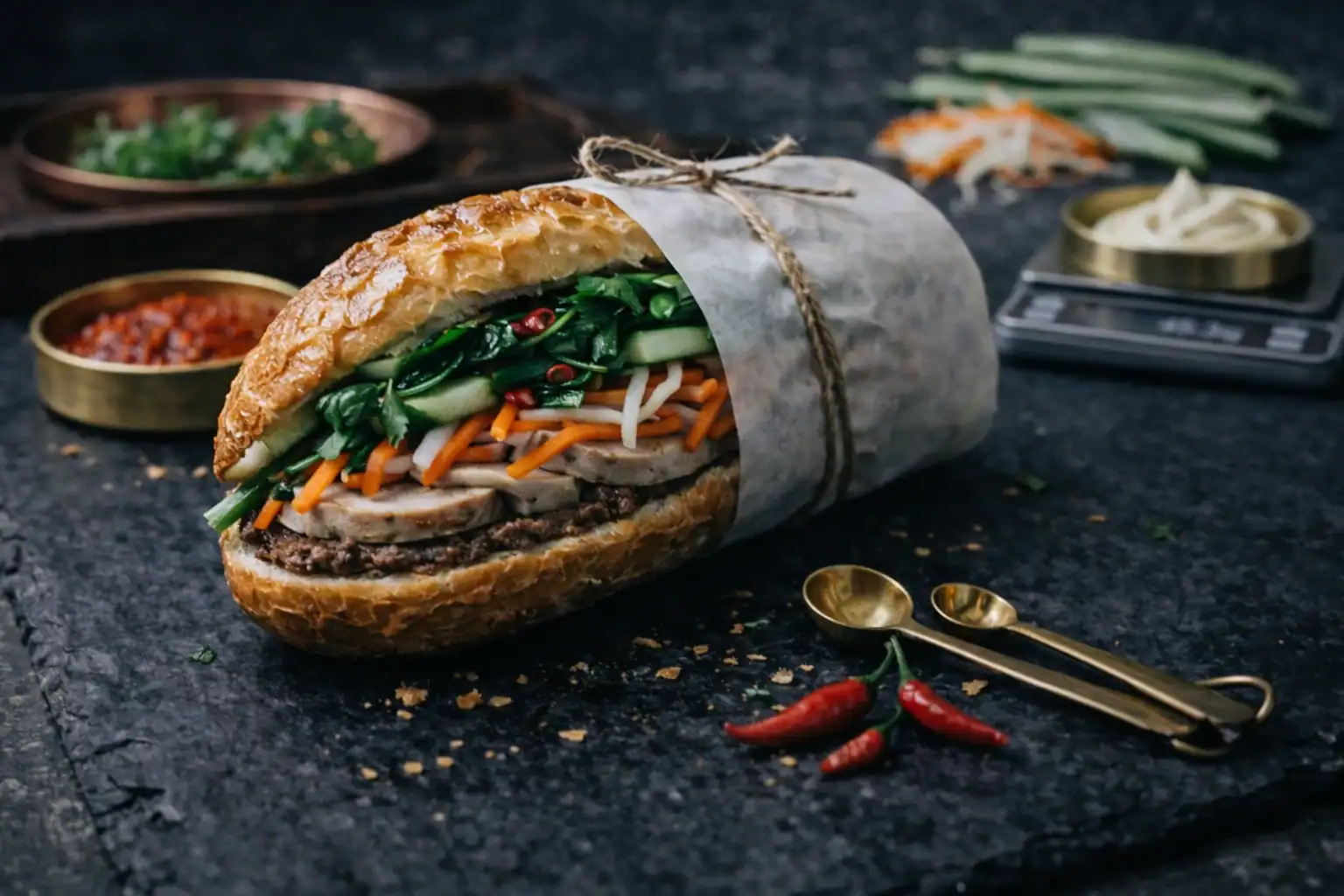
The bread. It has to shatter. A thick, chewy crust kills the sandwich before it starts. The Vietnamese baguette uses a specific ratio of rice flour to bread flour that produces a crust so thin and brittle it cracks when you squeeze it. That sound is not decoration. It is the standard.
The fat barrier. Mayonnaise on both inner surfaces. Pâté on the bottom half. Two layers of fat between the bread and the wet ingredients. Without them, the bread absorbs moisture from the pickles within minutes and goes soft. With them, the sandwich holds for thirty minutes after assembly. Street cart vendors in Sài Gòn have known this for generations.
The acid. Pickled daikon and carrot in a precise brine ratio. Sharp enough to cut through the fat. Not so sharp that it overpowers everything else. The balance is not approximate. It is specific.
The heat. Jalapeño, added last. It arrives late and lingers. It does not compete with the other flavors. It finishes them.
The herb. Fresh cilantro, added whole. Not chopped. It lifts the entire sandwich. Remove it and something is missing even if you cannot name what.
These five elements are the architecture. Every recipe on this site is built around them. Every variation starts here.
[ START HERE ]
The history is documented. The architecture is clear. Now comes the food.
The Archive holds every bánh mì recipe on this site. Authentic originals. Modern variations. All of them built on the same five elements that have defined this sandwich for over a century. Start with the bread. Everything else follows.