Ingredients
Equipment
Method
Mix the Dough
- Add the bread flour, rice flour, salt, yeast, and sugar to the bowl of your stand mixer. Give the dry ingredients a quick stir to combine. Add the water and oil. Mix on low speed for 3 minutes until the dough comes together. Turn up to medium speed and knead for 7 minutes. The dough should be smooth and slightly sticky when done. It will feel softer than bread dough you may have made before. That is intentional.
- To mix by hand: stir until the dough comes together, then turn it out onto a clean counter and knead for 10 to 12 minutes. The dough is ready when the surface feels smooth and stretches without tearing.
First Proof
- Put the dough in a lightly oiled bowl and cover it with plastic wrap. Leave it at room temperature for about 90 minutes until it has doubled in size. Do not rush this step. The flavor develops during the rise.
Shape
- Turn the dough out onto a clean counter. Do not flour the surface. Cut the dough into 4 equal pieces. Each piece should weigh roughly 178 grams.
- To shape each piece: press it gently into a rough rectangle with your hands. Fold the two long edges in toward the center, like closing a letter. Press the seam closed with your fingertips.
- Roll each piece gently back and forth under your palms until you have a cylinder about 9 to 10 inches long with slightly tapered ends. Place each shaped baguette seam-side down in the baguette pan. The dough is soft, so work gently.
Second Proof and Preheat
- Cover the shaped baguettes loosely with plastic wrap. Let them rise for 45 to 60 minutes. They are ready when they look puffy and a light poke with your finger leaves a dent that fills back in slowly.
- While the dough is rising, set up your oven. Place your baking stone or steel on the middle rack. Place an empty metal pan on the bottom rack. Set the oven to 475°F. Let it preheat for at least 45 minutes. The stone needs a full 45 minutes to heat through. This is the step most home bakers skip and it is why their crust does not turn out right.
Score
- Using your lame or razor blade, cut 3 to 4 diagonal slashes across the top of each baguette. Hold the blade at a shallow angle and cut with one clean motion. Do not saw back and forth. The scores allow the bread to expand in the oven. They also create the ridged surface that is characteristic of a proper bánh mì baguette.
Bake with Steam
- Have your cup of boiling water ready before you open the oven. Slide the baguette pan onto the hot stone. Immediately pour the boiling water into the empty metal pan on the bottom rack. Close the oven door quickly to trap the steam inside.
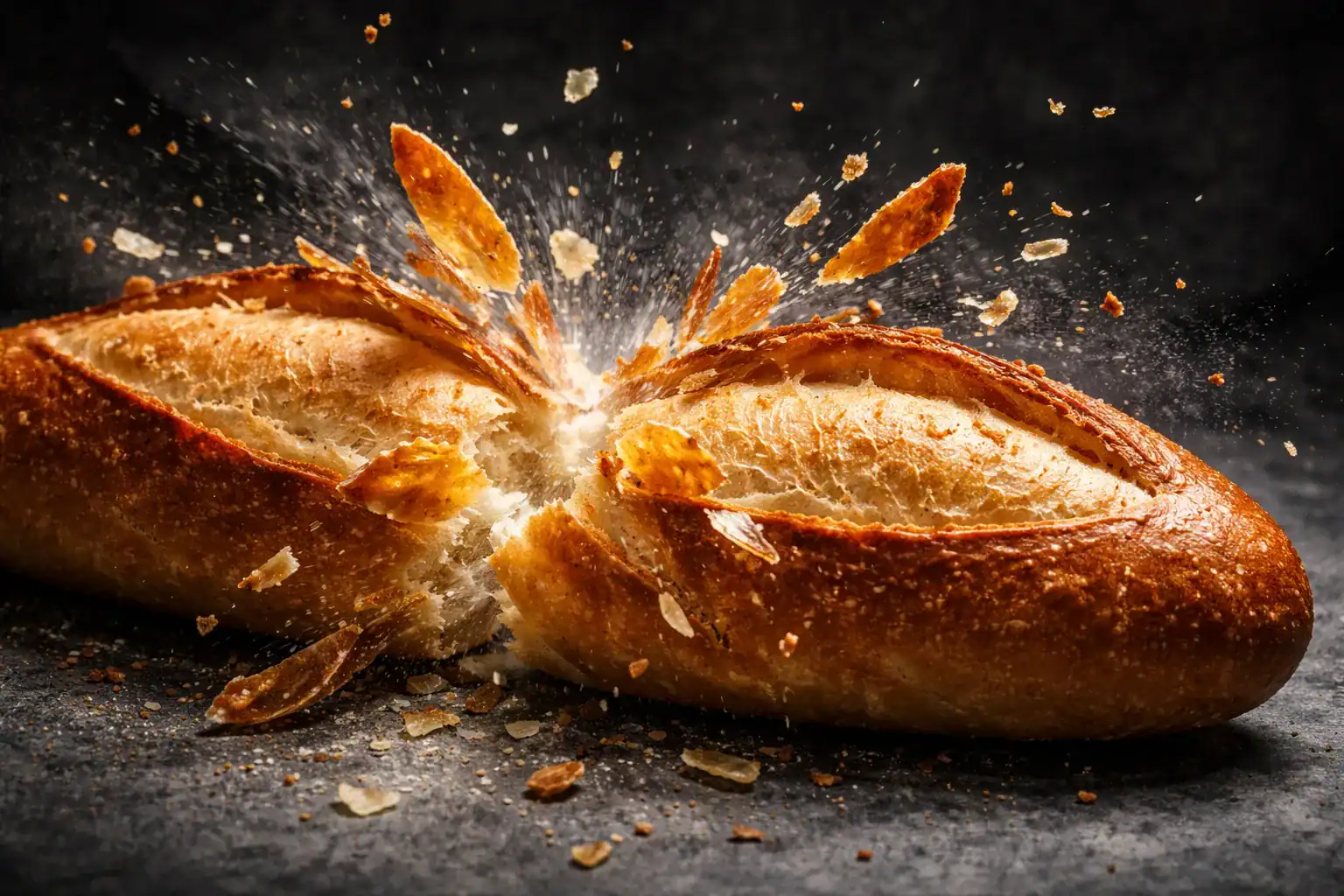
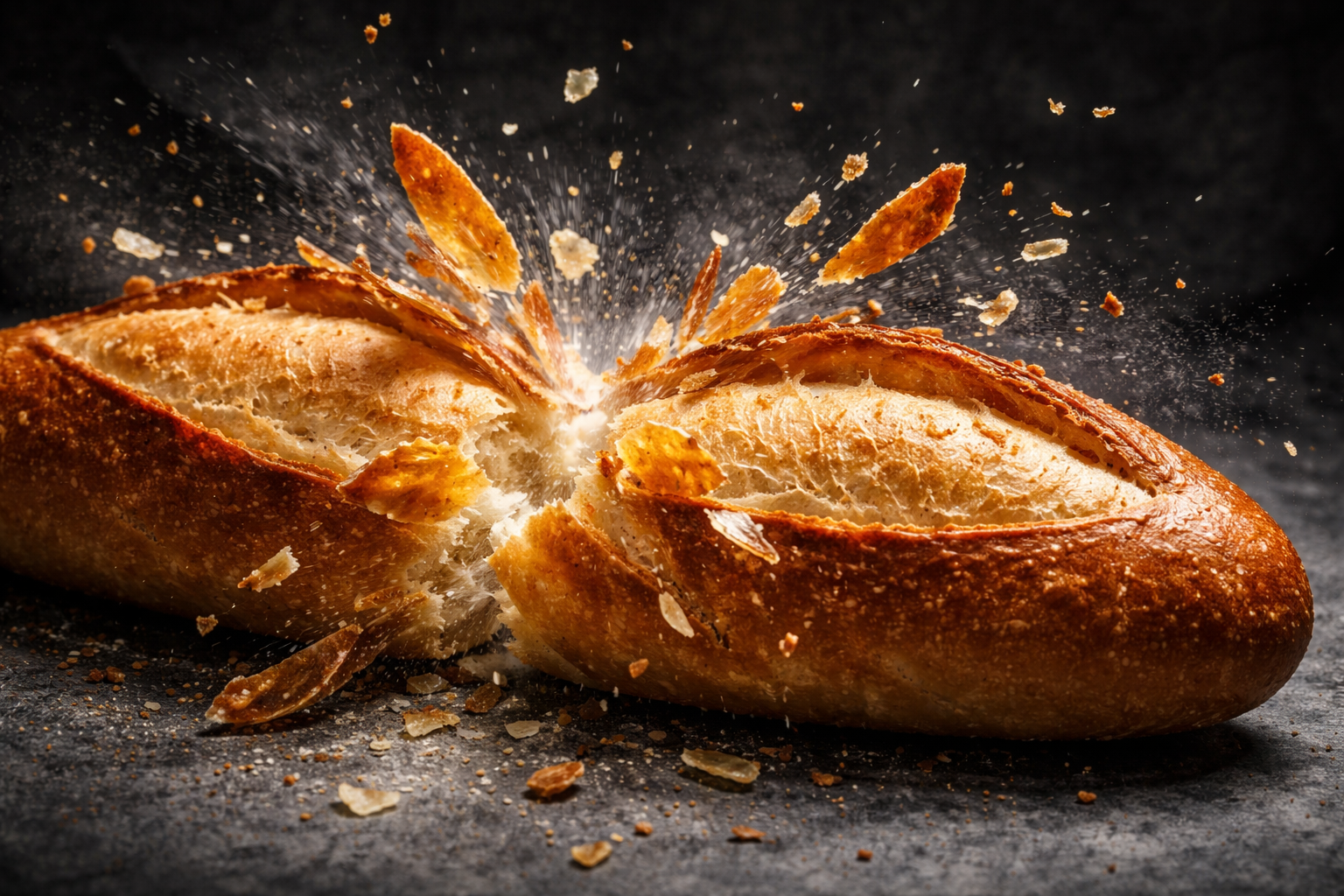
- Bake for 8 minutes with the steam. The steam is what makes the Glass Crust possible. It keeps the surface of the dough moist during the first phase of baking, which allows the bread to expand fully before the crust sets. Take the steam away too early and the crust thickens. Leave it too long and the crust never gets crispy. Eight minutes is the target.
- After 8 minutes, carefully remove the steam pan from the oven. Lower the temperature to 450°F. Keep baking for 12 to 15 minutes until the baguettes are deep golden brown.
- To check if they are done: pick one up and tap the bottom. It should sound hollow. The crust will feel hard when you pull it out. That is what you want.
Finish and Cool
- Transfer the baguettes to a wire rack. Wait at least 20 minutes before cutting into them. The bread is still finishing inside during this time. Steam is escaping through the crust and that process is part of what makes the Glass Crust set properly. Cut too soon and the inside will be gummy. Twenty minutes is worth it.
Notes
Read the full recipe before you start. Bread rewards preparation and punishes improvisation.
On measuring: Use a kitchen scale. Volume measurements like cups and tablespoons are not precise enough for bread. Weight is the only way to get consistent results.
On the flour ratio: The 87.5% bread flour to 12.5% rice flour ratio is not approximate. Changing it shifts the crust texture. More rice flour produces a crust that is too brittle and shatters before the bread is fully sliced. Less rice flour produces a crust that is too thick and chewy. The ratio is locked.
On the steam phase: Eight minutes is not a suggestion. Remove the steam too early and the crust sets before the bread has fully expanded. Leave it too long and the surface stays moist and never crisps. Eight minutes is the target every time.
On proofing: The 90-minute first proof and 45 to 60-minute second proof are both required. Rushing either produces a dense crumb. The flavor develops during the first proof. The structure develops during the second.
On the baking stone: The stone needs a full 45 minutes to heat through. A stone that has not fully preheated produces a softer bottom crust. This is the step most home bakers skip and it is why their crust does not turn out right.
On cooling: Wait at least 20 minutes before cutting. The bread is still finishing inside during this time. Steam is escaping through the crust and that process is part of what makes the Glass Crust set properly. Cut too soon and the inside will be gummy.
On storage: The Glass Crust is best within 4 hours of baking. The crust naturally softens overnight. To bring it back, put the baguettes in a 200°C oven for 4 minutes. Do not refrigerate. Cold air makes bread go stale faster.