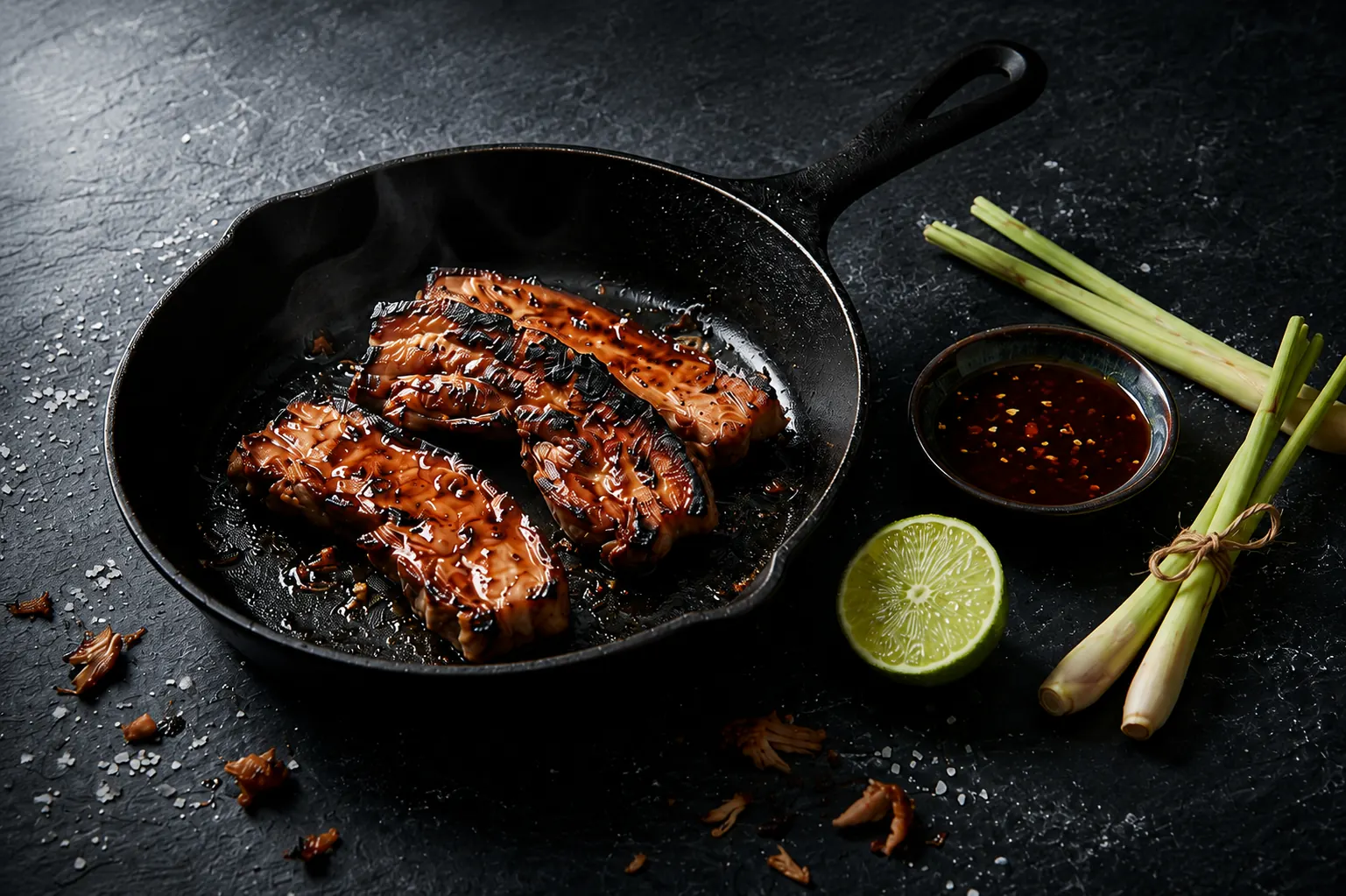
BEST CAST IRON SKILLET FOR BÁNH MÌ
Most people assembling a bánh mì kitchen think hard about the bread, the spreads, and the pickles. The pan gets ignored. That is where the proteins fall apart. Not in the seasoning, not in the timing, but in the sear.
A cast iron skillet holds heat at a level no other pan in a home kitchen can match. When marinated pork hits a properly preheated cast iron surface, the exterior caramelizes in under two minutes. The same slice in a nonstick pan steams instead of sears. The crust never forms. The filling tastes flat inside the sandwich no matter how good everything else is.
This page covers the three best cast iron skillets for bánh mì at every price point, why surface temperature matters more than most cooks realize, and exactly what to look for when buying.
[ WHY THE SKILLET MATTERS FOR BÁNH MÌ SPECIFICALLY ]
The proteins in a bánh mì (thịt nướng, gà, heo quay) all need high direct heat to develop the caramelized exterior that makes them work inside the sandwich. That exterior is not cosmetic. It creates textural contrast against the soft crumb and delivers the concentrated savory layer that carries the filling through every other ingredient. Without it, the sandwich is just bread and condiments.
Cast iron retains heat because of its mass. A 12-inch cast iron skillet weighs around 8 pounds. That weight is thermal storage. When a cold piece of marinated pork hits the surface, the pan does not drop in temperature the way a thin stainless or aluminum pan does. It stays hot. The sear continues uninterrupted. The moisture in the meat burns off immediately rather than pooling underneath and turning the whole surface into a steam bath.
Nonstick fails at this task completely. The coatings degrade at the temperatures a proper sear requires, and the pans are too light to sustain the heat once protein hits the surface. Stainless steel gets closer but demands more oil, more attention, and more patience than most home cooks want to give it on a weeknight. Cast iron is the tool that does this job correctly and keeps doing it correctly for decades without asking much in return.
For bánh mì specifically, the 12-inch size matters. It gives you enough surface area to lay four to six strips of pork flat without crowding. Crowding is what turns a sear into a braise. Each piece needs its own space and its own direct contact with the pan surface. Get the size right and the rest follows.
[ THE RECOMMENDATION ]
The Lodge Seasoned Cast Iron Skillet 12 Inches is the correct skillet for this job. It is pre-seasoned with vegetable oil at the factory and ready to use from the first cook. The seasoning builds with every use. After six months of regular cooking the surface develops a natural release layer that makes it genuinely easier to work with than the day it arrived.
The 12-inch diameter handles four to six strips of marinated pork in a single batch without crowding. The helper handle on the opposite side makes it manageable at full weight when moving from stovetop to oven. The walls are low enough to give you clear access with tongs while keeping oil from spattering across the stovetop.
At around $30 it is not the cheapest pan on the market and it is not trying to be. It is the pan that does exactly what bánh mì proteins require, built to a standard that does not wear out. Buy it once and stop thinking about the pan.
[ THE THREE OPTIONS ]
[ BEST OVERALL ] Lodge Seasoned Cast Iron Skillet 12 Inches — around $30. The recommendation above. Pre-seasoned, ready to use immediately, and built to a standard that improves with every cook. The right choice for the overwhelming majority of home kitchens.
[ PREMIUM ] Le Creuset Enameled Cast Iron Skillet 11.75″ — around $260. Le Creuset is the standard against which all enameled cast iron is measured, and for good reason. The enameled interior does not require seasoning and does not react with acidic marinades, which matters when you are working with the citrus and fish sauce bases that Vietnamese cooking depends on. Heat distribution is exceptionally even and the skillet moves from stovetop to table without looking out of place. The honest weakness is weight: the Le Creuset runs heavier than the Lodge and at $260 it is a serious investment for a pan that will perform similarly on most tasks. Buy it if you cook daily, care about longevity, and want one pan that outlasts everything else in your kitchen.
[ ALTERNATIVE ] Victoria 10-Inch Cast Iron Skillet — around $25. Made in Colombia and pre-seasoned with flaxseed oil, which produces a smoother initial surface than standard vegetable oil seasoning. At 10 inches it is sized for cooking proteins for two bánh mì at a time, which suits smaller households well. The honest weakness is capacity: cooking for more than two people means multiple batches. If the Lodge 12-inch feels like more pan than you need right now, the Victoria is the honest entry point.
[ THE SCIENCE ]
Cast iron holds heat the way a brick holds warmth on a cold night. The mass absorbs energy slowly and releases it slowly. When you preheat a cast iron skillet for five minutes over medium-high heat, you are loading that mass with thermal energy. When cold protein hits the surface, the pan has enough stored heat to keep cooking temperatures high while the moisture in the meat burns off. That is what creates the sear. A thin pan has no stored energy to give. The temperature drops the moment anything cold touches it and the process shifts from searing to steaming without you ever noticing the difference until the sandwich disappoints you.
[ THE FAQ ]
Does cast iron work on all stovetops? Yes. Cast iron works on gas, electric, and induction stovetops, and in the oven. The Lodge and Victoria are compatible with all four. The Le Creuset enameled base is also induction compatible. If you have a glass ceramic cooktop, lift the pan rather than sliding it to avoid scratching the surface.
Do I need to season it before the first use? The Lodge and Victoria both arrive pre-seasoned and are ready to cook immediately. Build the seasoning further by rubbing a thin layer of oil on the surface after each wash and heating it until it smokes. The Le Creuset is enameled and requires no seasoning at all.
Can I use cast iron with Vietnamese marinades? Bare cast iron can react with highly acidic ingredients over long contact periods. Marinate in a glass or ceramic container, not in the pan. For searing, the contact time is short enough that it is not a concern. If you cook frequently with acidic sauces, the Le Creuset enameled surface eliminates this entirely.
How do I clean it? Rinse with hot water while still warm. Use a stiff brush or chainmail scrubber for anything stuck. Dry immediately and completely. Cast iron rusts fast when left wet. Apply a thin layer of oil before storing. Avoid dish soap on bare cast iron. It strips the seasoning you have been building.
What size is right for bánh mì? A 12-inch skillet is the correct size. It fits four to six strips of pork or chicken without crowding, which covers proteins for four bánh mì in a single batch. A 10-inch pan works well for two. Anything smaller and you are cooking in rotation, which means the first batch sits while the second one finishes.
[ WHAT TO READ NEXT ]
For the grilled pork filling that this skillet was built for, see the Bánh Mì Thịt Nướng recipe, the one where the sear makes or breaks the sandwich.
The Classic Bánh Mì Thịt Nguội shows the cold cut approach where no pan is needed at all, and why the balance of textures works just as well without the heat.
For the complete breakdown of every tool a serious bánh mì kitchen requires, see The Equipment page.