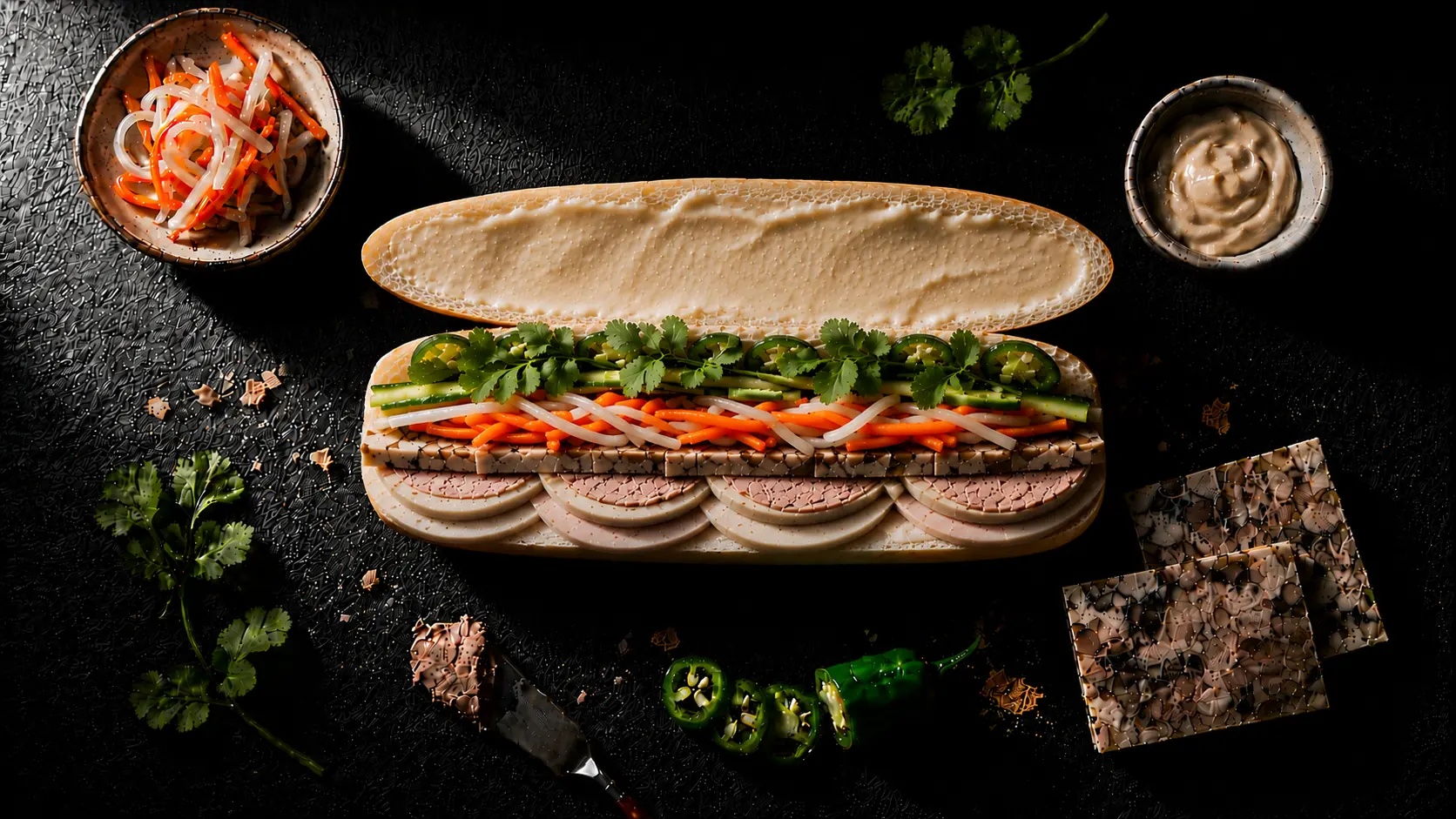
bánh mì đặc biệt (Vietnamese special combination bánh mì) with chả lụa, chả bì, and giò thủ on dark slate

Bánh Mì Đặc Biệt (The Special Combination)

Bánh mì đặc biệt is the special combination. It is the version that puts all three traditional Vietnamese cold cuts into a single sandwich: chả lụa, chả bì, and giò thủ. Each one contributes something different. Chả lụa is smooth and dense. Chả bì adds shredded texture and rendered fat from the skin. Giò thủ brings firm gelatin from the collagen in the head. Together they cover three different fat behaviors in a single bite. This is not a modern invention. It is the standard order at cold cut bánh mì shops across Vietnam.

The bread is the Vietnamese glass crust baguette. Thin shattering exterior, cloud-light crumb. Pork liver pâté goes on the bottom half, Vietnamese mayonnaise on the top. The cold cuts layer in sequence, then đồ chua, cucumber, cilantro, and jalapeño. Three drops of Maggi Seasoning Sauce to finish. Every element has a function. Nothing is decorative.

bánh mì đặc biệt (Vietnamese special combination bánh mì) with chả lụa, chả bì, and giò thủ on dark slate
L. Nguyen

Bánh Mì Đặc Biệt (The Special Combination)

Bánh mì đặc biệt layers all three traditional Vietnamese cold cuts (chả lụa, chả bì, and giò thủ) into a single sandwich. The version that uses all three rather than one. This is the standard combination at cold cut bánh mì shops across Vietnam. [ INTERMEDIATE ]
Prep Time 15 minutes
Total Time 15 minutes
Servings: 4 bánh mì
Course: Sandwich
Cuisine: Vietnamese

Ingredients
  

The Cold Cuts
  • 120 g chả lụa (Vietnamese steamed pork sausage), thinly sliced
  • 120 g chả bì (Vietnamese shredded pork roll), thinly sliced
  • 120 g giò thủ (Vietnamese head cheese), thinly sliced
The Assembly
  • 4 Vietnamese bánh mì baguettes (Glass Crust standard)
  • 60 g Vietnamese mayonnaise
  • 60 g pork liver pâté
  • 240 g đồ chua (pickled daikon and carrot), drained
  • 1 Persian cucumber, thinly sliced lengthwise
  • 1 bunch fresh cilantro, stems trimmed
  • 2 jalapeños, thinly sliced
  • Maggi Seasoning Sauce, for finishing

Equipment

  • Bread knife
  • Pâté Spreader / Offset Spatula

Method
 

The Assembly
  1. Split each baguette lengthwise, cutting three-quarters of the way through. Do not cut completely. The hinge holds the sandwich together.
  2. Spread the pâté across the bottom half of each baguette. Cover the full surface. The pâté is the fat anchor. It goes down first because it is the densest layer. It seals the bread against moisture from the vegetables above it.
  3. Spread the Vietnamese mayonnaise across the top half of each baguette. The mayonnaise binds the upper layer and adds a second fat source with a sharper, more acidic profile than the pâté.
  4. Lay the chả lụa across the pâté. Follow with the chả bì, then the giò thủ. Stagger the layers so each cold cut is present in every bite. Each one has a different fat behavior. If they stack in blocks, the sandwich eats unevenly.
  5. Add the đồ chua directly on top of the cold cuts. The acidity cuts through the fat in the pork and resets the palate between bites.
  6. Add the cucumber strips along the length of the sandwich. The cucumber adds moisture and a clean, neutral crunch that balances the richness of the cold cuts.
  7. Add a small bundle of cilantro. The herb lifts the sandwich. It is not garnish — it is a structural component.
  8. Lay the jalapeño slices across the top. Three drops of Maggi Seasoning Sauce along the length. No more. Close the sandwich, press down firmly with your palm, and serve immediately.

Notes

On cold cut thickness: Slice each cold cut to 5mm. This is thicker than deli-slice standard. At 5mm each cut holds its shape inside the sandwich and stays distinct from the others. Thinner and the three layers compress into one mass. You lose the texture difference that makes this sandwich work.
On sourcing: All three cold cuts are available at Vietnamese grocery stores and most Asian supermarkets. Chả lụa is the easiest to find and usually comes pre-sliced. Chả bì is available at the same stores, typically in the refrigerated deli section. Giò thủ is the hardest to find packaged. Ask at the deli counter directly. If the store makes bánh mì, they stock it.
On timing: This recipe is assembly only. The 15 minute prep assumes all three cold cuts are already made or purchased. If you are making them from scratch, plan ahead. Chả lụa takes 2 hours. Chả bì takes 3 hours. Giò thủ requires an overnight chill. All three recipes are on this site.
On the bread: The Glass Crust baguette is not interchangeable with a standard French baguette. A thick chewy crust compresses the fillings and fights the sandwich. The Vietnamese baguette yields when you press it closed. If you cannot source one locally, the Glass Crust Bánh Mì Baguette recipe on this site produces the correct bread at home.

[ THE SCIENCE ]

The three cold cuts in bánh mì đặc biệt are not interchangeable. Chả lụa is dense and smooth. It contributes a firm, uniform slice with concentrated pork flavor. Chả bì adds shredded texture and rendered fat from the skin, which is softer and more gelatinous. Giò thủ brings gelatin from the collagen in the head, which has set firm but releases slowly as you chew. Together they cover three different fat behaviors: emulsified, rendered, and gelled. A sandwich built on one fat type tastes the same from the first bite to the last. Three fat types, layered in sequence, keeps every bite different.

[ THE FAQ ]

What does đặc biệt mean? Đặc biệt is Vietnamese for special. In the context of bánh mì, it refers to the special combination, the version that includes all three traditional cold cuts rather than a single filling. It is the default order at most Vietnamese bánh mì shops that specialize in cold cut sandwiches.

What is the difference between bánh mì đặc biệt and bánh mì thịt nguội? Bánh mì thịt nguội is the broader category. Cold cut bánh mì. Bánh mì đặc biệt is the specific combination within that category that uses all three cuts together. Thịt nguội means cold meat. Đặc biệt means special. The distinction matters when you are ordering.

Can I use store-bought cold cuts? Vietnamese delis and Asian grocery stores carry all three cuts. The key is finding a shop that makes them in-house. The texture and seasoning are noticeably better than packaged versions. If packaged is the only option, it still works. All three cold cuts have full recipes on this site: Chả Lụa, Chả Bì, and Giò Thủ. Making them from scratch produces a noticeably better sandwich.

Do I need to warm the cold cuts? No. Bánh mì đặc biệt is a cold sandwich. The cold cuts go in at room temperature or straight from the refrigerator. Warming them softens the texture and changes the fat behavior. Chả bì in particular loses its structure when heated.

What bread works if I cannot make the glass crust baguette? A Vietnamese baguette from a bakery that specializes in them is the correct substitute. Standard French baguette has too thick a crust and too dense a crumb. It overpowers the cold cuts rather than supporting them. If neither is available, a soft sub roll will work. The sandwich will taste right. The texture will not. The full recipe for the Glass Crust Baguette is on this site.

[ THE EQUIPMENT ]

A bread knife splits the baguette without crushing the Glass Crust. An offset spatula spreads the pâté and mayonnaise in a controlled, even layer. A knife drags and tears the bread surface. Both tools are covered in the equipment guides on this site.

The full equipment list with specific recommendations is on the Equipment page.


[ WHAT TO READ NEXT ]

The Classic Bánh Mì Thịt Nguội recipe is the broader cold cut category this sandwich belongs to. It uses chả lụa and chả bì without the giò thủ, which makes it a useful comparison for understanding what the third cold cut actually adds to the đặc biệt.

The fat barrier is what keeps this sandwich intact regardless of the filling. The Vietnamese Mayonnaise recipe covers the emulsion technique and why the spread matters as much as the protein.

Three cold cuts worth of fat needs something sharp to cut through it. The Đồ Chua recipe is where the brine ratio is explained, and why the acidity level that works for a two cold cut sandwich needs to be slightly more aggressive here.