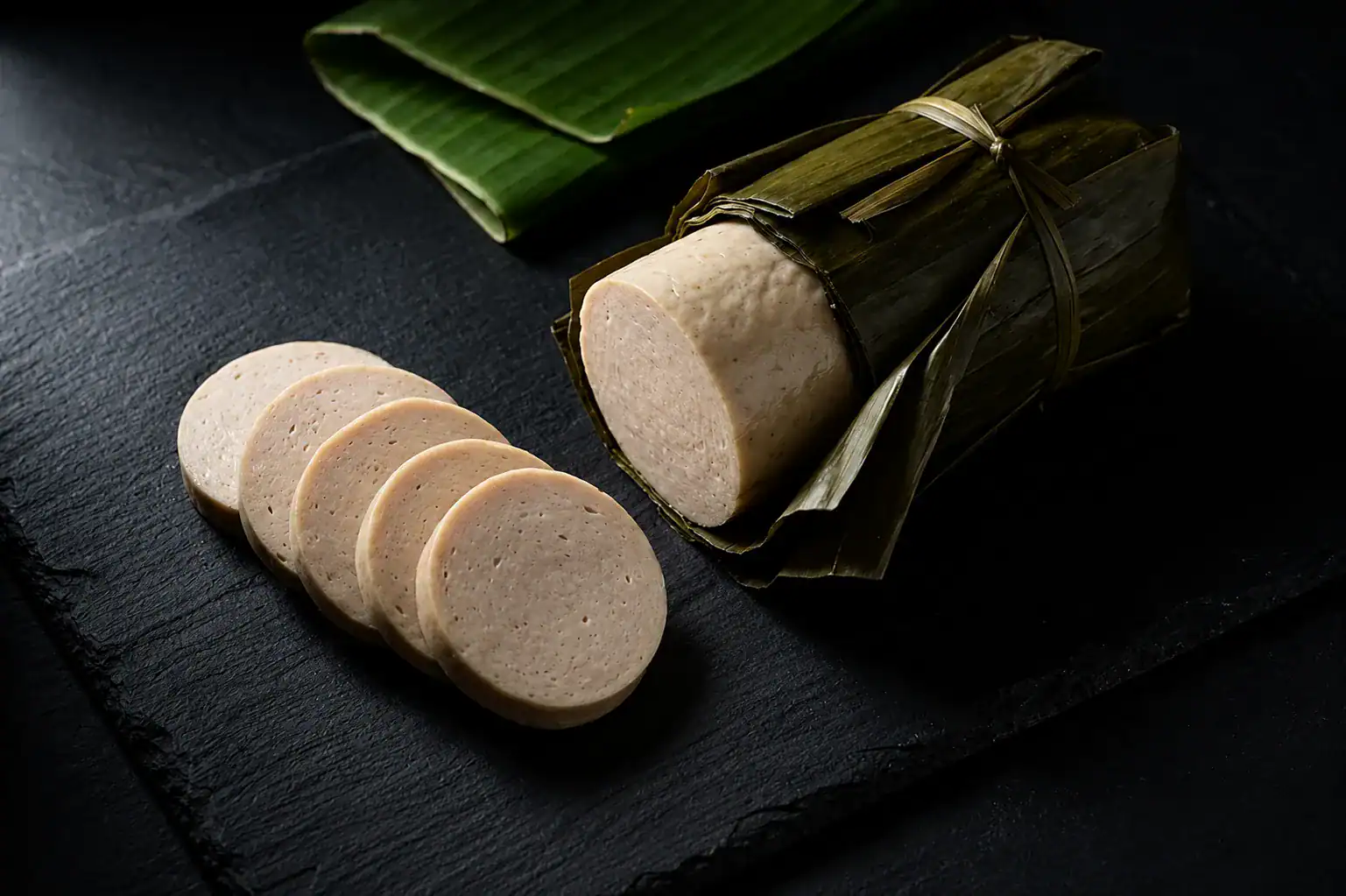
Chả lụa Vietnamese steamed pork roll partially unwrapped from banana leaves with slices on dark slate

CHẢ LỤA (VIETNAMESE STEAMED PORK ROLL)

Chả lụa is the foundational cold cut of the bánh mì. Every street cart in Vietnam has it. Every classic bánh mì thịt nguội starts with it. It is the ingredient that defines the sandwich more than any other single component.

Most people buy it. The refrigerated deli section of any Vietnamese grocery store carries it in cylindrical rolls wrapped in banana leaves or plastic. Store-bought chả lụa is good. The version you make at home is better in the same way homemade anything is better. Fresher, more flavour, no preservatives, and the satisfaction of knowing exactly what is in it.

This recipe produces authentic chả lụa using a food processor method that works in a standard home kitchen. The key is processing the pork long enough to break the protein structure down completely. That step takes longer than most home cooks expect. Do not rush it. The smooth bouncy texture that defines good chả lụa depends entirely on it.

L. Nguyen

Chả Lụa (Vietnamese Steamed Pork Roll)

The foundational cold cut of the bánh mì. Lean pork processed until smooth, seasoned with fish sauce and tapioca starch, wrapped in banana leaves and steamed. The ingredient that defines the classic sandwich. [ INTERMEDIATE ]
Prep Time 30 minutes
Cook Time 45 minutes
Chill Time 2 hours
Total Time 3 hours 15 minutes
Servings: 10 bánh mì
Course: Condiment
Cuisine: Vietnamese

Ingredients
  

The Pork Paste
  • 500 g lean pork (pork loin or pork leg), cut into 2cm cubes
  • 2 tbsp fish sauce
  • 1 tbsp sugar
  • 1 tsp fine salt
  • ½ tsp white pepper
  • ½ tsp baking powder
  • 2 tbsp tapioca starch
  • 2 tbsp cold water
  • 1 tsp neutral oil
The Wrap
  • 2 banana leaves, cleaned and softened over a flame (or aluminium foil as substitute)
  • 1 length kitchen twine for tying

Equipment

  • Food processor
  • Steamer basket
  • Kitchen thermometer
  • Kitchen twine
  • Banana leaves or aluminium foil

Method
 

Prepare the Pork
  1. Cut pork into 2cm cubes. Place on a tray and freeze for 20 minutes. The pork should be very cold but not frozen solid. Cold fat and protein process more cleanly and produce a smoother paste.
First Process
  1. Add the cold pork cubes to a food processor. Process on high for 2 minutes until the pork breaks down into a coarse paste. Scrape down the sides.
  2. Add fish sauce, sugar, salt, white pepper, baking powder, tapioca starch, cold water, and neutral oil. Process on high for another 5 to 6 minutes, stopping every 2 minutes to scrape down the sides.
  3. The paste is ready when it is completely smooth, slightly sticky, and pulls away from the sides of the bowl cleanly. It should look almost like a pale pink putty. If it still has visible texture, process for another 2 minutes.
Shape and Wrap
  1. Lay a piece of banana leaf or aluminium foil on a flat surface. Scoop the pork paste onto the centre. Shape into a cylinder approximately 5cm in diameter and 20cm long.
  2. Roll the banana leaf or foil tightly around the paste, tucking the ends in as you go. The roll should be firm with no air pockets. Tie both ends with kitchen twine and tie two additional loops around the middle to keep the shape during steaming.
Steam
  1. Place the wrapped roll in a steamer over boiling water. Steam for 45 minutes. The internal temperature should reach 70°C / 158°F.
  2. Do not open the steamer during the first 30 minutes. The steam environment needs to stay consistent for the texture to develop correctly.
Chill
  1. Remove from the steamer. Let cool at room temperature for 15 minutes. Then refrigerate for a minimum of 2 hours before slicing. The chả lụa firms up significantly as it chills and slices much more cleanly when cold.
Slice and Serve
  1. Unwrap and slice at 3 to 4mm thickness. The slices should be smooth, pale, and slightly translucent at the edges. They should hold their shape without crumbling.

Notes

Unwrap and slice at 3 to 4mm thickness. The slices should be smooth, pale, and slightly translucent at the edges. They should hold their shape without crumbling.
Keep the pork very cold throughout the process. If the paste starts to feel warm during processing, stop and refrigerate for 10 minutes before continuing. Warm fat smears rather than blending cleanly.
Banana leaves add a subtle grassy flavour to the outer layer of the roll. If unavailable, aluminium foil is a perfectly acceptable substitute. Use two layers and wrap tightly.
Store-bought chả lụa is available at Vietnamese grocery stores in the refrigerated deli section. Look for a smooth uniform texture, pale pink to white colour, and clean smell with no sourness. It is sold in cylindrical rolls wrapped in banana leaves or plastic.
This recipe keeps for 4 days refrigerated. Freezes well for up to 2 months. Slice before freezing for easier portioning.

[ THE SCIENCE ]

Chả lụa gets its distinctive smooth bouncy texture from a process called myosin extraction. When lean pork is processed at high speed for an extended period, the mechanical action breaks down the muscle fibres and releases myosin, a protein that acts as a natural binder. The more thoroughly the pork is processed, the more myosin is released and the smoother and bouncier the final texture becomes.

This is why the processing time matters so much. Five to six minutes of continuous processing releases significantly more myosin than two minutes. The difference in texture between under-processed and correctly processed chả lụa is immediately obvious. One crumbles. The other bounces.

The baking powder contributes a small amount of lift during steaming, creating the slight sponginess that good chả lụa has. The tapioca starch binds the moisture and produces the smooth, slightly elastic quality that distinguishes it from standard steamed ground pork.

Keeping the pork cold before and during processing slows fat melting. Warm fat smears rather than blending cleanly into the paste, producing a greasy rather than smooth result. The 20-minute freeze before processing is not optional.

[ THE FAQ ]

Q: Can I use pork belly instead of pork loin? No. Pork belly has too much fat. Chả lụa requires lean pork. Too much fat in the paste produces a greasy, crumbly result rather than the smooth bouncy texture the recipe needs. Pork loin or pork leg are the correct cuts.

Q: Do I have to use banana leaves? No. Aluminium foil is a perfectly acceptable substitute. Banana leaves add a very subtle grassy flavour to the outer layer of the roll but the difference in the finished sandwich is minimal. If banana leaves are unavailable, use two layers of foil and wrap tightly.

Q: How long does it keep? Four days refrigerated. Freezes well for up to two months. Slice before freezing for easier portioning. Defrost overnight in the refrigerator.

Q: My chả lụa is crumbly and not smooth. What went wrong? The pork was not processed long enough or the paste was too warm during processing. Make sure the pork is very cold before processing and do not stop the food processor until the paste is completely smooth and pulls away from the sides cleanly.

Q: Where can I buy chả lụa if I do not want to make it? Vietnamese grocery stores carry it in the refrigerated deli section. It is sold in cylindrical rolls wrapped in banana leaves or plastic. Look for a smooth uniform texture and pale pink to white colour. It should smell clean with no sourness.

[ THE EQUIPMENT ]

A food processor is essential for this recipe. A high-powered blender works as an alternative but requires more stopping and scraping. A steamer basket over a large pot is all you need for cooking. A kitchen thermometer confirms the internal temperature reaches 70°C. Kitchen twine holds the shape during steaming.

The full equipment list with specific recommendations is on the Equipment page.

[ WHAT TO READ NEXT ]

The Classic Bánh Mì Thịt Nguội is the sandwich that uses chả lụa as its primary cold cut. This is the recipe it was made for.

The Chả Bì recipe is the shredded pork component that layers on top of the chả lụa in the classic sandwich. Make both and the thịt nguội layer is complete.

The What Goes in a Bánh Mì guide covers sourcing advice for store-bought chả lụa including what to look for and what to avoid.