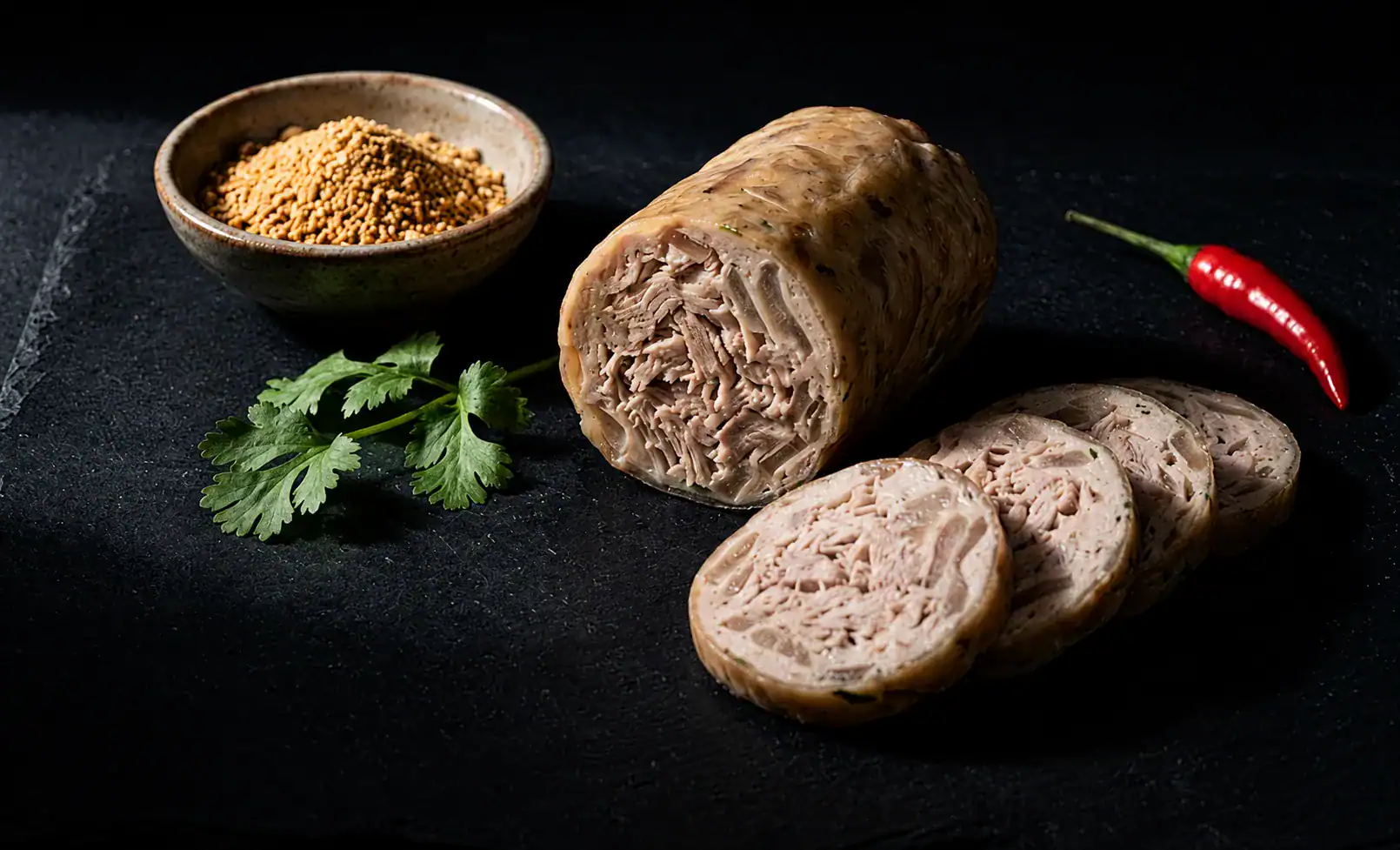
Chả bì Vietnamese shredded pork sliced and ready for bánh mì assembly

Chả Bì (Vietnamese Shredded Pork)

Chả bì is shredded pork and pork skin pressed into a firm roll, coated in roasted rice powder, and sliced thin for the bánh mì. It sits alongside chả lụa and pâté as part of the cold cut layer that defines the classic sandwich. Most people have eaten it without knowing its name. It is the component that adds a dry, slightly crumbly texture to the bite, a contrast to the smooth pâté and the springy chả lụa that makes the whole sandwich more interesting.

The technique is simpler than it sounds. Boil the pork. Shred it by hand. Toast rice in a dry pan until it smells nutty and turns golden. Grind it coarse. Mix everything together, roll it tight in plastic wrap, and refrigerate until firm. Two hours later you have a proper Vietnamese cold cut that most people have never tried to make at home, and it is easier than you think.

L. Nguyen

Chả Bì (Vietnamese Shredded Pork)

Shredded pork and pork skin coated in roasted rice powder and pressed into a firm roll. The cold cut that adds dry, crumbly texture to the classic bánh mì thịt nguội. [ INTERMEDIATE ]
Prep Time 20 minutes
Cook Time 45 minutes
Chill Time 2 hours
Total Time 3 hours 5 minutes
Servings: 4 bánh mì
Course: Condiment
Cuisine: Vietnamese

Ingredients
  

The Pork
  • 300 g pork shoulder, boneless
  • 150 g pork skin, cleaned
The Seasoning
  • 1 tbsp fish sauce
  • 1 tsp sugar
  • ½ tsp white pepper
  • ½ tsp garlic powder
  • 1 tsp Maggi Seasoning Sauce
  • ½ tsp salt, to taste
The Roasted Rice Powder
  • 3 tbsp uncooked jasmine rice

Equipment

  • Dry skillet or wok
  • Sharp knife or kitchen shears
  • Mixing bowl
  • Plastic wrap

Method
 

Prepare the Pork Skin
  1. Place the pork skin in a pot and cover with cold water. Bring to a boil and cook for 20 to 25 minutes. You want it soft enough to pierce easily with a chopstick, but not falling apart. Drain and let it cool completely before you touch it.
  2. Once cool, use a sharp knife or kitchen shears to cut the skin into thin strips. Then cut across those strips into fine shreds, about 3 to 4cm long. The thinner the shreds, the better the texture in the finished roll.
Make the Roasted Rice Powder
  1. Put the jasmine rice into a dry skillet over medium-low heat. No oil. Stir constantly for 8 to 10 minutes until the rice turns deep golden brown and the kitchen smells like toasted nuts. Stay at the pan. The difference between perfect and burnt is about 60 seconds.
  2. Transfer to a mortar or spice grinder and grind to a coarse powder. You want texture here, not flour. Stop grinding when it looks like coarse sand.
Cook and Shred the Pork
  1. Place the pork shoulder in a pot, cover with cold water, and add a pinch of salt. Bring to a boil, then reduce to a gentle simmer for 20 to 25 minutes until cooked through. Drain and let it cool until you can handle it comfortably.
  2. Shred by hand along the grain into thin fibres. Pull with the grain and you get long, clean strands. Pull against it and you get mush. Take your time here. Good shredding is the difference between chả bì that looks like a proper Vietnamese cold cut and one that looks like pulled pork.
Season and Combine
  1. In a large bowl, combine the shredded pork, pork skin strips, fish sauce, sugar, white pepper, garlic powder, Maggi Seasoning Sauce, and salt. Mix thoroughly with clean hands until every strand is coated.
  2. Add the roasted rice powder and mix again. The powder will absorb surface moisture from the pork and bind everything together. Keep mixing until every piece is coated and the mixture looks dry and slightly crumbly. If it still feels wet, add another tablespoon of rice powder and mix again.
Press and Chill
  1. Lay a sheet of plastic wrap flat on your work surface. Pile the seasoned mixture into the centre and shape it roughly into a log about 6cm in diameter.
  2. Roll the plastic wrap tightly around it, twisting both ends to compress everything together. There should be no air gaps. The tighter you roll it, the cleaner it slices later.
  3. Refrigerate for at least 2 hours. Overnight is better. The cold firms the roll and makes slicing clean and easy. Unwrap, slice into 0.5cm rounds, and layer directly onto the baguette.

Notes

On sourcing pork skin: Most Asian grocery stores carry cleaned pork skin, either fresh or frozen. If you do not see it in the case, ask at the counter. It is a standard ingredient and almost always available.
On store-bought chả bì: Pre-made chả bì is sold vacuum-sealed at Vietnamese grocery stores. It is a legitimate shortcut when time is short. Buy from a Vietnamese grocer with high turnover for the best quality.
On texture: Chả bì should feel dry and slightly crumbly when sliced, not wet or sticky. The roasted rice powder is what creates that texture. Do not skip it and do not substitute it with raw rice flour.
On storage: Wrapped tightly in plastic, chả bì keeps in the refrigerator for up to 5 days. It does not freeze well as the texture breaks down when thawed.
For the full bánh mì assembly, see the Classic Bánh Mì Thịt Nguội recipe. For the bread, see the Glass Crust Baguette recipe. For the pickled vegetables, see the Đồ Chua recipe.

[ THE SCIENCE ]

Roasted rice powder is doing two things at once. First, it pulls moisture away from the surface of the pork and pork skin. That is why the finished chả bì has a dry, almost chalky exterior when sliced rather than the wet, sticky surface you would get from plain seasoned pork. Second, it adds flavour. When rice is toasted in a dry pan, the starches undergo the Maillard reaction, the same process that browns a steak or darkens a bread crust. The result is a layer of nutty, slightly smoky flavour that raw rice flour cannot replicate.

The pork skin is not there for flavour. Boiled pork skin on its own tastes like almost nothing. What it contributes is a specific resistance when you bite through it, soft but slightly chewy, layered between the lean shredded pork fibres. That contrast is the texture that makes chả bì recognisable. It is the reason the sandwich has more going on in a single bite than most people can identify.

The pressing and chilling step is structural. The rice powder and the cold temperature work together to firm the mixture into something that holds its shape and slices cleanly. Skip the chill and you have a bowl of seasoned pork. Give it two hours and you have a cold cut.

[ THE FAQ ]

Q: What does chả bì taste like? Mild, slightly salty, and nutty from the rice powder. It is not trying to be the loudest thing in the sandwich. It works because it complements the richness of the pâté and the creaminess of the Vietnamese mayonnaise rather than competing with them.

Q: Is chả bì the same as chả lụa? No. Chả lụa is made from smooth emulsified pork paste, wrapped in banana leaf, and steamed. The texture is dense and springy. Chả bì is shredded, pressed, and dry. Both appear in a classic bánh mì thịt nguội, and they do completely different jobs in the same sandwich.

Q: Can I make this without pork skin? You can, but it is no longer technically chả bì. The pork skin is not optional in the traditional preparation. If it is genuinely unavailable, use all pork shoulder and accept a different result. It will still be good. It will not be chả bì.

Q: What is the rice powder actually doing? It absorbs moisture, adds texture, and contributes a toasted nutty flavour that is essential to the finished product. You can buy thính (roasted rice powder) pre-made at Vietnamese grocery stores, but making it fresh takes ten minutes and the flavour is noticeably better.

Q: How thin should I slice it? 0.5cm is the standard. Thin enough to layer properly inside the baguette without dominating the bite. Thinner than 0.3cm and it falls apart when you handle it. Thicker than 0.8cm and it takes over.

[ THE EQUIPMENT ]

Chả bì needs a dry skillet for toasting the rice, a sharp knife or kitchen shears for breaking down the pork skin, and a large mixing bowl for combining everything by hand. The pressing step requires nothing more than plastic wrap and space in the refrigerator.

The full equipment list with specific recommendations is on the Equipment page.

[ WHAT TO READ NEXT ]

Chả bì is one half of the cold cut combination that defines a traditional bánh mì thịt nguội. For the complete assembly, see the Classic Bánh Mì Thịt Nguội recipe.

For the other cold cut in that same sandwich, see the Chả Lụa recipe.

The What Goes in a Bánh Mì guide covers every component of the sandwich including sourcing advice for both cold cuts.