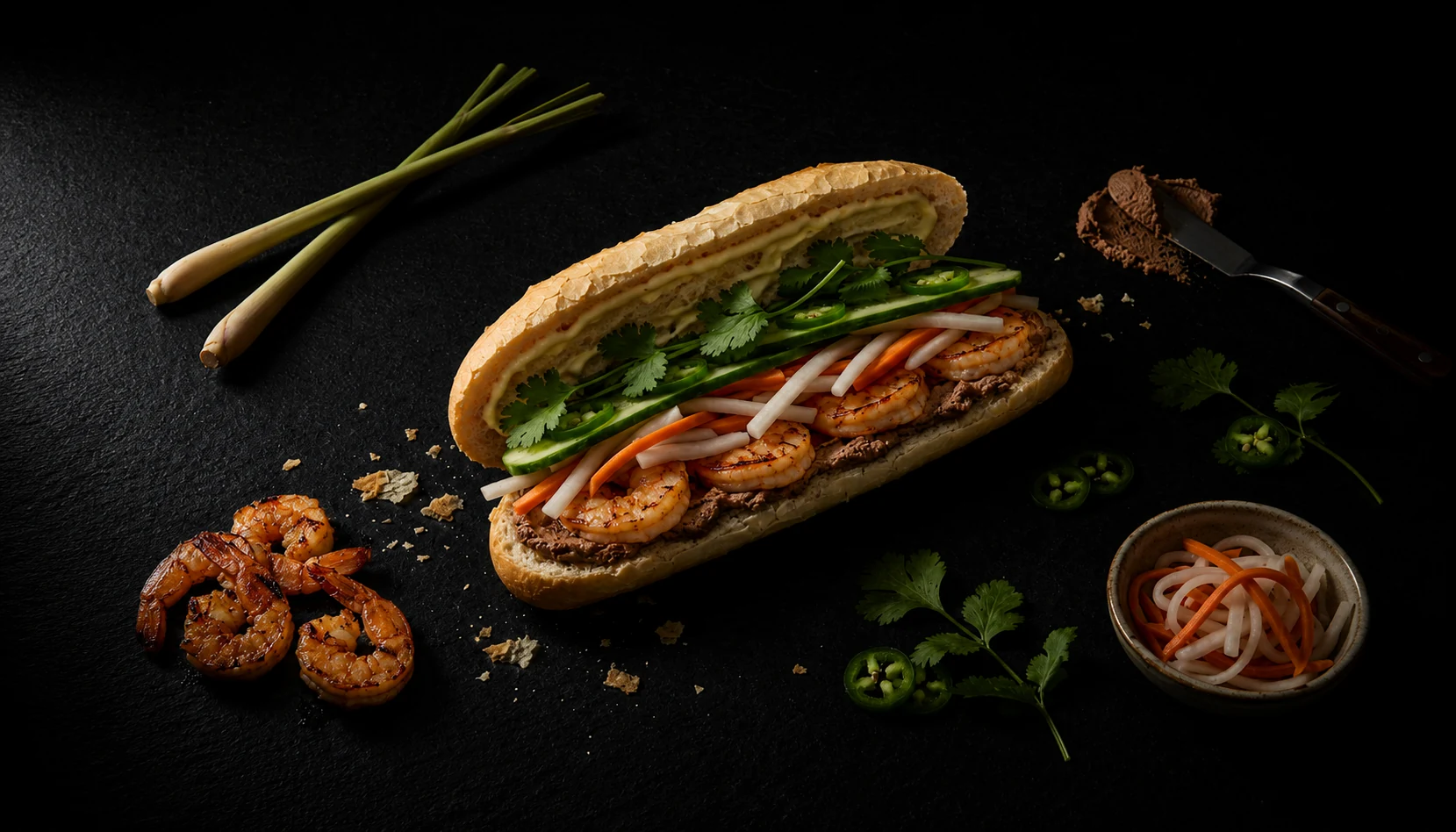
bánh mì tôm (Vietnamese shrimp bánh mì) with caramelized lemongrass shrimp, đồ chua, cucumber, cilantro, and jalapeño on dark slate

BÁNH MÌ TÔM (SHRIMP BÁNH MÌ)

Bánh mì tôm is the shrimp version. Whole shrimp are marinated in lemongrass, garlic, fish sauce, and sugar, then sautéed over high heat until the exterior caramelizes and the inside stays tender. The shrimp are split and laid flat inside the sandwich so they cover the full length of the bread.

The build follows the same five-element structure. Pork liver pâté on the bottom half, Vietnamese mayonnaise on the top, the shrimp layered across, then đồ chua, cucumber, cilantro, and jalapeño. The lemongrass in the marinade carries through every bite. The pickles cut the sweetness of the caramelized shrimp cleanly.

bánh mì tôm (Vietnamese shrimp bánh mì) with caramelized lemongrass shrimp, đồ chua, cucumber, cilantro, and jalapeño on dark slate
L. Nguyen

Bánh Mì Tôm (Shrimp Bánh Mì)

Whole shrimp marinated in lemongrass, garlic, fish sauce, and sugar, sautéed over high heat until caramelized, then laid flat inside a Glass Crust baguette with pâté, Vietnamese mayonnaise, đồ chua, cucumber, cilantro, and jalapeño. [ INTERMEDIATE ]
Prep Time 15 minutes
Cook Time 10 minutes
Marinating Time 30 minutes
Total Time 55 minutes
Servings: 4 bánh mì
Course: Sandwich
Cuisine: Vietnamese

Ingredients
  

The Shrimp
  • 500 g large shrimp, 16 to 20 count, peeled and deveined, tails removed
  • 2 stalks lemongrass, white part only, finely minced
  • 3 garlic cloves, finely minced
  • 2 tbsp fish sauce
  • 1 tbsp sugar
  • 1 tsp white pepper
  • 1 tbsp neutral oil, for cooking
The Assembly
  • 4 Vietnamese bánh mì baguettes (Glass Crust standard)
  • 60 g pork liver pâté
  • 60 g Vietnamese mayonnaise
  • 240 g đồ chua (pickled daikon and carrot), drained
  • 1 Persian cucumber, thinly sliced lengthwise
  • 1 bunch fresh cilantro, stems trimmed
  • 2 jalapeños, thinly sliced
  • Maggi Seasoning Sauce, for finishing

Equipment

  • Cast iron skillet
  • Bread knife
  • Pâté Spreader / Offset Spatula
  • Kitchen scale

Method
 

Marinate the Shrimp
  1. Combine lemongrass, garlic, fish sauce, sugar, and white pepper in a bowl. Add the shrimp and toss to coat completely. Cover and refrigerate for 30 minutes. The lemongrass and fish sauce need time to penetrate the shrimp. Less than 30 minutes and the marinade stays on the surface. More than 2 hours and the fish sauce begins to break down the texture of the shrimp.
  2. Remove the shrimp from the refrigerator 10 minutes before cooking. Pat each shrimp dry with paper towel. Dry shrimp caramelize. Wet shrimp steam.
Cook the Shrimp
  1. Heat neutral oil in a cast iron skillet over high heat until smoking.
  2. Add the shrimp in a single layer. Do not crowd them. Cook for 90 seconds without moving until the underside develops a deep caramelized crust. Flip and cook for a further 60 seconds. The shrimp should be fully white and opaque throughout with a caramelized exterior and curled into a loose C shape. A tight O shape means overcooked. Remove from heat immediately.
  3. Transfer to a plate and rest for 2 minutes. Split each shrimp along the belly with a knife so it opens flat. The flat surface covers more of the bread and distributes the shrimp evenly across the length of the sandwich.
Assemble
  1. Split each baguette lengthwise, cutting three-quarters of the way through. Do not cut completely. The hinge holds the sandwich together.
  2. Spread the pâté across the bottom half of each baguette. Cover the full surface. The pâté provides the savory base that anchors the sweetness of the lemongrass shrimp above it.
  3. Spread the Vietnamese mayonnaise across the top half of each baguette.
  4. Lay the split shrimp flat across the pâté. Arrange them to cover the full length of the bread. Four to five shrimp per sandwich depending on size.
  5. Add the đồ chua directly on top of the shrimp. Drain it thoroughly. The acidity cuts through the sweetness of the caramelized marinade.
  6. Add cucumber strips along the length of the sandwich.
  7. Add a small bundle of cilantro. Do not chop it. Whole sprigs only.
  8. Lay jalapeño slices across the top. Three drops of Maggi Seasoning Sauce along the length. No more. Close the sandwich, press down firmly with your palm, and serve immediately.

Notes

On the shrimp size: 16 to 20 count per pound is the correct size for bánh mì tôm. Smaller shrimp cook too fast to develop a caramelized exterior and get lost inside the sandwich. Larger shrimp are correct but require splitting into smaller pieces to lay flat. The 16 to 20 count size splits cleanly and covers the bread in a single even layer.
On lemongrass preparation: Use the white part only. The outer leaves are tough and fibrous. Peel back two or three layers until you reach the pale yellow inner stalk. Mince it as finely as possible. Coarse lemongrass pieces do not soften during the short cooking time and create an unpleasant texture in the finished sandwich.
On drying the shrimp: Pat the shrimp completely dry before cooking. Moisture on the surface of the shrimp creates steam when it hits the hot pan. Steam prevents caramelization. A dry shrimp in a very hot pan develops the caramelized crust in 90 seconds. A wet shrimp in the same pan produces a grey, steamed result with no color and no crust.
On the C shape versus O shape: Shrimp curl as they cook. A loose C shape means the shrimp is cooked correctly. A tight O shape means it is overcooked and the texture inside will be rubbery. Watch the curl and remove from heat the moment the shrimp forms a C.
On marinating time: 30 minutes is the minimum. 1 hour produces a deeper lemongrass flavor. Do not marinate overnight. The fish sauce breaks down the shrimp texture beyond 2 hours and produces a soft, mushy result.
On make-ahead: The marinade can be prepared up to 24 hours ahead and refrigerated. The shrimp should be marinated and cooked just before assembling. Cooked shrimp does not reheat well in this sandwich. The texture changes significantly after refrigeration.

[ THE SCIENCE ]

The caramelized crust on bánh mì tôm shrimp comes from the same process as every other high heat protein in the archive. The sugars in the marinade and the natural sugars in the shrimp hit the very hot pan surface and break down into new compounds that produce the dark, sweet, slightly bitter crust. Think of it this way: the marinade is loading the shrimp with sugar, and the hot pan burns it into flavor. But shrimp cook faster than any other protein in the archive. The window between a perfect caramelized crust and an overcooked rubbery shrimp is about 30 seconds. High heat and fast hands are the only technique here.

[ THE FAQ ]

What size shrimp should I use? 16 to 20 count per pound is the correct size. This means 16 to 20 shrimp per pound, which puts each shrimp at approximately 25 to 30 grams. Large enough to develop a caramelized exterior before the interior overcooks. Small enough to split flat and lay across the bread in a single even layer.

Can I grill the shrimp instead of using a pan? Yes. A charcoal grill produces additional smokiness that works well with the lemongrass marinade. Thread the shrimp on skewers to prevent them from falling through the grates. Cook for 90 seconds per side over direct high heat. The technique and timing are identical to the cast iron method.

Why do I need to split the shrimp after cooking? Whole shrimp sit awkwardly inside the sandwich and slide out when you press it closed. Splitting each shrimp along the belly opens it flat and creates a larger surface that lays cleanly against the pâté and holds in place when the sandwich is closed. It also distributes the shrimp more evenly across the full length of the bread.

Can I use frozen shrimp? Yes. Thaw completely in cold water for 20 minutes, then pat completely dry before marinating. Frozen shrimp that is not fully thawed releases water during cooking and steams rather than caramelizes. The result is the same as not drying fresh shrimp before cooking.

How do I know when the shrimp is cooked through? The shrimp should be opaque throughout with no translucent areas at the center, and curled into a loose C shape. The exterior should show caramelized color on both sides. If you are unsure, cut one shrimp in half. The interior should be white and firm throughout.

[ THE EQUIPMENT ]

A cast iron skillet holds heat when the cold shrimp hits the surface and maintains the temperature needed for proper caramelization. A bread knife splits the baguette without crushing the Glass Crust. An offset spatula spreads the pâté and mayonnaise in a controlled, even layer.

The full equipment list with specific recommendations is on the Equipment page.

[ WHAT TO READ NEXT ]

Bánh mì gà nướng is the grilled chicken version in the archive. Where tôm uses whole shrimp caramelized over high heat, gà nướng uses bone-in chicken thighs with a four-ingredient marinade of fish sauce, black pepper, lime juice, and garlic. Both are high heat proteins with a caramelized exterior. The technique is the same. The flavor is completely different.

Bánh mì chả cá is the fish cake version. Where tôm uses whole shrimp, chả cá grinds white fish into a paste and fries it into patties. Both are seafood sandwiches. Both are lighter than the pork versions in the archive.

The Đồ Chua recipe covers the pickle that cuts through the sweetness of the lemongrass marinade in this sandwich. The acidity level in the brine is what makes the pickle work against a sweet protein rather than a savory one.