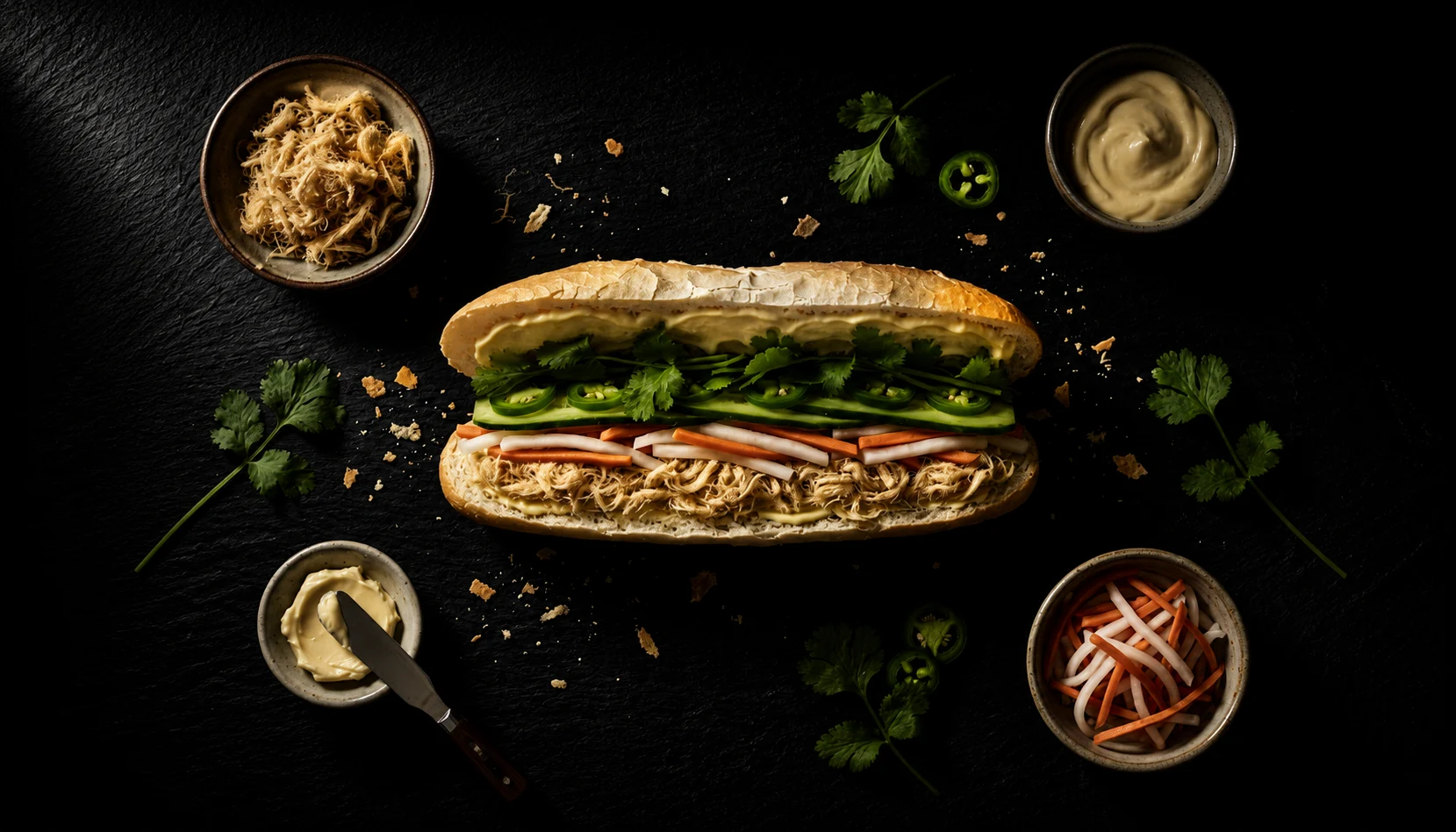
BÁNH MÌ CHÀ BÔNG (PORK FLOSS BÁNH MÌ)

Bánh mì chà bông is the pork floss version. Pork shoulder is simmered until completely tender, shredded into fine fibers, then dry-fried in a pan until each strand is light, golden, and pulls apart like cotton. The result is layered generously into a Glass Crust baguette with butter and Vietnamese mayonnaise. No pâté. No heavy protein. This is the breakfast sandwich.

The floss carries a concentrated savory sweetness from the fish sauce and sugar that penetrates every fiber during the drying process. The đồ chua cuts through it. The cilantro lifts it. The jalapeño adds the heat that arrives at the end. The texture contrast between the airy floss and the shattering crust is what defines this sandwich.

L. Nguyen

Bánh Mì Chà Bông (Pork Floss Bánh Mì)

Pork shoulder simmered until tender, shredded into fine fibers, and dry-fried until light, golden, and fluffy, then layered generously into a Glass Crust baguette with butter and Vietnamese mayonnaise, đồ chua, cucumber, cilantro, and jalapeño. The breakfast sandwich in the archive. [ INTERMEDIATE ]
Prep Time 15 minutes
Cook Time 1 hour 30 minutes
Drying Time 30 minutes
Total Time 2 hours 15 minutes
Servings: 4 bánh mì
Course: Sandwich
Cuisine: Vietnamese

Ingredients
  

The Pork Floss
  • 600 g pork shoulder, cut into 5cm chunks
  • 2 tbsp fish sauce
  • 1 tbsp sugar
  • 1 tsp white pepper
  • 1 tsp neutral oil
  • 1 shallot, halved
  • 2 garlic cloves, lightly crushed
  • 1 tsp salt, for the poaching liquid
The Assembly
  • 4 Vietnamese bánh mì baguettes (Glass Crust standard)
  • 30 g unsalted butter, softened
  • 60 g Vietnamese mayonnaise
  • 240 g đồ chua (pickled daikon and carrot), drained
  • 1 Persian cucumber, thinly sliced lengthwise
  • 1 bunch fresh cilantro, stems trimmed
  • 2 jalapeños, thinly sliced
  • Maggi Seasoning Sauce, for finishing

Equipment

  • Large pot or Dutch oven
  • Cast iron skillet
  • Bread knife
  • Pâté Spreader / Offset Spatula
  • Kitchen scale

Method
 

Make the Pork Floss
  1. Place pork shoulder chunks in a large pot with shallot, garlic, and salt. Cover with cold water. Bring to a boil over high heat then reduce to a steady simmer. Cook for 60 to 75 minutes until the pork is completely tender and pulls apart easily when pressed with a fork. The meat must be fully tender before shredding. Under-cooked pork produces tough, chewy floss rather than fine, airy fibers.
  2. Remove the pork from the liquid and set aside to cool for 15 minutes. Reserve the cooking liquid. Once cool enough to handle, shred the pork against the grain into the finest fibers possible. Use two forks or your fingers. The finer the shred at this stage, the lighter and fluffier the finished floss will be.
  3. Transfer the shredded pork to a bowl. Add fish sauce, sugar, and white pepper. Mix thoroughly until the seasoning coats every fiber. Add 2 tablespoons of the reserved cooking liquid and mix again. The cooking liquid carries concentrated pork flavor from the simmer. Adding it at this stage allows it to absorb into the fibers before the drying process drives out all the moisture, leaving only the flavor behind.
  4. Heat a cast iron skillet or wide pan over medium-low heat. Add neutral oil and spread it across the surface. Add the seasoned shredded pork in a single layer. Cook, stirring constantly, for 25 to 35 minutes until the pork is completely dry, light golden, and pulls apart into fine airy strands. Reduce the heat if any strands begin to darken too quickly. The constant stirring separates the fibers and prevents them from clumping. Patience at this stage is what separates correct floss from dense, chewy shreds.
  5. Remove from heat and spread on a plate to cool completely. The floss will crisp further as it cools. Once fully cool it should be light, airy, and pull apart easily between your fingers.
Assemble
  1. Split each baguette lengthwise, cutting three-quarters of the way through. Do not cut completely. The hinge holds the sandwich together.
  2. Spread the softened butter across the bottom half of each baguette. Cover the full surface. Butter rather than pâté is the correct base for bánh mì chà bông. The fat binds the floss to the bread and prevents it from falling out.
  3. Spread the Vietnamese mayonnaise across the top half of each baguette.
  4. Layer the pork floss generously across the butter. Press it lightly into the butter so it adheres. Use enough floss to cover the full length of the bread in a layer approximately 1cm deep.
  5. Add the đồ chua directly on top of the floss. Drain it thoroughly. The acidity cuts through the richness of the butter and the concentrated sweetness of the floss.
  6. Add cucumber strips along the length of the sandwich.
  7. Add a small bundle of cilantro. Do not chop it. Whole sprigs only.
  8. Lay jalapeño slices across the top. Three drops of Maggi Seasoning Sauce along the length. No more. Close the sandwich, press down firmly with your palm, and serve immediately.

Notes

On the pork cut: Pork shoulder is the correct cut for chà bông. The fat content keeps the meat moist during the long simmer and produces fibers that dry correctly in the pan. Pork loin is too lean and produces dry, brittle floss with no flavor. Pork belly is too fatty and the strands clump together during drying.
On shredding: The finer the shred, the better the floss. Coarse shreds produce a dense, chewy texture. Fine fibers produce the light, airy result the sandwich depends on. Take the extra time at the shredding stage. It changes the final texture completely.
On the drying process: Constant stirring throughout the drying stage is not optional. It separates the fibers, prevents clumping, and ensures even drying across the entire batch. Leaving the pan unattended produces uneven results with some strands burnt and others still moist.
On butter versus pâté: Traditional bánh mì chà bông uses butter, not pâté. The butter provides fat to bind the floss to the bread without competing with the concentrated flavor of the floss. Pâté would overwhelm the sandwich. This is one of the few sandwiches in the archive where pâté does not appear.
On storage: Pork floss keeps in an airtight container at room temperature for up to 5 days, refrigerated for up to 2 weeks, and frozen for up to 3 months. Make a full batch. The floss is the labor-intensive component. The sandwich assembly takes 3 minutes once the floss is ready.
On store-bought floss: Vietnamese pork floss is available at most Asian grocery stores. Look for ruốc or chà bông in the dry goods aisle. The homemade version has a fresher, more delicate flavor. Store-bought works correctly in the sandwich.

[ THE SCIENCE ]

The light, airy texture of chà bông comes from removing almost all moisture from the pork fibers through a combination of simmering and dry-frying. When pork is simmered for a long time, the collagen in the connective tissue breaks down completely and the muscle fibers soften and separate. Think of it this way: the simmer unravels the pork from a solid block into individual threads, and the dry-frying then drives out all the water those threads absorbed during cooking. With no water left to weigh them down, the individual fibers become light enough to float apart from each other. That is the floss. Remove the moisture and the structure reveals itself.

[ THE FAQ ]

What is the difference between ruốc and chà bông? They are the same thing. Ruốc is the northern Vietnamese term. Chà bông is the southern Vietnamese term. Both refer to Vietnamese pork floss made by simmering pork until tender, shredding it into fine fibers, and dry-frying until light and fluffy. The preparation is identical. The name changes depending on region.

Why is there no pâté in this sandwich? Bánh mì chà bông is one of the few sandwiches in the Vietnamese bánh mì tradition that does not use pâté. The concentrated savory sweetness of the floss is the dominant flavor in this sandwich. Pâté would compete with it and change the balance. Butter provides the fat layer the sandwich needs without interfering with the floss.

Can I make the pork floss ahead of time? Yes. This is the recommended approach. The floss keeps refrigerated for up to 2 weeks. Make a full batch on the weekend and use it throughout the week. The sandwich itself takes 3 minutes to assemble once the floss is ready.

Why is my floss clumping instead of staying light and airy? Two possible causes. The pork was not shredded finely enough before drying. Or the drying process was not long enough and moisture remained in the fibers. Return the clumped floss to a dry pan over medium-low heat and continue stirring until completely dry. Pull the clumps apart with two forks as they dry.

Can I use a food processor to shred the pork? Yes. Pulse the cooked pork in a food processor 8 to 10 times until shredded into fine fibers. Do not over-process. Over-processing produces a paste rather than fibers. Check after every 2 pulses. Hand shredding produces longer, more airy fibers but the food processor method is acceptable and significantly faster.

[ THE EQUIPMENT ]

A large pot or Dutch oven simmers the pork shoulder until completely tender. A cast iron skillet dries the shredded pork evenly over consistent heat. A bread knife splits the baguette without crushing the Glass Crust. An offset spatula spreads the butter and mayonnaise in a controlled, even layer.

The full equipment list with specific recommendations is on the Equipment page.

[ WHAT TO READ NEXT ]

Bánh mì bơ is the other simple sandwich in the archive. Where chà bông layers concentrated pork flavor over butter, bánh mì bơ uses butter and Maggi Seasoning Sauce only. Both are morning sandwiches. Both depend on the bread more than any other version in the archive.

Bánh mì trứng is the fried egg version. Where chà bông is dry and light, trứng is rich and runny. Both are breakfast sandwiches. Both are faster to assemble than any of the braised or grilled versions.

Chả lụa is the steamed pork sausage used in the classic cold cut combination. Where chà bông dries the pork into fine airy fibers, chả lụa steams it into a smooth, dense cold cut. The same base protein processed in opposite directions.

Bánh mì gà xé phay is the other cold protein sandwich in the archive. Where chà bông dries the pork into airy floss, gà xé phay poaches the chicken and dresses it in fish sauce and lime. Both are assembled without any heat at the final stage. Both depend entirely on the preparation rather than the cooking for their flavor.