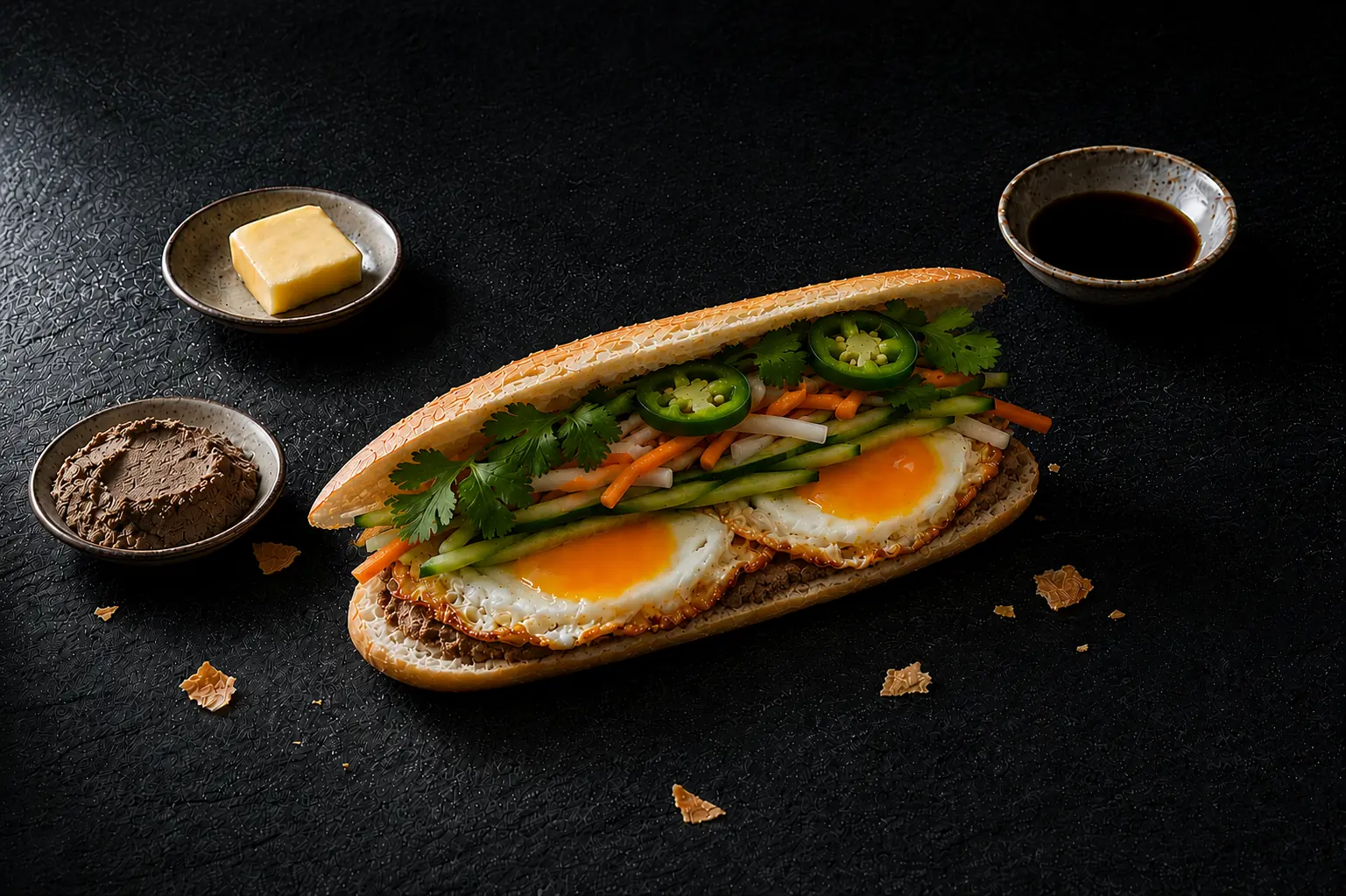
Bánh mì trứng with two sunny side up fried eggs, pork liver pâté, pickled daikon carrot, cucumber, cilantro and jalapeño on glass crust baguette

BÁNH MÌ TRỨNG (FRIED EGG BÁNH MÌ)

Bánh Mì Trứng is the breakfast version. It is the fastest sandwich in the archive and the one Vietnamese street vendors have been selling since before sunrise for decades. Two eggs, butter, soy sauce, pork liver pâté, and the same Glass Crust baguette that holds every other version together.

The egg is fried sunny side up in butter until the whites are set and the edges turn lacy and slightly crisp. The yolk stays runny. When you close the sandwich and press down, the yolk breaks and soaks into the crumb. That is not an accident. That is the sandwich.

Bánh mì trứng with two sunny side up fried eggs, pork liver pâté, pickled daikon carrot, cucumber, cilantro and jalapeño on glass crust baguette
L. Nguyen

Bánh Mì Trứng (Fried Egg Bánh Mì)

Two eggs fried sunny side up in butter until the edges are lacy and crisp, layered with pork liver pâté, Vietnamese mayonnaise, pickled daikon and carrot, fresh cucumber, cilantro, and jalapeño on a Glass Crust baguette. The breakfast version. Fast, built on the same architecture as every other sandwich in the archive. [ BEGINNER ]
Prep Time 10 minutes
Cook Time 15 minutes
Total Time 25 minutes
Servings: 4 bánh mì
Course: Sandwich
Cuisine: Vietnamese

Ingredients
  

The Pickles
  • 200 g daikon radish, julienned 3mm wide
  • 200 g carrot, julienned 3mm wide
  • 120 ml unseasoned rice vinegar
  • 120 ml water
  • 30 g sugar
  • 8 g kosher salt
The Eggs
  • 8 large eggs
  • 2 tbsp unsalted butter
  • 2 tsp soy sauce
  • ½ tsp white pepper
The Assembly
  • 4 Vietnamese bánh mì baguettes (Glass Crust standard)
  • 4 tbsp Vietnamese mayonnaise
  • 60 g pork liver pâté
  • 1 small cucumber, sliced lengthwise into thin strips
  • 1 bunch fresh cilantro, stems trimmed
  • 2 jalapeños, sliced thin on a bias
  • Maggi Seasoning Sauce, for finishing

Equipment

  • Small pan
  • Mandoline slicer
  • Bread knife
  • Pâté Spreader / Offset Spatula

Method
 

Make the Pickles
  1. Combine rice vinegar, water, sugar, and salt in a small saucepan over medium heat. Stir until sugar and salt dissolve completely, 2 to 3 minutes. Do not boil. Remove from heat and let cool to room temperature, 15 minutes.
  2. Pack daikon and carrot into a clean jar. Pour brine over vegetables. The brine should cover the vegetables completely. Seal and refrigerate for a minimum of 1 hour. Two hours produces a better result. The pickles will keep for 2 weeks refrigerated.
Fry the Eggs
  1. Heat ½ tbsp butter in a small pan over medium heat. The butter should foam and then settle. Do not let it brown. Brown butter will overpower the egg.
  2. Crack 2 eggs into the pan. They should sizzle immediately on contact. If they do not, the pan is not hot enough.
  3. Add ½ tsp soy sauce around the edges of the eggs, not directly on the yolks. The soy sauce seasons the whites and creates the lacy crisp edges that define this sandwich.
  4. Cook until the whites are fully set and the edges are golden and slightly crisp, about 2 to 3 minutes. The yolks must remain runny. Do not flip. Do not cover.
  5. Remove from heat. Cook in four batches, one sandwich worth of eggs at a time. Season with white pepper.
Assemble
  1. Split each baguette lengthwise, cutting three-quarters through. Do not cut completely. The hinge holds the sandwich together.
  2. Open the bread. Apply Vietnamese mayonnaise to both cut surfaces. This is the fat barrier. It seals the bread and complements the egg yolk.
  3. Spread pâté on the bottom half only.
  4. Slide the fried eggs onto the pâté, yolk side up. Both eggs per sandwich. They should sit flat and cover the full length of the bread.
  5. Add cucumber strips across the eggs.
  6. Add pickled daikon and carrot. Drain them first. Excess brine combined with the egg yolk will oversaturate the bread.
  7. Add cilantro in whole sprigs. Do not chop it.
  8. Finish with jalapeño slices. Two to three per sandwich is the correct amount.
  9. Three drops of Maggi Seasoning Sauce across the top. No more. Close the sandwich. Press down firmly with your palm. The yolk will break and soak into the crumb. Serve immediately.

Notes

On the eggs: Use the freshest eggs available. Fresh eggs have tighter whites that hold their shape in the pan. Older eggs spread across the pan and produce thin, ragged whites that are harder to transfer to the baguette. The difference is visible immediately when the egg hits the butter.
On the butter: Unsalted butter is correct. The soy sauce provides all the salt the egg needs. Salted butter combined with soy sauce will oversalt the whites. Keep them separate.
On the yolk: The runny yolk is not optional. It is the sauce for this sandwich. An overcooked yolk produces a dry filling with no moisture to bind the other ingredients. Pull the eggs off the heat the moment the whites are set.
On the pâté: Pork liver pâté is the correct choice here. The recipe is on this site. If you do not have time to make it from scratch, Flower Brand pâté is the correct store-bought substitute. It is available at most Asian grocery stores and online.
On the pickles: The pickles in this recipe follow the same formula as the Đồ Chua recipe on this site. If you have a jar already made, use those. The brine in the ingredients list produces the correct result if you are making them fresh.
On make-ahead: The pickles can be made up to 2 weeks ahead. The eggs must be cooked to order. Do not fry the eggs in advance. A cold fried egg on a bánh mì is not the same sandwich.

[ THE SCIENCE ]

The lacy crispy edges on a fried egg are not just texture. They are the result of two things happening at the same time. When the egg hits hot butter, the water in the egg white turns to steam instantly and pushes outward from the edges. At the same time, the proteins in the egg white denature and set in the heat, locking the bubbles from that steam in place. The result is a thin, crispy, almost airy border around the egg white. The soy sauce added around the edges accelerates this process because the salt in the soy sauce draws moisture out of the whites faster, which means more steam, more bubbles, and a crispier edge. Think of it like the difference between boiling water in a wide shallow pan versus a deep narrow one. The wider the surface, the faster the moisture escapes, and the crispier the result.

[ THE FAQ ]

Why does this recipe use butter instead of oil? Butter is the authentic choice for Bánh Mì Trứng. The milk solids in butter brown at the edges of the egg and add a nutty richness that neutral oil cannot replicate. It also complements the soy sauce in a way that vegetable oil does not. Use unsalted butter so the soy sauce controls the salt level.

Can I use more than two eggs per sandwich? Two is the correct number. More than two eggs and the sandwich becomes structurally unstable. The bread cannot hold the height and the yolks produce more liquid than the crumb can absorb without going soggy. Two eggs fit flat across the full length of a standard bánh mì baguette and produce the right yolk to bread ratio.

What if I prefer a cooked yolk? The runny yolk is what makes this sandwich work. It acts as the sauce and binds the filling. A fully cooked yolk produces a dry sandwich with no moisture to tie the ingredients together. If you must cook the yolk through, add a teaspoon of water to the pan and cover for 30 seconds. It will still be firmer than ideal but it is the closest acceptable result.

Why do the eggs need to be cooked in batches? A standard pan cannot maintain the temperature needed for crispy edges if you cook four eggs at once. Crowding the pan drops the temperature and the eggs steam instead of fry. Cook two at a time, one sandwich worth per batch, and the butter stays hot enough to produce the correct result every time.

[ THE EQUIPMENT ]

A small pan sized for two eggs at a time produces the correct result. A pâté spreader applies the pork liver pâté in an even layer across the bottom half of the baguette. A mandoline slicer produces the consistent 3mm julienne the pickles require. A bread knife splits the baguette without crushing the Glass Crust.

The full equipment list with specific recommendations is on the Equipment page.

[ WHAT TO READ NEXT ]

The Pork Liver Pâté recipe covers how to make the pâté from scratch. It takes 30 minutes and produces a result no store-bought version matches. Worth making the day before.

For the bread this sandwich depends on, see the Glass Crust Baguette recipe. The thin shattering crust and the cloud-light crumb are what make the yolk absorption work correctly.

Bánh mì chảo is the pan version of the fried egg. Where bánh mì trứng puts the egg inside the baguette, chảo cracks the eggs directly into a sauced cast iron skillet and serves the bread on the side for dipping. Same breakfast logic, completely different format.

Bánh mì chà bông is the other breakfast sandwich in the archive. Where trứng is rich and runny from the fried egg, chà bông is dry and light from the pork floss. Both are fast to assemble. Both are morning sandwiches.