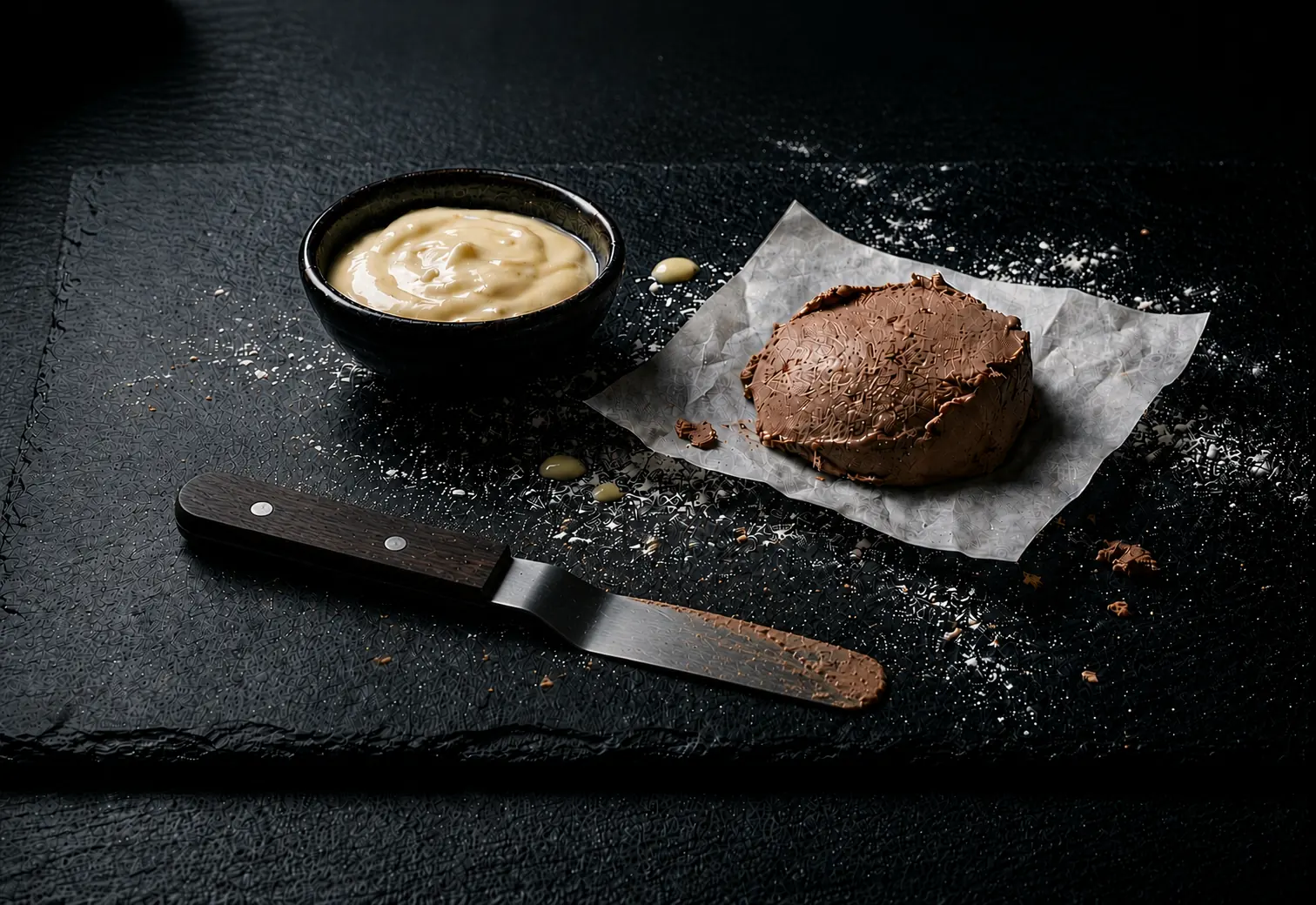
BEST OFFSET SPATULA FOR BÁNH MÌ
Most people building a bánh mì at home spread the pâté with the back of a spoon or the flat of a knife and wonder why the sandwich goes soggy within ten minutes. The fat barrier is not decorative. It is the waterproofing system that keeps the bread dry long enough to eat the sandwich. And it only works if it is even.
An uneven spread pools fat in the middle and leaves gaps at the edges. Those gaps are where moisture from the đồ chua and the cucumber enters the bread. A properly applied fat barrier gives you thirty minutes before the bread starts softening. A poorly applied one gives you five. The difference is the tool.
This page covers why the spread layer matters more than most people realize, what to look for in an offset spatula for bánh mì, and three options at every price point.
[ WHY IT MATTERS FOR BÁNH MÌ SPECIFICALLY ]Tag: H2
The fat barrier in a bánh mì has one job: keep the bread dry long enough to eat the sandwich. Vietnamese mayonnaise goes on both inner surfaces first. Pâté goes on the bottom half only, on top of the mayonnaise. Both layers need to cover the full surface from one end of the bread to the other without gaps. A gap in the fat barrier is where moisture enters and the bread starts softening.
The offset spatula is the correct tool because it matches the geometry of the job. A bánh mì baguette is long, narrow, and has a soft open crumb that tears under downward pressure. The angled blade lets you apply forward pressure along the length of the bread without your knuckles dragging on the surface. You can cover the full interior in two passes without tearing the crumb or pushing filling out the sides.
The layer thickness matters too. Pâté spread too thick overwhelms the acid from the đồ chua and the brightness of the cilantro. Spread too thin and it contributes nothing to the fat barrier and the sandwich softens in under five minutes. The correct offset spatula gives you the control to hit the right thickness consistently, which is something a spoon or a flat knife cannot do.
[ THE RECOMMENDATION ]
The OXO Good Grips Offset Icing Spatula is the correct tool for spreading pâté and Vietnamese mayonnaise on a bánh mì. The bent handle keeps your knuckles clear of the bread surface throughout the spread, which is what allows you to apply consistent forward pressure along the full length of the interior without your hand interrupting the pass. The stainless steel blade is thin enough to flex with the curve of the bread and rigid enough to control the thickness of the spread.
At around $15 it is one of the most affordable tools on this site. The fat barrier either works or it does not. The OXO makes sure it works every time.
[ THE THREE OPTIONS ]
[ BUDGET ] Ateco 1385 Offset Spatula — around $7 The correct starting point. A 4.5 inch stainless steel blade with a wood handle and the offset angle that makes even spreading possible on a narrow baguette interior. Used in professional pastry kitchens for decades for good reason. The blade is thin and flexible enough to spread Vietnamese mayonnaise and pâté in a single controlled pass without tearing the crumb. For anyone getting started with bánh mì at home, buy this one.
[ MID-RANGE ] Professional Large Stainless Steel 8″ Icing Spatula — around $12 A longer blade for bakers who want more coverage per pass. The 8 inch length covers a full-size baguette in a single stroke rather than two. The wood handle provides a comfortable grip and the slightly more rigid blade gives better control on thicker spreads like pâté. The right choice for bakers who make bánh mì regularly and want a tool that handles multiple spreading tasks without switching tools.
[ PREMIUM ] OXO Good Grips Offset Icing Spatula — around $15 The recommended pick. The bent handle design is the specific feature that separates it from every other spatula on this list. It keeps your knuckles off the bread surface and shifts your hand into a natural forward-pressure position that a straight offset handle does not. The result is a more controlled, more even spread across the full interior of the baguette. If you want the most reliable pâté spreader on this list, this is it.
[ THE SCIENCE ]
Spreading is a mechanical process with two variables: pressure direction and blade flexibility. A flat knife applies pressure primarily downward. On a soft open crumb that downward pressure compresses the bread before it spreads the filling. The crumb flattens. The filling pools rather than distributing evenly across the surface.
An offset spatula applies pressure forward rather than downward. The angled handle shifts the force along the surface of the bread rather than into it. The crumb stays intact. The filling moves forward and distributes evenly with each pass. On a 30cm baguette that difference between downward and forward pressure is the difference between a torn interior and a clean even layer.
Blade flexibility matters for the same reason. A stiff blade cannot follow the slight curve of a baguette interior. It bridges across the high points and leaves gaps at the edges. A flexible blade conforms to the surface and maintains contact throughout the spread. Both the Ateco and OXO blades flex with the bread surface without losing control of the filling.
The fat barrier works as a waterproofing system. Vietnamese mayonnaise is an emulsion, oil dispersed in egg yolk. When applied evenly it forms a continuous film across the bread surface that moisture cannot easily penetrate. A gap in that film is where liquid from the đồ chua, the cucumber, and the protein enters the bread. Even application is not about aesthetics. It is about how long the sandwich stays structurally sound after assembly.
[ THE FAQ ]
Can I just use a butter knife? A butter knife applies pressure downward rather than forward and the blade is too thick to spread pâté evenly across a soft crumb without tearing it. An offset spatula costs under $10 and solves the problem entirely. It is the easiest upgrade on this equipment list.
What size offset spatula works best for bánh mì? A 4 to 5 inch blade matches the width of a demi-baguette interior and gives you the most control on a narrow surface. An 8 inch blade covers more ground per pass but requires more care on a narrow bread. The Ateco 1385 at 4.5 inches is the correct size for most home bakers making bánh mì.
Do I need a separate spatula for mayonnaise and pâté? No. Wipe the blade clean between the mayonnaise and pâté layers. Both are fat-based and the blade transfers minimal residue between passes if wiped with a clean cloth or paper towel.
Can I use the same spatula for other bánh mì components? The offset spatula is built for spreading. For slicing chả lụa or chả bì you need a straight-edge knife. For cutting the baguette you need the bread knife. Each tool in the bánh mì kitchen has a specific job and the offset spatula does its job better than anything else.
How do I clean an offset spatula after use? Rinse immediately before the fat sets. Both the Ateco and OXO are dishwasher safe but hand washing preserves the blade longer. Dry immediately to prevent water spots on the stainless steel blade.
[ WHAT TO READ NEXT ]
The spatula spreads the fat barrier. The Vietnamese Mayonnaise recipe covers the exact emulsion ratio and technique that produces the correct consistency for even spreading, including why the oil temperature during emulsification affects how the mayonnaise behaves on the bread.
The Pork Liver Pâté recipe covers the fat content and texture that makes pâté spreadable at the correct temperature and why spreading it cold straight from the refrigerator produces a different result than spreading it at room temperature. The full equipment list for bánh mì is on the Equipment page.
The complete assembly sequence including the exact order in which the fat layers go down and why the sequence matters is in the Classic Bánh Mì Thịt Nguội recipe.