BEST RICE VINEGAR FOR BÁNH MÌ
Most home cooks making đồ chua for the first time reach for whatever vinegar is already in the pantry. White distilled vinegar. Apple cider vinegar. Seasoned rice vinegar. The pickle looks right. The color is there. The vegetables soften. But the flavor is wrong and they cannot figure out why.
The answer is always the vinegar. Unseasoned rice vinegar has a clean, neutral acidity that cuts through the fat of the pâté and mayonnaise without adding a flavor of its own. Every other vinegar brings something extra to the brine. That extra something fights with the cilantro, competes with the jalapeño, and turns a pickle that should taste sharp and bright into one that tastes like the vinegar it was made with.
This page covers what to look for in a rice vinegar for bánh mì, why unseasoned is non-negotiable, and the two options worth buying.
[ WHY THIS INGREDIENT MATTERS ]
Đồ chua has one job in the bánh mì. It cuts through the fat. The pâté is rich. The Vietnamese mayonnaise is rich. Without a sharp acid component the sandwich becomes heavy after the first two bites. The pickled daikon and carrot provide that sharpness, but only if the brine is correct. The brine is only correct if the vinegar is correct.
Unseasoned rice vinegar sits at around 4 to 4.5% acidity. That is lower than white distilled vinegar at 5% and significantly lower than apple cider vinegar which can reach 6% or higher. The lower acidity produces a pickle that is sharp enough to cut through fat without being so aggressive that it dominates every bite. Sharp enough to notice. Gentle enough to let everything else in the sandwich still speak.
The flavor profile matters as much as the acidity level. Rice vinegar is made from fermented rice and has a mild, slightly sweet character with no harsh edges. White distilled vinegar is made from grain alcohol and tastes like it. Apple cider vinegar adds a fruity note that fights with the cilantro and jalapeño. Unseasoned rice vinegar adds nothing except the acid the brine requires. That is exactly what it should do.
[ WHAT TO KNOW BEFORE YOU BUY ]
The most important word on the label is unseasoned. Seasoned rice vinegar has added salt and sugar which throws off the brine ratio in the đồ chua recipe. The recipe specifies exact amounts of both. If the vinegar already contains them the brine becomes too salty and too sweet before you have added a single gram of either. Always buy unseasoned. Check the label every time because seasoned and unseasoned bottles look almost identical on the shelf.
The second thing worth knowing: rice vinegar is one of the few ingredients in bánh mì where switching brands genuinely does not matter much. Any unseasoned rice vinegar at 4 to 4.5% acidity will produce the correct result. Marukan is the recommendation because it is consistent, widely available, and the flavor is clean and neutral. But if your local Asian grocery store carries a different brand at the correct acidity, buy that one.
Do not substitute white distilled vinegar or apple cider vinegar. Both are too acidic and both add flavors that compete with the other ingredients. The đồ chua will be edible. It will not be correct.
[ THE OPTIONS ]
Marukan Genuine Brewed Rice Vinegar 12oz — around $3 The correct vinegar for most home kitchens. 4.1% acidity, clean flavor, widely available at Asian grocery stores and mainstream supermarkets. At this price there is no reason to use anything else. Buy this one.
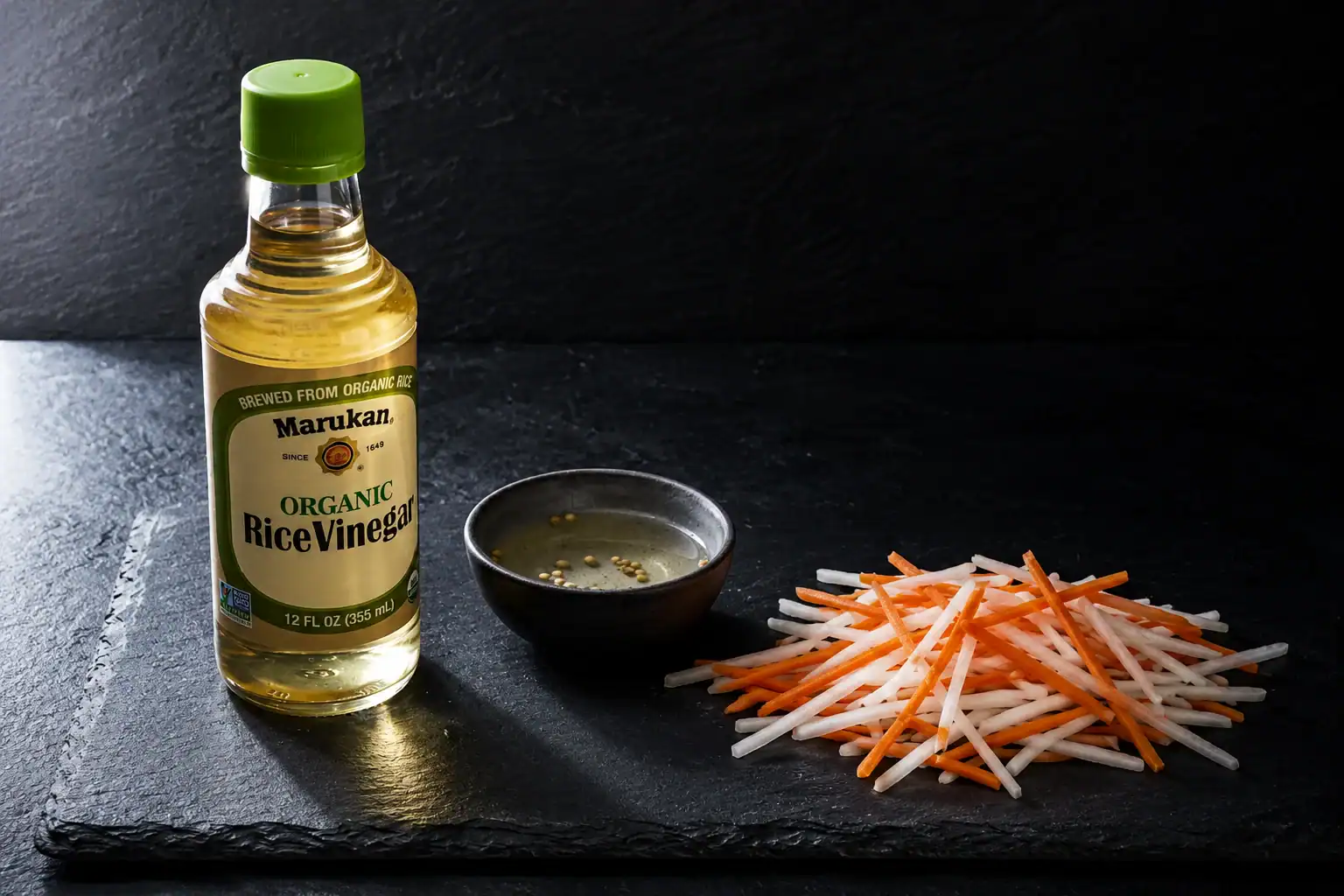
Marukan Organic Unseasoned Rice Vinegar 12oz — around $5 The recommended pick. Certified organic, same 4.1% acidity, same clean flavor profile as the standard version. The correct choice for cooks who prioritise organic ingredients. The price difference from the standard bottle is minimal and the result in the brine is identical. If you are going to use this vinegar every time you make bánh mì, which you should, buy the organic.
[ THE SCIENCE ]
Here is the simplest way to understand what vinegar does to a vegetable. When you drop a piece of daikon into an acid brine, the acid starts breaking down the cell walls near the surface of the vegetable. Think of it like the acid slowly unlocking the doors of each cell. Once enough doors are open the texture softens, the vegetable becomes pliable, and the flavor of the brine moves inside. At 4 to 4.5% acidity that process takes about two hours at room temperature. That is the window the đồ chua recipe is built around.
Higher acidity vinegars unlock those doors faster. A pickle made with 5% or 6% acidity vinegar at the same ratio will be noticeably softer after two hours and may start breaking down the vegetable completely if left overnight. The texture becomes mushy rather than crisp. That fails in the sandwich because đồ chua needs to provide crunch as well as acid. The texture is part of the job.
The sugar in the brine plays a counterbalancing role that most people do not expect. It competes with the acid for the water molecules at the vegetable surface, which slows the penetration slightly. This is why the ratio in the recipe matters. Too much sugar and the pickle is too mild and takes too long to develop. Too little and the acid penetrates too quickly and the texture suffers. The correct ratio at 4 to 4.5% acidity produces a pickle that is ready in two hours and holds its crunch for up to two weeks.
The reason unseasoned rice vinegar produces a cleaner tasting pickle than any substitute comes down to what is not in it. White distilled vinegar is just acetic acid in water. It does the pickling job but adds nothing else of value. Apple cider vinegar contains malic acid and polyphenols from the apples that give it its distinctive flavor. Rice vinegar contains trace amounts of amino acids from the fermented rice that round out its flavor without asserting themselves. Those amino acids are why rice vinegar tastes mild and slightly sweet rather than sharp and one-dimensional.
[ THE FAQ ]
Can I use white distilled vinegar instead of rice vinegar? White distilled vinegar works in an emergency but produces a harsher, more one-dimensional pickle. The acidity is higher at 5% which makes the pickle more aggressive, and the flavor has a sharpness that rice vinegar does not. Use rice vinegar for the correct result.
Can I use apple cider vinegar? Apple cider vinegar adds a fruity note that competes with the other flavors in the sandwich. The acidity is also higher and more variable than rice vinegar. It produces a usable pickle but not the correct one. Unseasoned rice vinegar is the right ingredient for this job.
What is the difference between seasoned and unseasoned rice vinegar for bánh mì? Seasoned rice vinegar has added salt and sugar. Unseasoned has neither. For đồ chua you must use unseasoned. The recipe specifies exact amounts of salt and sugar. Using seasoned vinegar throws off that ratio and produces a brine that is too salty and too sweet before anything else is added.
How long does rice vinegar keep? Unopened, rice vinegar keeps indefinitely. Once opened it keeps for at least two years stored in a cool dark place. There is no need to refrigerate it. The acidity itself prevents spoilage.
Does the brand of rice vinegar matter? Less than most ingredients. Any unseasoned rice vinegar at 4 to 4.5% acidity produces the correct result. Marukan is the recommendation because it is consistent and widely available. If your local Asian grocery store carries a different brand at the correct acidity, that works too.
[ WHAT TO READ NEXT ]
The vinegar builds the brine. The Đồ Chua recipe covers the exact salt and sugar ratios that produce the correct acidity and texture, including the salt pre-treatment step that draws moisture from the vegetables before pickling and produces a crisper result.
The Quick Pickled Cucumber recipe uses the same vinegar and the same brine logic applied to a lighter, faster pickle that works alongside the đồ chua in bánh mì variations that call for fresh cucumber.
The Equipment page covers every tool required to make and serve bánh mì correctly at home, from the mandoline slicer that cuts the daikon and carrot to the bread knife that opens the baguette.