Ingredients
Equipment
Method
Prepare the Cucumber
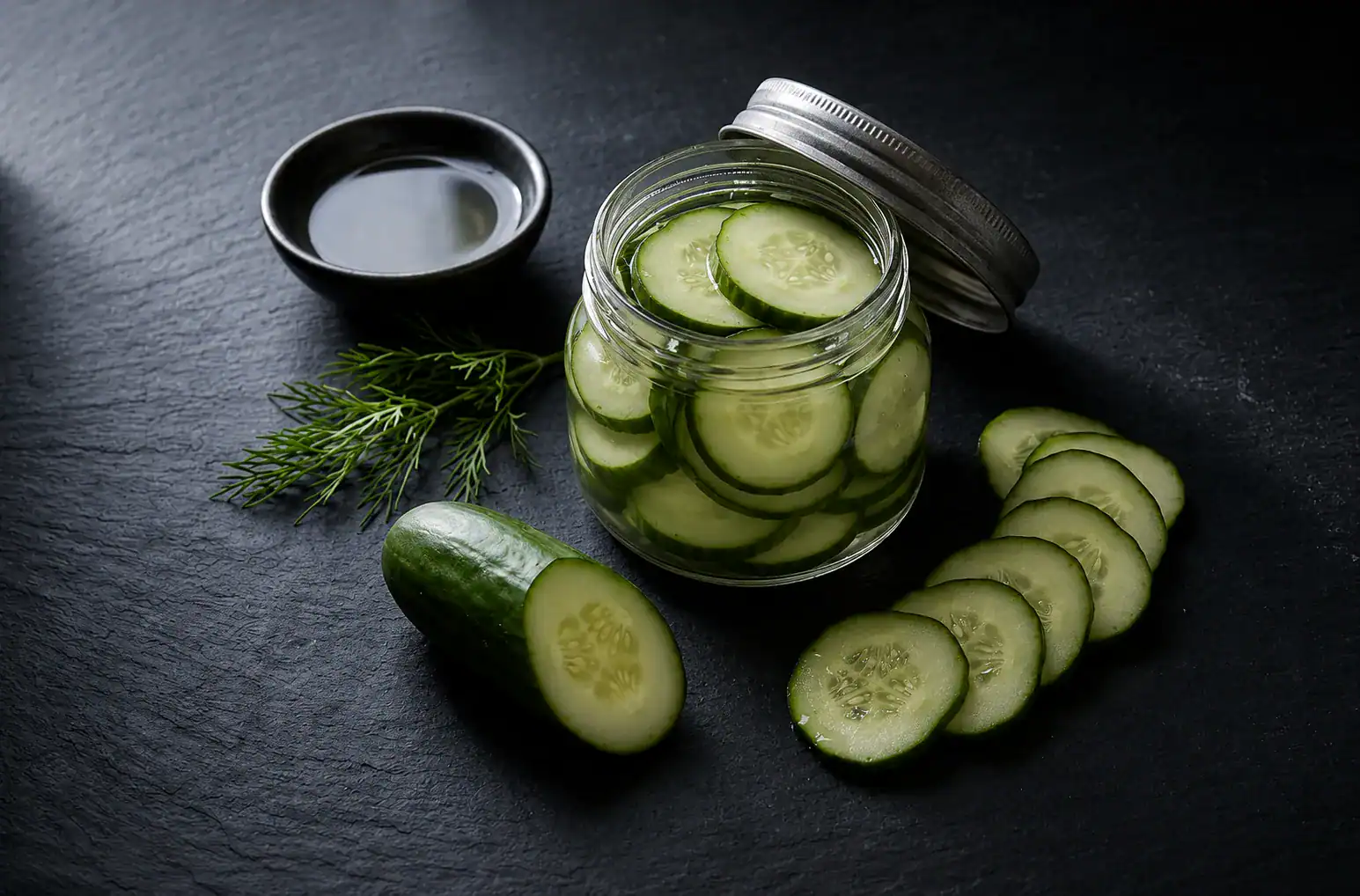
- Wash the cucumber and slice off both ends. Do not peel it. The skin adds colour, holds the slice together in the sandwich, and keeps the crunch. Slice into rounds approximately 3mm thick. If you prefer strips, cut lengthways into thin spears instead. Both work in the sandwich.
- Place the slices in a bowl, add 1 tsp salt, and toss to coat. Let sit for 10 minutes. You will see moisture pooling at the bottom of the bowl. That is exactly what you want. After 10 minutes, rinse thoroughly under cold water and pat dry. This step is what keeps the pickle crisp instead of soggy.
Make the Brine
- Combine rice vinegar, sugar, salt, and cold water in a bowl. Stir until the sugar and salt dissolve completely. Taste it. Sharp, slightly sweet, and clean is what you are going for. Too sharp, add a teaspoon more sugar. Too flat, add a teaspoon more vinegar. Trust your palate here.
Pickle
- Add the cucumber to the brine. Press everything down so every slice is submerged. Leave at room temperature for 30 minutes. The cucumber will soften slightly and take on the brine. It will not be deeply sour at 30 minutes. That is correct. For the bánh mì you want it bright and lightly pickled, not fermented.
- Transfer to a glass jar or airtight container and refrigerate until ready to use. The flavour deepens over the first few hours and the pickle gets better the longer it sits.
Notes
On cucumber variety: English and Japanese cucumbers are the best choice. Thin skin, small seeds, and a clean neutral flavour that takes the brine without turning soft. Avoid standard salad cucumbers. The thick skin and large seeds add excess water and the texture is not as good.
On thickness: 3mm rounds is the standard. Thinner than 2mm and the slices lose structure in the sandwich. Thicker than 5mm and they start to dominate the bite.
On timing: Thirty minutes is the minimum. Two hours is better. Overnight is the best version. All three work. It just depends on how much time you have.
On storage: Keeps in the refrigerator for up to 5 days in the brine. The flavour keeps developing over the first 24 hours and then holds steady.
For the full bánh mì assembly, see the Classic Bánh Mì Thịt Nguội recipe. For the primary pickle layer that goes in every classic bánh mì, see the Đồ Chua recipe.