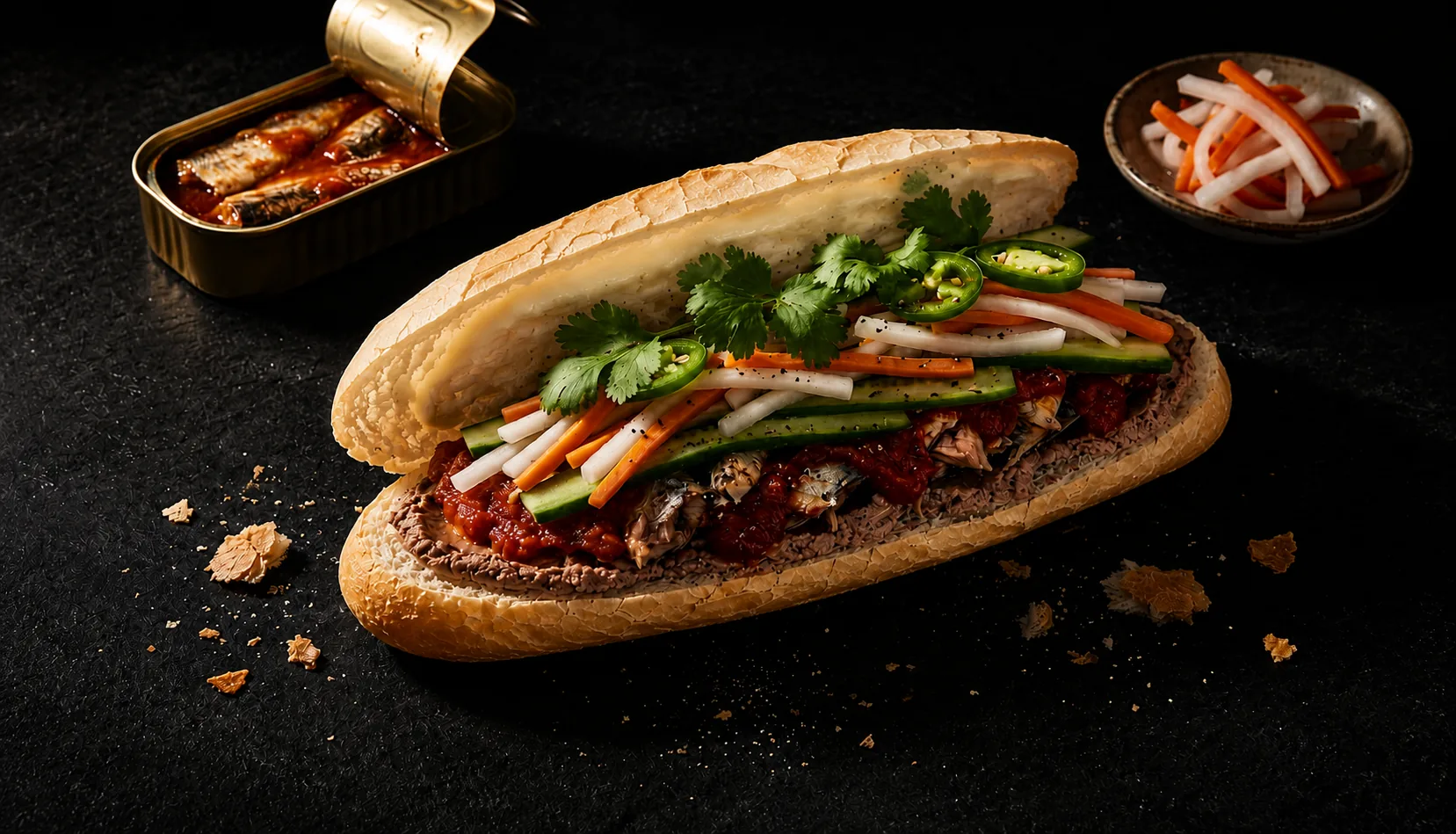
banh mi ca moi (Vietnamese sardine banh mi) with sardines in tomato sauce, pickled daikon and carrot, cilantro on dark slate

BÁNH MÌ CÁ MÒI (VIETNAMESE SARDINE BÁNH MÌ)

Bánh mì cá mòi is the sardine version. The filling is canned sardines packed in tomato sauce, warmed in a pan with sautéed onion, seasoned with fish sauce and black pepper until the sauce reduces and thickens around the fish. The sardines are partially mashed as they cook. Not smooth, not whole. Somewhere between a spread and a filling, with the tomato sauce binding everything together.

This is one of the oldest and most personal bánh mì varieties in the archive. It was working-class street food in Saigon before the war and pantry food for the diaspora after it. The ingredient is a tin of sardines. The flavor it produces inside a Glass Crust baguette with Vietnamese mayonnaise and pâté is completely disproportionate to that simplicity.

banh mi ca moi (Vietnamese sardine banh mi) with sardines in tomato sauce, pickled daikon and carrot, cilantro on dark slate
L. Nguyen

Bánh Mì Cá Mòi (Vietnamese Sardine Bánh Mì)

Canned sardines in tomato sauce warmed with sautéed onion, fish sauce, and black pepper until the sauce thickens, layered with pork liver pâté and Vietnamese mayonnaise on a Glass Crust baguette. The pantry version. [ BEGINNER ]
Prep Time 10 minutes
Cook Time 10 minutes
Total Time 20 minutes
Servings: 4 bánh mì
Course: Sandwich
Cuisine: Vietnamese

Ingredients
  

The Sardine Filling
  • 2 cans sardines in tomato sauce (106g to 125g each), do not drain
  • 1 tbsp neutral oil
  • 1 medium white onion, finely diced
  • 1 tbsp fish sauce
  • 1 tsp sugar
  • 1 tsp freshly ground black pepper, plus more for finishing
  • 2 tbsp water
The Assembly
  • 4 Vietnamese bánh mì baguettes (Glass Crust standard)
  • 60 g Vietnamese mayonnaise
  • 60 g pork liver pâté
  • 240 g đồ chua (pickled daikon and carrot), drained
  • 2 Persian cucumbers, sliced lengthwise into thin strips
  • 1 bunch fresh cilantro, stems trimmed
  • 2 jalapeños, sliced thin on a bias
  • Maggi Seasoning Sauce, for finishing

Equipment

  • Bread knife
  • Pâté Spreader / Offset Spatula

Method
 

Make the Sardine Filling
  1. Heat neutral oil in a small pan over medium heat. Add the diced onion and a pinch of salt. Cook for 4 to 5 minutes, stirring occasionally, until the onion is soft and lightly golden. Do not rush this step. The onion needs to be fully cooked before the sardines go in. Raw onion in the filling produces a sharp bite that overpowers the fish.
  2. Add the sardines and all their tomato sauce to the pan. Add fish sauce, sugar, black pepper, and water. Stir and partially mash the sardines with the back of a spoon. They should break down into large flakes, not a smooth paste. Leave some texture. Simmer for 3 to 4 minutes until the sauce thickens and coats the fish. The filling is ready when it holds its shape on a spoon without running.
  3. Remove from heat. Taste and adjust black pepper. Bánh mì cá mòi is generously seasoned with black pepper. It should be clearly present in every bite.
Assemble
  1. Split each baguette lengthwise, cutting three-quarters through. Do not cut completely. Open the bread. Apply Vietnamese mayonnaise to both cut surfaces. This is the fat barrier. It seals the bread and prevents the warm sardine filling from making the crumb soggy.
  2. Spread pork liver pâté on the bottom half only.
  3. Spoon the warm sardine filling generously along the full length of the bread over the pâté. The filling should be warm when it goes in. A cold sardine filling loses the flavor intensity the black pepper and fish sauce produce when warm.
  4. Add Persian cucumber strips across the sardine filling. Add the drained đồ chua on top of the cucumber. Excess brine will make the sandwich soggy.
  5. Add cilantro in whole sprigs. Do not chop it. Add jalapeño slices. Two to three per sandwich is correct. Add three drops of Maggi Seasoning Sauce across the top. Finish with freshly ground black pepper. Close the sandwich and press down firmly. Serve immediately.

Notes

On the sardines: Canned sardines packed in tomato sauce are correct for this recipe. Not sardines in olive oil, not sardines in water. The tomato sauce is the cooking medium and the source of the flavor that ties the filling together. Any brand works but look for sardines packed tightly in a thick tomato sauce rather than a thin watery one. The thickness of the sauce determines the final texture of the filling.
On the mashing technique: Partially mash the sardines, not completely. The filling should have visible flakes of fish in a thick tomato sauce, not a smooth spread. Complete mashing produces a paste that sits flat in the sandwich. Partial mashing produces a filling with texture that holds its shape when the bread is pressed together.
On black pepper: Black pepper is the defining seasoning of bánh mì cá mòi. Use freshly ground pepper, not pre-ground. The amount in the recipe produces a clearly present but not overwhelming heat. Add more at the end if you prefer a stronger result. This is one sandwich where more pepper is almost always correct.
On Vietnamese mayonnaise: Vietnamese mayonnaise is the correct choice here. The recipe is on this site. If you do not have time to make it from scratch, Kewpie is the correct store-bought substitute. Do not use standard mayonnaise. The flavor profile is different enough to affect the finished sandwich.
On the pickles: The đồ chua recipe on this site produces the correct pickle for this sandwich. Make it at least 1 hour ahead. If you have a jar already made, use it. The pickles keep for 2 weeks refrigerated.
On make-ahead: The sardine filling keeps for 2 days refrigerated. Reheat gently in a small pan before assembling. Do not microwave. The filling dries out and loses its sauce texture when microwaved. Assemble the sandwiches to order.
On sourcing: Canned sardines in tomato sauce are available at every supermarket. Brunswick, King Oscar, and Chicken of the Sea all produce acceptable results. The brand matters less than the tomato sauce being thick and flavorful.

[ THE SCIENCE ]

Canned sardines are one of the most nutritionally concentrated foods available. The canning process does something that fresh cooking cannot. When sardines are sealed in a can with tomato sauce and heat-processed, the proteins in the fish break down slightly and the tomato sauce infuses into every fiber of the fish over months of storage. The result is a flavor intensity that fresh sardines cooked in tomato sauce cannot match regardless of technique. Think of it like the difference between a stock made in 20 minutes and one simmered for 4 hours. The canned sardine has already done the long slow work before you open the tin. This is why the recipe specifies canned sardines specifically. Fresh sardines produce a different dish.

[ THE FAQ ]

Why use canned sardines instead of fresh? The canning process concentrates the flavor of the sardines and infuses the tomato sauce into the fish over time. Fresh sardines cooked in tomato sauce produce a milder, less intense result. Canned sardines are not a shortcut. They are the correct ingredient for this specific dish.

Can I use sardines in olive oil instead of tomato sauce? No. The tomato sauce is not just a packing medium. It is a key flavor component of the filling. Sardines in olive oil produce a completely different flavor profile and require a separate sauce to be made from scratch. Use sardines packed in tomato sauce.

Is this a breakfast sandwich or a lunch sandwich? Both. Bánh mì cá mòi was traditionally a breakfast and Sunday meal in Vietnam, quick to prepare from pantry ingredients. It is eaten at any time of day. The speed of preparation, under 20 minutes from start to finish, makes it practical for any meal.

How do I prevent the bread from going soggy? Two things. First, the Vietnamese mayonnaise on both cut surfaces creates a moisture barrier that prevents the filling from soaking directly into the crumb. Second, drain the đồ chua thoroughly before adding it. Excess brine combined with the tomato sauce in the filling will saturate the bread quickly. Assemble and eat immediately.

Can I use mackerel instead of sardines? Yes. Canned mackerel in tomato sauce is a direct substitute and produces a very similar result. The flavor is slightly stronger and less delicate than sardines. In Vietnam, bánh mì cá nục uses mackerel prepared the same way. Both are correct.

[ THE EQUIPMENT ]

A bread knife splits the Glass Crust baguette cleanly without crushing it. A pâté spreader or offset spatula applies the pork liver pâté and Vietnamese mayonnaise in an even layer across the bread surfaces.

The full equipment list with specific recommendations is on the Equipment page.

[ WHAT TO READ NEXT ]

Bánh Mì Chả Cá is the other seafood sandwich in the archive. Where bánh mì cá mòi uses canned sardines warmed in tomato sauce, bánh mì chả cá uses fresh white fish processed into patties and pan-fried until golden. Both are seafood. The preparation logic and the texture could not be more different.

Pork Liver Pâté is the ingredient that appears on the bottom half of every sandwich in the archive including this one. The full recipe on this site covers the technique that produces the correct spreadable texture. Store-bought pâté works but the homemade version produces a noticeably richer result.

Đồ Chua is the pickle that balances the richness of the sardine filling. The full recipe covers the brine ratio in detail. If you have a jar already made, use it. The pickles in this recipe follow the same formula.