Ingredients
Equipment
Method
Cook the Lạp Xưởng
- Place the lạp xưởng links in a cold dry pan. No oil is needed. The sausage contains enough fat to cook itself. Turn the heat to medium. As the pan heats, the fat begins to render out into the pan. Cook for 3 to 4 minutes per side until the skin is blistered and the cut surfaces are deeply caramelized. Press gently with a spatula if the links curl.
- Remove from heat and leave to rest for 2 minutes. Slice on the bias at 5mm thickness. Slicing on the bias produces larger cut surfaces that show the caramelized exterior and fit the length of the bread more naturally than straight cuts.
Assemble
- Split each baguette lengthwise, cutting three-quarters through. Do not cut completely. Open the bread. Apply Vietnamese mayonnaise to both cut surfaces. This is the fat barrier. It seals the bread and balances the richness of the lạp xưởng.
- Spread pork liver pâté on the bottom half only.
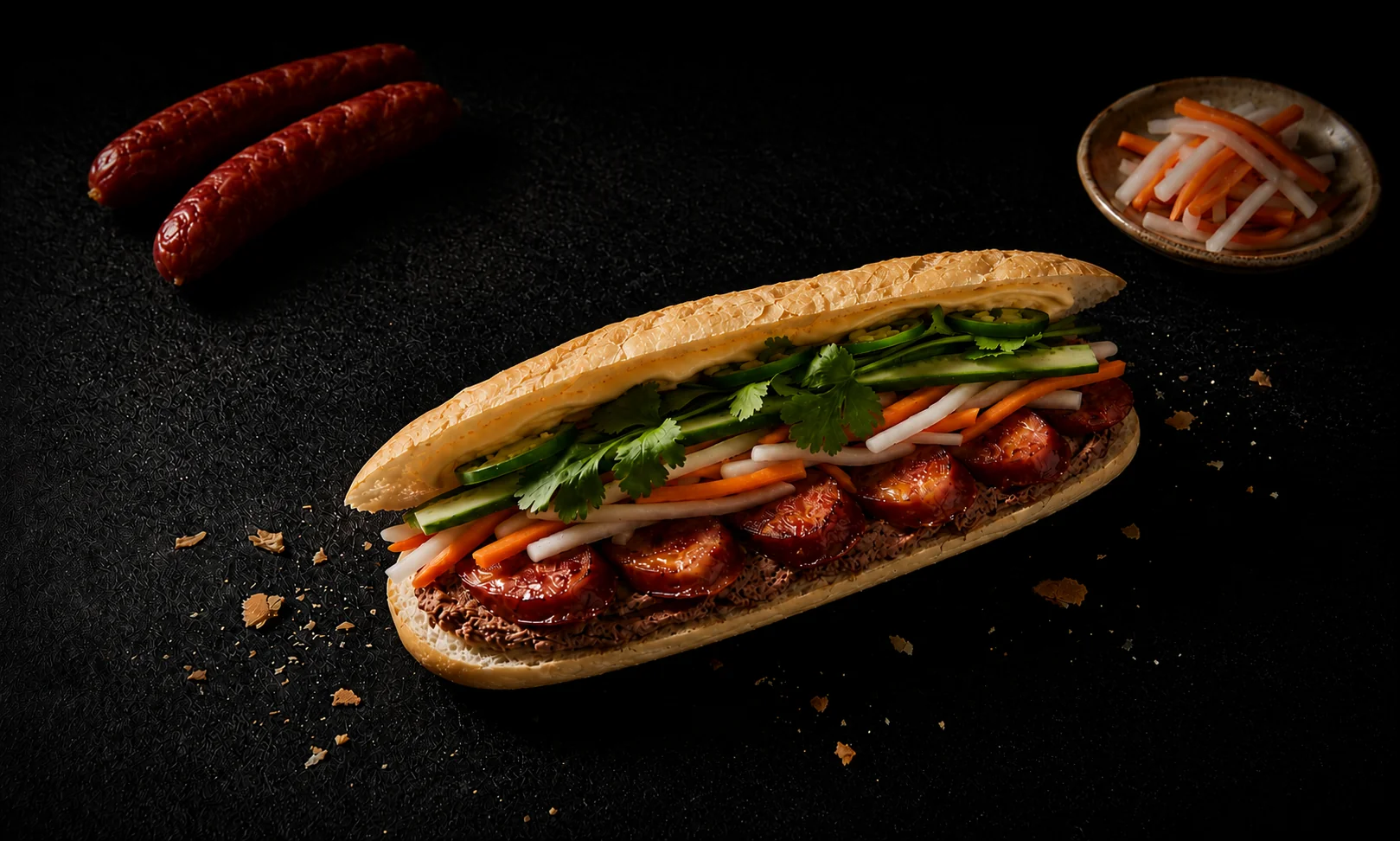
- Lay the sliced lạp xưởng along the full length of the bread over the pâté. Two links per sandwich is the correct amount. The slices should overlap slightly and cover the bread from end to end.
- Add Persian cucumber strips across the sausage. Add the drained đồ chua on top of the cucumber. Excess brine will make the sandwich soggy.
- Add cilantro in whole sprigs. Do not chop it. Add jalapeño slices. Two to three per sandwich is correct. Add three drops of Maggi Seasoning Sauce across the top. Close the sandwich and press down firmly. Serve immediately.
Notes
On the sausage: Vietnamese lạp xưởng is available at most Asian grocery stores in the refrigerated or dried goods section. Look for links that are dark red with visible fat marbling. The Vietnamese version uses fish sauce rather than rice wine, which gives it a savory-sweet flavor different from Chinese lap cheong. Both work in this recipe but the Vietnamese version is correct. Brands including Kam Yen Jan and Sun Fat are widely available.
On cooking without oil: Lạp xưởng contains enough fat to cook itself in a dry pan. Adding oil produces a greasy result. Start in a cold pan and bring the heat up gradually. This gives the fat time to render before the skin begins to caramelize.
On the caramelized surface: The sweet caramelized crust that forms on the cut surfaces of the sausage during pan-frying is the defining texture of bánh mì lạp xưởng. Do not rush it. A pale sausage with no caramelization produces a flat result. The skin should blister and the cut surfaces should be deeply golden before the sausage comes off the heat.
On Vietnamese mayonnaise: Vietnamese mayonnaise is the correct choice here. The recipe is on this site. If you do not have time to make it from scratch, Kewpie is the correct store-bought substitute. Do not use standard mayonnaise. The flavor profile is different enough to affect the finished sandwich.
On the pickles: The đồ chua recipe on this site produces the correct pickle for this sandwich. Make it at least 1 hour ahead. If you have a jar already made, use it. The pickles keep for 2 weeks refrigerated.