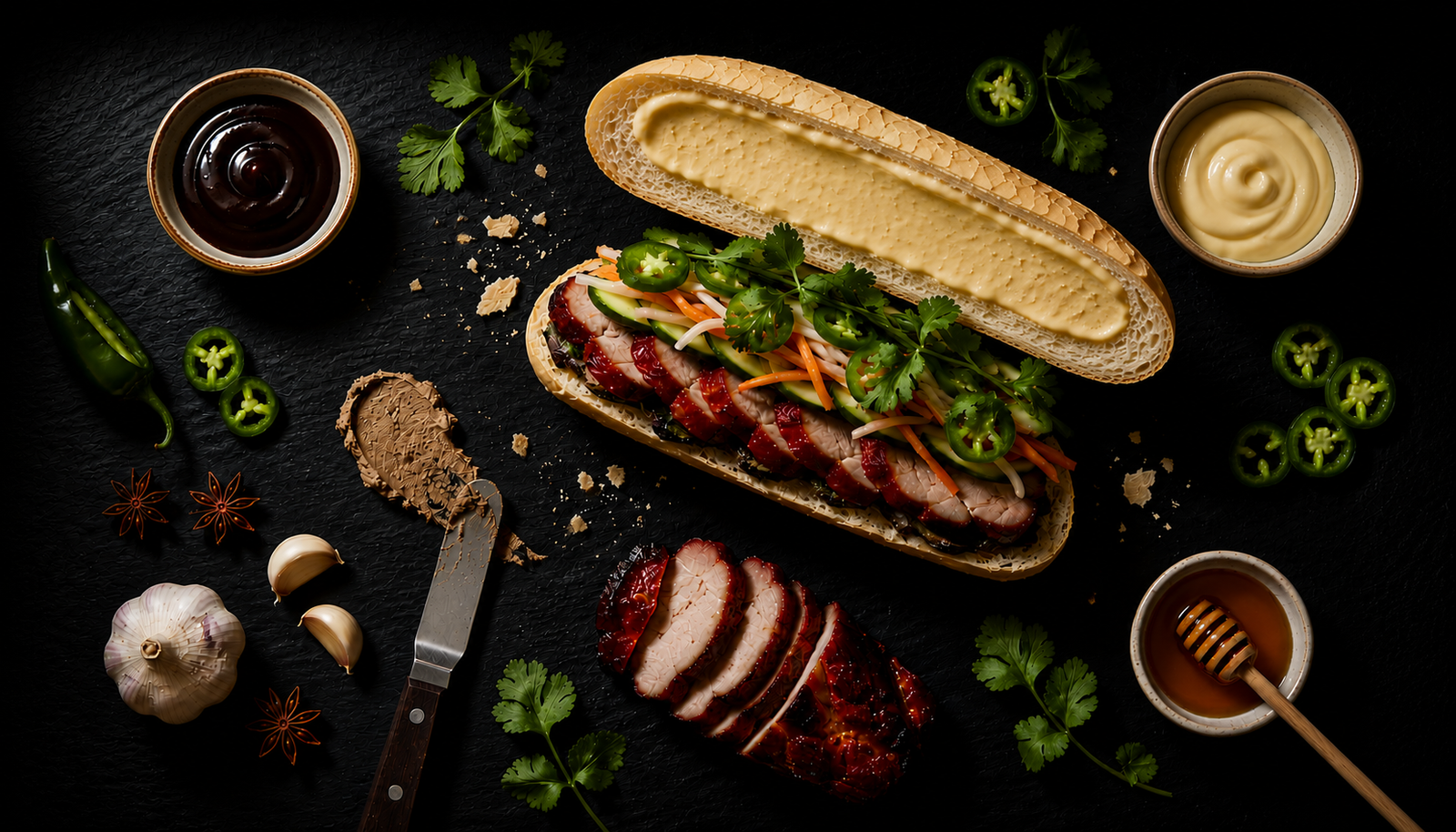
bánh mì xá xíu (Vietnamese BBQ pork bánh mì) with lacquered char siu pork, đồ chua, cucumber, cilantro, and jalapeño on dark slate

Bánh Mì Xá Xíu (Vietnamese BBQ Pork Bánh Mì)

Bánh mì xá xíu is the Vietnamese BBQ pork version. Pork shoulder is marinated in a combination of hoisin sauce, five spice, garlic, soy sauce, and honey, then roasted at high heat until the exterior caramelizes into a dark, lacquered crust. The interior stays moist. The contrast between the sticky, sweet outer layer and the tender meat inside is what defines xá xíu.

The build follows the same five-element structure. Pork liver pâté on the bottom half, Vietnamese mayonnaise on the top, the sliced xá xíu layered across, then đồ chua, cucumber, cilantro, and jalapeño. The sweetness of the BBQ pork is the dominant flavor note. The đồ chua cuts through it and resets the palate between bites.

bánh mì xá xíu (Vietnamese BBQ pork bánh mì) with lacquered char siu pork, đồ chua, cucumber, cilantro, and jalapeño on dark slate
L. Nguyen

Bánh Mì Xá Xíu (Vietnamese BBQ Pork Bánh Mì)

Pork shoulder marinated in hoisin sauce, five spice, garlic, soy sauce, and honey, roasted until the exterior caramelizes into a dark lacquered crust, then sliced and layered on a Glass Crust baguette with pâté, Vietnamese mayonnaise, đồ chua, cucumber, cilantro, and jalapeño. [ INTERMEDIATE ]
Prep Time 20 minutes
Cook Time 35 minutes
Marinating Time 4 hours
Total Time 4 hours 55 minutes
Servings: 4 bánh mì
Course: Sandwich
Cuisine: Vietnamese

Ingredients
  

The Xá Xíu Marinade
  • 600 g pork shoulder, cut into 3cm thick slabs
  • 3 tbsp hoisin sauce
  • 2 tbsp soy sauce
  • 1 tbsp honey
  • 1 tbsp Shaoxing wine or dry sherry
  • 3 cloves garlic, finely minced
  • 1 tsp five spice powder
  • 1 tsp white pepper
  • ½ tsp red food coloring, optional
The Assembly
  • 4 Vietnamese bánh mì baguettes (Glass Crust standard)
  • 60 g pork liver pâté
  • 60 g Vietnamese mayonnaise
  • 240 g đồ chua (pickled daikon and carrot), drained
  • 1 Persian cucumber, thinly sliced lengthwise
  • 1 bunch fresh cilantro, stems trimmed
  • 2 jalapeños, thinly sliced
  • Maggi Seasoning Sauce, for finishing

Equipment

  • Roasting pan with rack
  • Bread knife
  • Pâté Spreader / Offset Spatula
  • Kitchen scale
  • Instant-read thermometer

Method
 

Marinate the Pork
  1. Cut the pork shoulder into slabs approximately 3cm thick. Slabs rather than a whole piece expose more surface area to the marinade and produce more of the caramelized crust that defines xá xíu.
  2. Combine hoisin sauce, soy sauce, honey, Shaoxing wine, garlic, five spice powder, and white pepper in a bowl. Add the pork and turn to coat completely. Cover and refrigerate for a minimum of 4 hours. Overnight produces a better result. The longer the pork marinates the deeper the flavor penetrates.
Roast the Pork
  1. Remove the pork from the refrigerator 30 minutes before roasting. Cold pork straight from the refrigerator extends cooking time and produces uneven results.
  2. Preheat oven to 220°C (425°F). Line a roasting pan with foil and place a rack inside. Place the pork slabs on the rack. Reserve the marinade for glazing. It will be applied during roasting and cooked to a safe temperature.
  3. Roast for 20 minutes. The exterior should begin to color and caramelize.
  4. Brush the pork generously with the reserved marinade. Return to the oven and roast for a further 10 to 15 minutes until the exterior is deeply caramelized and lacquered. Watch it closely in the final minutes. The honey in the marinade burns fast.
  5. Remove from the oven. Rest for 10 minutes before slicing. Resting allows the juices to redistribute. Pork sliced immediately loses moisture on the cutting board.
  6. Slice the pork thinly against the grain, approximately 3mm thick. Each slice should show a visible dark caramelized exterior and a moist, pale interior.
Assemble
  1. Split each baguette lengthwise, cutting three-quarters of the way through. Do not cut completely. The hinge holds the sandwich together.
  2. Spread the pâté across the bottom half of each baguette. Cover the full surface. The pâté provides the savory, fatty base that balances the sweetness of the xá xíu above it.
  3. Spread the Vietnamese mayonnaise across the top half of each baguette.
  4. Layer the xá xíu slices across the pâté. They should cover the full length of the bread without stacking too thick.
  5. Add the đồ chua directly on top of the pork. Drain it thoroughly. The xá xíu is sweet and rich. The acidity of the pickles is essential to balance it.
  6. Add cucumber strips along the length of the sandwich.
  7. Add a small bundle of cilantro. Do not chop it. Whole sprigs only.
  8. Lay jalapeño slices across the top. Three drops of Maggi Seasoning Sauce along the length. No more. Close the sandwich, press down firmly with your palm, and serve immediately.

Notes

On the pork cut: Pork shoulder is the correct cut for xá xíu. The fat content keeps the meat moist during the high heat roasting and produces a better result than leaner cuts. Pork loin can be used but requires careful monitoring to prevent drying out. Pork belly is a richer alternative that works well.
On the marinade: Hoisin sauce is the flavor anchor of xá xíu. Do not substitute it. Oyster sauce or plum sauce produce a different flavor profile that loses the defining character of xá xíu. The combination of hoisin, five spice, and honey produces the characteristic sweet, aromatic profile that distinguishes xá xíu from every other pork preparation on this site.
On the food coloring: Traditional xá xíu uses red food coloring to produce the characteristic deep red exterior. It is purely cosmetic and has no effect on flavor. Leave it out if preferred. The pork will taste identical.
On Shaoxing wine: Shaoxing wine is available at most Asian grocery stores. Dry sherry is the correct substitute. Cooking wine contains added salt which affects the seasoning balance. If using it, reduce the soy sauce by half.
On the glaze: Brush the pork with reserved marinade only once, in the final stage of roasting. Brushing too early burns the sugar in the marinade before the pork is cooked through.
On make-ahead: Xá xíu keeps refrigerated for up to 3 days. Slice cold for the cleanest cuts, then bring to room temperature before assembling. The pork can also be served warm straight from the oven.

[ THE SCIENCE ]

The lacquered crust on xá xíu comes from the sugars in the honey and hoisin sauce caramelizing at the surface. When sugar is exposed to high heat it breaks down and reforms into hundreds of new compounds. That is what produces the dark color, the slightly bitter edge, and the complex sweetness that raw honey or hoisin alone cannot replicate. Think of it like this: the marinade is loading the surface of the pork with fuel. The high heat oven ignites it. Brush the glaze on too early and the sugar burns before the pork is cooked through. Brush it in the final stage and the heat is just enough to caramelize without burning. The timing of the glaze is not optional. It is the difference between lacquered and burnt.

[ THE FAQ ]

What is the difference between xá xíu and char siu? They are the same dish. Xá xíu is the Vietnamese transliteration of the Cantonese char siu. Vietnamese xá xíu uses hoisin sauce as the marinade base and tends toward a sweeter profile. Cantonese char siu traditionally uses maltose and sometimes red fermented tofu, which produces a different color and a more complex savory note. The core technique is identical.

Can I use pork belly instead of pork shoulder? Yes. Pork belly produces a richer, fattier result with more rendered fat in the finished sandwich. The roasting time is the same. The slices will show a visible fat layer which changes the texture inside the sandwich. Both are correct. Shoulder is the more common choice at Vietnamese bánh mì shops.

Do I need a rack for roasting? Yes. The rack keeps the pork elevated above the rendered fat and drippings. Pork sitting in its own fat during roasting steams rather than roasts and the exterior never develops the lacquered crust. A roasting pan with a rack produces the correct result.

How do I know when the pork is done? The exterior should be deeply caramelized and slightly sticky when touched. The internal temperature should reach 68°C (155°F). Use an instant-read thermometer for accuracy. Do not rely on color alone. The marinade darkens faster than the pork cooks through.

Can I make xá xíu on a grill? Yes. A charcoal grill produces an excellent result with additional smokiness. Cook over medium indirect heat for 20 minutes, then move to direct heat for the final 5 minutes to develop the caramelized crust. The same glaze timing applies. Brush with reserved marinade in the final stage only.

[ THE EQUIPMENT ]

A roasting pan with a rack is essential for xá xíu. The rack keeps the pork elevated and allows the heat to circulate evenly around each slab. A bread knife splits the baguette without crushing the Glass Crust. An offset spatula spreads the pâté and mayonnaise in a controlled, even layer. An instant-read thermometer confirms the internal temperature without cutting into the pork.

The full equipment list with specific recommendations is on the Equipment page.

[ WHAT TO READ NEXT ]

Bánh Mì Thịt Nướng is the grilled pork version, marinated in lemongrass and fish sauce rather than hoisin and five spice. Both are high heat pork sandwiches. The flavor profiles are completely different. Worth making both to understand the range of what marinated pork can do in a bánh mì.

Bánh Mì Heo Quay is the other high heat pork roasting sandwich in the archive. Where xá xíu builds a sweet lacquered crust through the marinade, heo quay builds a shattering crackling through the skin. Both use high heat. Both depend on surface preparation before the pork goes into the oven. The techniques are worth comparing.

Bánh Mì Vịt Quay uses the same lacquered roasting logic as xá xíu. Five spice, hoisin, and a maltose glaze applied before roasting. Where xá xíu is pork shoulder with a sweet marinade, vịt quay is whole duck with an interior cavity marinade and a separate glaze on the skin. The spice profile overlaps directly. The technique is the same family.

Bánh Mì Lạp Xưởng is the other sweet pork sandwich in the archive. Where xá xíu roasts a fresh pork shoulder until the marinade lacquers into a dark crust, lạp xưởng pan-fries a dried cured sausage until the fat renders and the cut surfaces caramelize. Both are sweet. The preparation logic is completely different.