Ingredients
Equipment
Method
Make the Pickles
- Combine rice vinegar, water, sugar, and salt in a small saucepan over medium heat. Stir until sugar and salt dissolve completely, 2 to 3 minutes. Do not boil. Remove from heat and let cool to room temperature, 15 minutes.
- Pack daikon and carrot into a clean jar. Pour brine over vegetables. The brine should cover the vegetables completely. Seal and refrigerate for a minimum of 1 hour. Two hours produces a better result. The pickles will keep for 2 weeks refrigerated.
Marinate the Pork
- Combine lemongrass, garlic, shallots, fish sauce, sugar, oil, and black pepper in a bowl. Mix until the sugar dissolves.
- Add the pork and work the marinade into the meat with your hands. Cover and refrigerate for 2 hours minimum. Overnight is the correct choice.
Grill the Pork
- Remove pork from the refrigerator 20 minutes before cooking. Cold protein in a hot pan drops the surface temperature and steams rather than chars.
- Heat a cast iron skillet or grill over high heat until smoking. No additional oil needed. The oil in the marinade is sufficient.
- Grill pork slices in a single layer for 2 to 3 minutes per side. Do not move them during cooking. Let the char develop.
- The edges should be dark and caramelized. The center should remain tender. Remove from heat and rest for 3 minutes.
Assemble
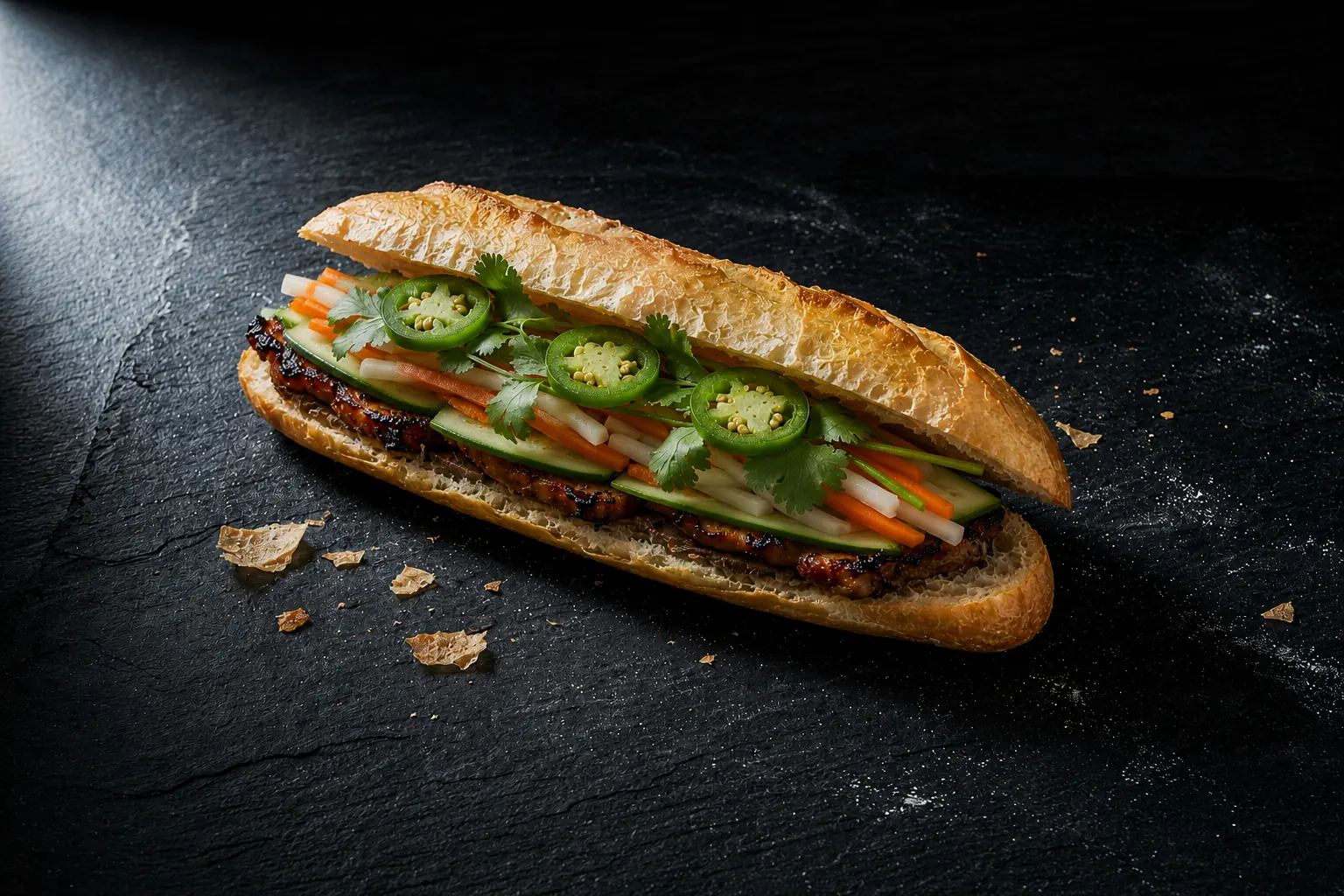
- Split each baguette lengthwise, cutting three-quarters through. Do not cut completely. The hinge holds the sandwich together.
- Open the bread. Apply Vietnamese mayonnaise to both cut surfaces. This is the fat barrier. It seals the bread against moisture from the vegetables and the pork.
- Spread pâté on the bottom half only.
- Layer grilled pork slices on the pâté. Overlap them slightly. Do not pile them. The bread cannot handle height.
- Add cucumber strips across the pork.
- Add pickled daikon and carrot. Drain them first. Excess brine soaks the bread.
- Add cilantro in whole sprigs. Do not chop it.
- Finish with jalapeño slices. Two to three per sandwich is the correct amount.
- Three drops of Maggi Seasoning Sauce across the top. No more. Close the sandwich. Press down firmly with your palm. Serve immediately.
Notes
On Vietnamese mayonnaise: Vietnamese mayonnaise is the correct choice here. The recipe is on this site. If you do not have time to make it from scratch, Kewpie is the correct store-bought substitute. Do not use standard mayonnaise. The flavor profile is different enough to affect the finished sandwich.
On the pickles: The pickles in this recipe follow the same formula as the Đồ Chua recipe on this site. If you have a jar already made, use those. If not, the brine in the ingredients list produces the correct result.
On pork cut: Pork belly can be substituted for shoulder. It produces a richer, fattier result. Slice it the same thickness and follow the same method. Cook time may increase by 1 minute per side due to the higher fat content.
On marinating time: The marinade can sit for up to 24 hours refrigerated. Beyond that, the fish sauce begins to break down the protein structure, producing a slightly soft texture on the surface.
On heat source: A charcoal grill produces a result that is better than cast iron. Cook over direct high heat, 2 to 3 minutes per side. The smoke adds a layer of flavor the pan cannot replicate.
For the bread this sandwich depends on, see the Glass Crust Bánh Mì Baguette recipe. For the fat barrier that keeps the sandwich intact, see the Vietnamese Mayonnaise recipe. For the pickles, see the Đồ Chua recipe.