WHY IS MY BÁNH MÌ BREAD TOO DENSE?
Dense bánh mì bread is caused by one of five things: the proofing was rushed, the baking stone was not hot enough, the steam phase was cut short, the flour had too little protein, or the dough was measured by volume instead of weight. Every one of these has a specific fix. The Glass Crust and the cloud-light crumb are not accidents. They are the result of a precise sequence executed correctly.
If your bread came out dense, something in that sequence broke down. This guide covers exactly where and exactly how to fix it.
[ THE FIVE CAUSES ]
1. The proofing was rushed.
This is the most common cause. The Glass Crust baguette recipe requires a 90-minute first proof and a 45 to 60-minute second proof. During the first proof the yeast consumes the sugars in the flour and releases carbon dioxide bubbles that create the air pockets in the crumb. During the second proof the shaped dough builds the structure that holds those air pockets in place when it hits the oven.
Rush either proof and the dough goes into the oven without enough bubbles or enough structure. The result is a dense, tight crumb with very little rise. The dough is ready for the second proof when a light poke with your finger leaves a dent that fills back in slowly. If it springs back immediately, it needs more time. If the dent stays, it has gone too far.
2. The baking stone was not hot enough.
The recipe requires a baking stone or steel preheated at 475°F for a full 45 minutes before the bread goes in. Most home bakers skip this or cut it short. The stone needs that full time to absorb and hold enough heat to deliver a rapid burst of bottom heat the moment the bread makes contact.
That initial burst of bottom heat drives oven spring. Oven spring is the rapid final rise that happens in the first few minutes of baking before the crust sets. Without it, the bread rises slowly and unevenly. The crumb is dense because the structure never got the heat it needed to expand quickly.
3. The steam phase was cut short.
The recipe uses 8 minutes of steam at the start of the bake. Steam keeps the surface of the dough moist so it can expand freely before the crust sets. Pull the steam pan too early and the crust sets before the bread has fully expanded. The loaf is locked into a smaller size than it should be and the crumb is compressed and dense.
Eight minutes is not approximate. It is the exact window the recipe was built around. A minute too short produces a noticeably denser result.
4. The flour had too little protein.
The recipe calls for high-protein bread flour, 12.5% protein or higher. All-purpose flour typically contains 10 to 11% protein. That difference matters more than it sounds. Protein forms gluten when mixed with water. Gluten is the network that traps the carbon dioxide bubbles released by the yeast. More gluten means more trapped bubbles, which means a lighter, more open crumb.
Using all-purpose flour instead of bread flour produces a dough that cannot hold enough bubbles. The crumb is dense because the structure collapsed before the bread could fully rise. King Arthur bread flour is the recommended choice in the recipe. Look for 12.5% protein or higher on the bag.
5. The dough was measured by volume instead of weight.
A cup of flour measured by scooping can contain anywhere from 120 to 160 grams depending on how packed it is. That 40-gram variation is enough to throw off the entire recipe. Too much flour produces a tight, stiff dough that cannot expand properly. Too little produces a slack dough that spreads rather than rises.
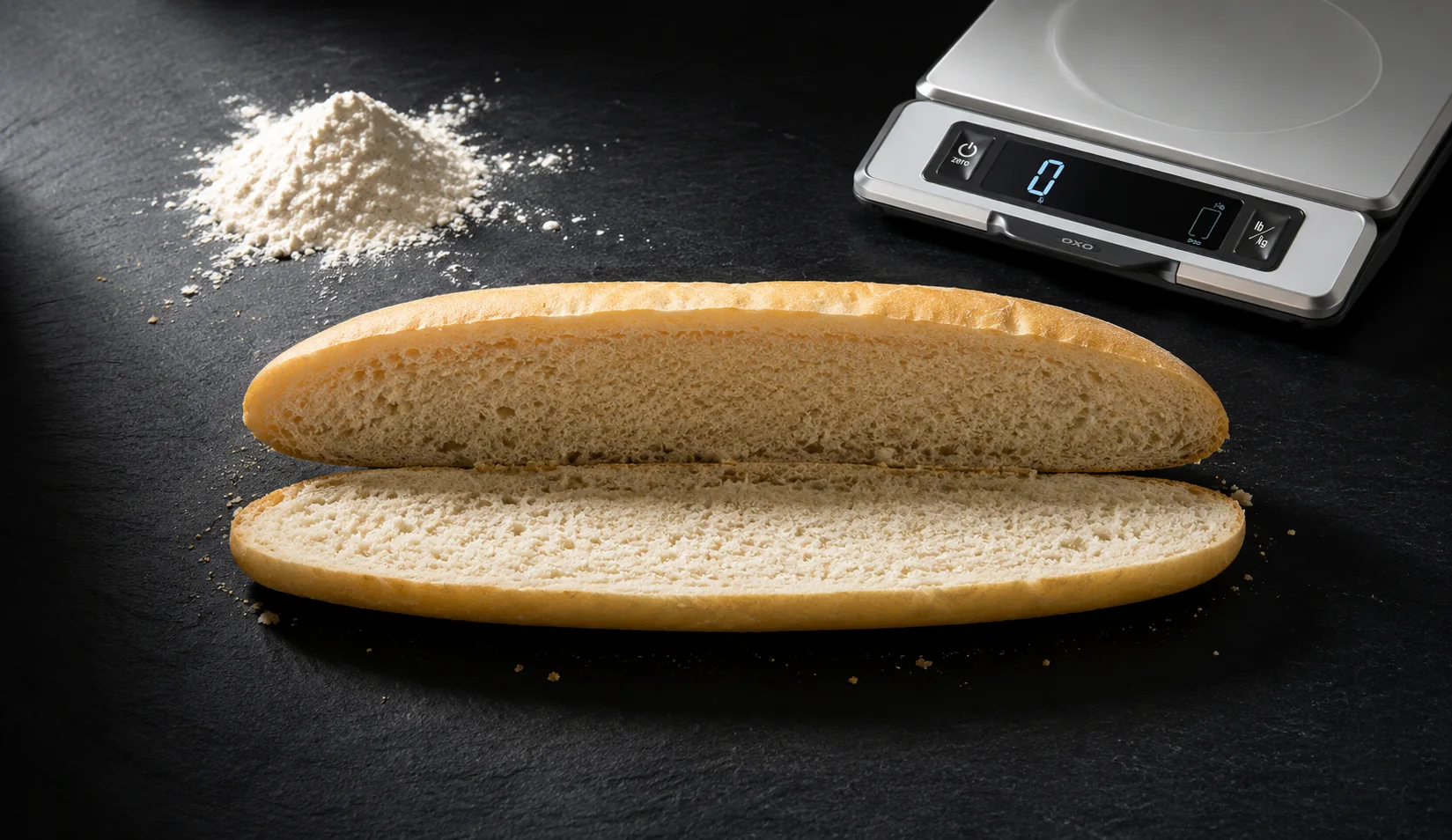
The recipe specifies all ingredients by weight in grams. A kitchen scale is not optional for this recipe. It is the only way to get consistent results.
[ THE PROOFING EXPLAINED ]
The two-proof system in the recipe is doing two different jobs and neither can be skipped.
The first proof is about flavor and the rise. The yeast consumes the sugars in the flour and releases carbon dioxide bubbles. Those bubbles get trapped in the gluten network and create the air pockets that will become the crumb. The 90-minute window at room temperature gives the yeast enough time to fill the dough with the right amount of bubbles. Rush it and the dough goes into shaping already behind.
The second proof is about structure. After shaping, the dough needs time to relax and rebuild the gluten network around its new form. The 45 to 60-minute second proof lets the shaped baguette develop the tension it needs to hold its structure in the oven. Without it, the shaped dough goes limp in the heat before the crust can set.
Think of it like inflating a balloon before putting it in a box. The balloon needs to be fully inflated first. Putting a half-inflated balloon in the box and hoping it expands inside does not work.
[ THE SCIENCE ]
The cloud-light crumb in an authentic bánh mì baguette comes from gluten and bubbles working together. Gluten is the protein network that forms when bread flour is mixed with water. It is stretchy and strong enough to trap the carbon dioxide bubbles released by the yeast. The more bubbles trapped, the more the dough expands. The more it expands, the lighter and more open the crumb.
The rice flour in this recipe interrupts the gluten network in the outer layer of the dough. This produces the thin, brittle Glass Crust rather than the thick chewy crust of a French baguette. But it also slightly reduces the overall gluten strength of the dough, which is why high-protein bread flour is non-negotiable. The bread flour provides the extra gluten strength needed to compensate for the rice flour.
Steam in the first 8 minutes of baking keeps the crust flexible so the dough can expand fully before it sets. Think of the crust like a skin. Steam keeps it soft and stretchy during the critical expansion phase. Without steam, the skin sets too early and the loaf is locked into whatever size it reached before oven spring finished.
[ THE FAQ ]
My bread rose well but is still dense. What happened? Good rise during proofing but a dense crumb after baking usually means the steam phase was cut short or the baking stone was not hot enough. Both cause the crust to set before the bread has fully expanded in the oven. Check that the stone preheated for the full 45 minutes and that the steam pan was in the oven for exactly 8 minutes.
Can I use all-purpose flour instead of bread flour? The recipe calls for high-protein bread flour specifically. All-purpose flour has less protein and produces a denser crumb. If bread flour is unavailable, all-purpose will produce a result but the crumb will not be as light or open. King Arthur bread flour is the recommended choice. Look for 12.5% protein or higher on the bag.
How do I know when the first proof is done? The dough should roughly double in size. At room temperature this takes about 90 minutes. Do not go by time alone. Check the size. A dough that has not doubled needs more time regardless of what the clock says.
How do I know when the second proof is done? Poke the shaped dough gently with one finger. If the dent fills back in slowly, it is ready. If it springs back immediately, give it more time. If the dent stays without filling back in, it has gone too far and will produce a flat, dense loaf.
Does the type of yeast matter? The recipe uses instant yeast. Active dry yeast works but needs to be dissolved in warm water first and takes longer to activate. Using active dry yeast without adjusting the proofing time can result in underproofed dough. Stick with instant yeast for the most consistent results.
[ WHAT TO READ NEXT ]
The Glass Crust Bánh Mì Baguette recipe is the starting point. Every cause and fix in this guide refers back to the specific steps in that recipe. If the bread came out dense, read through the full recipe notes before the next attempt. The notes cover the flour ratio, the steam phase, and the proofing sequence in detail.
The Best Baking Steel for Bánh Mì page covers the equipment that makes the difference between adequate and correct bottom heat. A baking steel delivers more heat faster than a baking stone, which is why the recipe recommends it.
The Best Bread Flour for Bánh Mì page covers the protein content question in full. Not all bread flour is equal. This page identifies the specific brands that consistently deliver the 12.5% protein the recipe requires.