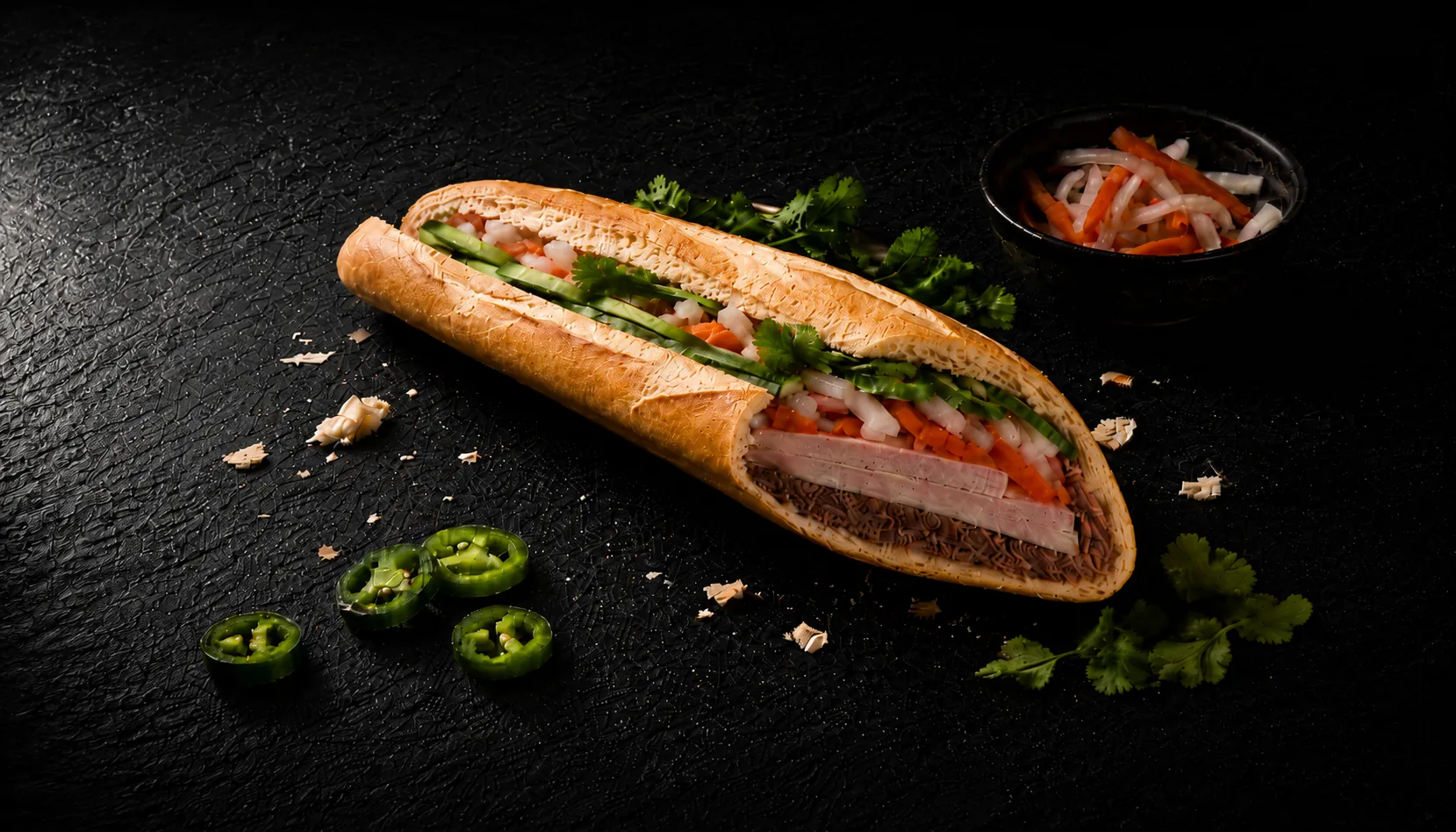
WHAT DOES BÁNH MÌ MEAN?
Bánh mì means wheat bread. Bánh is a Vietnamese word for any food made from flour or grain, including bread, cakes, dumplings, and noodles. Mì means wheat. Put them together and you get wheat bread, which is exactly what Vietnamese bakers called the French baguette when it arrived during the colonial period. The name described the ingredient that made this bread different from every other bánh: wheat flour instead of rice flour.
Outside Vietnam, bánh mì almost always means the sandwich. Inside Vietnam, it can mean either the bread or the sandwich depending on context. A vendor selling the filled version might have a sign reading bánh mì thịt, meaning wheat bread with meat, to make clear they are selling the sandwich and not just the loaf. The word grew from a simple ingredient description into the name of one of the most recognizable sandwiches in the world.
[ WHAT THE WORDS MEAN ]
Vietnamese is a tonal language where meaning is carried as much by pitch as by the letters themselves. Bánh mì is two syllables, two words, and two distinct meanings that combine into one precise description.
Bánh is a broad category word. It covers almost any food made from flour or grain that has been processed into a specific shape: bread, rice cakes, dumplings, steamed buns, crepes, noodles. The Vietnamese language uses bánh the way English uses the word cake or pastry, as a category rather than a single thing. Bánh cuốn is a rice paper roll. Bánh xèo is a sizzling crepe. Bánh bao is a steamed bun. Each one is a different food but all of them are bánh.
Mì means wheat. In Vietnamese it refers to wheat as an ingredient and the foods made from it, including noodles and bread. The French baguette was called bánh mì because it was the wheat flour bánh in a culinary tradition built almost entirely on rice.
When Vietnamese bakers encountered the French baguette in the late 19th century, they named it bánh mì to distinguish it from the rice flour-based foods that made up most of the existing bánh category. The name was a precise technical description before it became a cultural icon.
There is a folk etymology that claims bánh mì is a corruption of the French term pain de mie, a type of soft white sandwich bread. This is false. The etymology is clearly traced to bánh plus mì, two Vietnamese words with established independent meanings. The Oxford English Dictionary, Wiktionary, and Vietnamese linguistic sources all confirm this.
The correct spelling is bánh mì with diacritical marks. The spelling banh mi without diacriticals is an accepted English approximation but strips the tonal information from both words. The spelling bahn mi with the h before the n is incorrect in both Vietnamese and English. The h belongs after the n, not before it.
[ HOW TO PRONOUNCE IT ]
The closest English approximation is bahn mee. That is how most English speakers say it and Vietnamese speakers will understand it. The full tonal pronunciation requires two specific pitches that English does not use.
Bánh carries a rising tone. Start at a mid pitch and let the voice rise slightly, like the end of a question in English. The nh at the end is a palatal nasal, produced by pressing the tongue to the roof of the mouth. The closest English sound is the ng in singing but softer and more nasal. The full sound lands somewhere between bahn and bang, with a slight nasal quality at the end.
Mì carries a falling tone. Start at a mid pitch and let the voice drop. It sounds like mee with a slight downward fall at the end. This is the easier of the two syllables for English speakers.
Together: bahn mee, with the first syllable rising slightly and the second falling slightly. The tones are not essential for being understood but they are what makes the word sound correct to a Vietnamese speaker rather than accented.
[ COMMON MISTAKES ]
Bahn mi. H before the n. This is the most common misspelling in English. The correct order is nh not hn. Bánh mì. Not bahn mi.
Ban mee. Dropping the h entirely. This removes the nasal quality from the first syllable and changes the sound significantly.
Bay-n mee. Pronouncing the á as a long English a sound. The vowel in bánh is shorter and more central, closer to the a in father than the a in bay.
Saying it as one compressed sound. Some English speakers say ban-ee or bam-ee. The word has two distinct syllables. Bahn. Mee. Each one complete.
None of these mistakes will prevent a Vietnamese speaker from understanding you. Bánh mì is encountered often enough internationally that most vendors in Vietnam recognize every version. But saying it correctly shows respect for the language behind the food.
[ THE FAQ ]
Is it spelled banh mi or bánh mì? Both spellings are used. Bánh mì with diacritical marks is the correct Vietnamese spelling and preserves the tonal information. Banh mi without marks is the accepted English approximation used in most menus, articles, and food writing outside Vietnam. Both refer to the same word. The spelling bahn mi with h before n is incorrect in either language.
Does bánh mì mean sandwich or bread? Both, depending on context. In Vietnamese, bánh mì literally means wheat bread and can refer to the baguette itself or the filled sandwich. Outside Vietnam it almost always means the sandwich. Inside Vietnam a vendor might specify bánh mì thịt to make clear they are selling the filled version rather than just the loaf.
What language is bánh mì? Vietnamese. The word uses the Vietnamese alphabet which is based on the Roman alphabet but includes diacritical marks to represent tones and specific vowel sounds. The diacriticals in bánh mì are not decorative. They carry meaning. Remove them and you lose the tonal information that tells a Vietnamese speaker exactly how to say the word.
Is bánh mì related to the French word pain? Indirectly. The bánh mì baguette was introduced to Vietnam during French colonial rule and Vietnamese bakers adopted and transformed the French bread-making technique. But the word bánh mì is not derived from French. It comes from two Vietnamese words, bánh and mì, with established independent meanings. The folk etymology claiming it derives from the French pain de mie is false.
How do Vietnamese people actually say it? With two distinct tones. Bánh carries a rising tone and mì carries a falling tone. A Vietnamese speaker from the north says it with sharper tonal distinction than a speaker from the south, where the tones are flatter. The English approximation bahn mee captures the basic sound without the tonal precision.
[ WHAT TO READ NEXT ]
The history of how bánh mì became the sandwich it is today starts with the French colonial introduction of the baguette and ends with Vietnamese street vendors rebuilding it from the inside out. The full story is on The Evolution page.
What Goes in a Bánh Mì covers every ingredient in the sandwich, why each one is there, and what to use when you cannot find the original. It is the sourcing guide that turns the name into the actual food.
The Glass Crust Bánh Mì Baguette recipe covers the bread that gave the sandwich its name. The wheat flour and rice flour ratio that produces the thin shattering crust is what separates an authentic bánh mì baguette from every Western substitute.