IS BÁNH MÌ GLUTEN FREE?
Traditional bánh mì is not gluten free. The baguette is made from a blend of wheat flour and rice flour. The wheat flour contains gluten. That is the primary source and there is no way around it. A bánh mì without the baguette is a bowl, not a sandwich.
Beyond the bread, gluten appears in several other places in the sandwich that most people do not think about. Maggi Seasoning Sauce contains wheat. Standard soy sauce contains wheat. Hoisin sauce contains wheat flour. Some store-bought chả lụa contains wheat starch. If you have celiac disease or a serious gluten intolerance, the bread is not the only thing to watch. The condiments and some of the cold cuts also need checking.
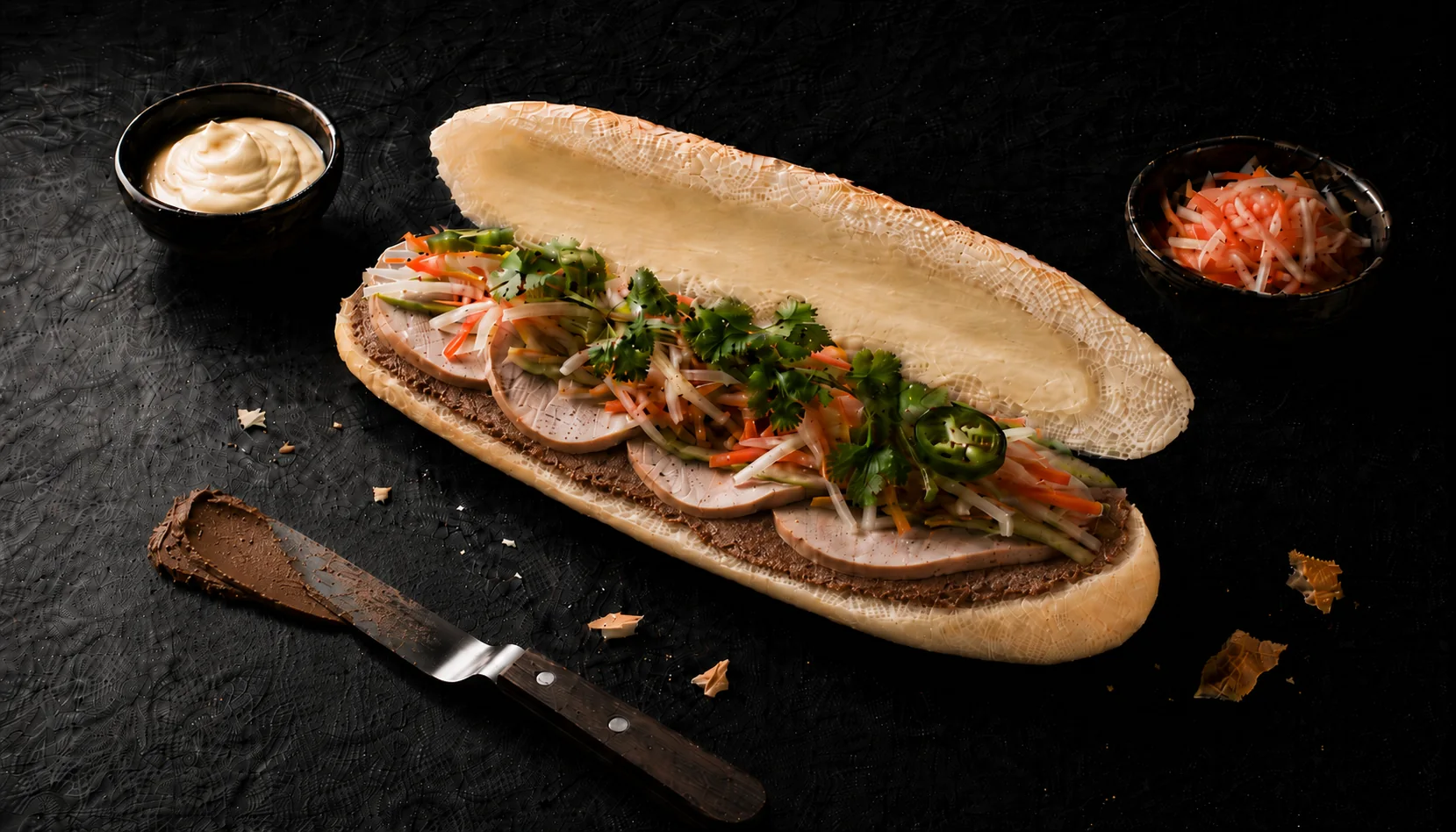
The fillings themselves are a different story. The pickled daikon and carrot, the Vietnamese mayonnaise, the fresh cucumber, the cilantro, the jalapeño, and plain grilled or roasted meats are all naturally gluten free. The sandwich has a gluten free filling inside a bread that is not.
[ WHERE THE GLUTEN IS ]
The bread. The Vietnamese bánh mì baguette is made from a blend of bread flour and rice flour. The rice flour has no gluten. The bread flour does. Together they produce a bread that contains gluten overall, even though the outer crust has a higher proportion of rice flour. The Glass Crust texture comes from the rice flour reducing the protein network in the outer layer, not from removing gluten entirely. There is no wheat-free version of this bread that produces the correct result.
Maggi Seasoning Sauce. Maggi is used inside almost every bánh mì in Vietnam, added as a finishing ingredient just before the sandwich closes. It is made from wheat-fermented glutamates. It contains gluten. Three drops go directly onto the filling of most sandwiches on this site. If you are making bánh mì at home and need a gluten free alternative, tamari is the closest substitute. Fish sauce applied in the same small quantity produces a similar umami effect with a slightly different character.
Soy sauce in marinades. Many bánh mì protein marinades call for soy sauce. Standard soy sauce is brewed with wheat. This applies to the grilled pork, grilled chicken, and xá xíu recipes on this site. Tamari or coconut aminos are the correct gluten free substitutes in any recipe that calls for soy sauce.
Hoisin sauce. Hoisin contains wheat flour as a thickener. It appears in the xá xíu marinade and in some assembly condiments. Gluten free hoisin sauce is available at Asian grocery stores and online. Check the label carefully as formulations vary by brand.
Store-bought chả lụa. Some commercial chả lụa brands use wheat starch as a binder. The homemade version on this site uses tapioca starch and contains no wheat. If buying store-bought chả lụa, check the ingredient list. Not all brands contain wheat but some do.
[ WHAT IS NATURALLY GLUTEN FREE ]
The filling components of a traditional bánh mì are almost entirely gluten free.
Đồ chua is pickled daikon and carrot in a rice vinegar brine. The brine is rice vinegar, water, sugar, and salt. No wheat in any of these ingredients.
Vietnamese mayonnaise is made from whole eggs and neutral oil. The recipe on this site uses rice vinegar as the acid component. No wheat.
Pork liver pâté made from scratch contains no wheat. The recipe on this site uses pork liver, fatback, fish sauce, and five spice. Store-bought pâté varies by brand. Flower Brand pork liver pâté is gluten free. Always check the label on any commercial pâté.
Fresh vegetables including cucumber, cilantro, and jalapeño are all naturally gluten free.
Plain grilled or roasted meats including chicken, pork shoulder, and duck are gluten free when marinated without soy sauce or hoisin. The marinade is where gluten enters, not the meat itself.
Fish sauce is naturally gluten free. It is fermented fish and salt with no wheat component.
Rice vinegar is gluten free.
[ THE FAQ ]
Can I make a gluten free bánh mì at home? Yes, with substitutions. The bread is the main challenge. Gluten free baguettes made with rice flour blends are available at specialty bakeries and some Asian grocery stores. The fillings require replacing Maggi with tamari, soy sauce with tamari or coconut aminos, and hoisin with a gluten free version. The result will not be identical to the original but the five-element architecture of the sandwich, covering the fat barrier, protein, acid, herb, and heat, remains intact.
Is the Vietnamese baguette gluten free? No. The Vietnamese baguette contains both bread flour and rice flour. The bread flour is wheat-based. The rice flour is in the recipe to produce the Glass Crust texture, not to make the bread gluten free. A Vietnamese baguette made entirely from rice flour would not produce the correct texture or structure.
Is Maggi Seasoning Sauce gluten free? No. Maggi is made from wheat-fermented glutamates and contains gluten. It is one of the less obvious gluten sources in a bánh mì. Tamari is the closest gluten free substitute for the same umami finishing effect. Fish sauce applied sparingly is the second option.
Is Vietnamese mayonnaise gluten free? Yes. Vietnamese mayonnaise is made from whole eggs, neutral oil, rice vinegar, and salt. None of these ingredients contain gluten. The recipe on this site is gluten free.
Is đồ chua gluten free? Yes. Đồ chua is pickled daikon and carrot in a rice vinegar brine. The brine contains rice vinegar, water, sugar, and salt. None of these ingredients contain gluten.
Is pork liver pâté gluten free? Homemade pork liver pâté is gluten free when made without wheat-containing ingredients. The recipe on this site uses pork liver, fatback, fish sauce, sugar, salt, white pepper, and five spice. All gluten free. Store-bought pâté varies by brand. Always check the label.
[ WHAT TO READ NEXT ]
The Glass Crust Bánh Mì Baguette recipe covers the flour ratio and technique behind the bread that contains the gluten. Understanding why the bread is built the way it is explains why a direct gluten free substitution is difficult to achieve without compromising the texture.
Vietnamese Mayonnaise is one of the few components in the sandwich that is naturally gluten free and requires no substitution. The full recipe covers the whole egg technique and the rice vinegar ratio that produces the correct texture for the fat barrier.
The Classic Bánh Mì Thịt Nguội is the sandwich that uses every component discussed on this page. It is the clearest illustration of where gluten appears in a traditional bánh mì and which elements are naturally safe.
The Is Bánh Mì Dairy-Free guide covers the other major dietary question alongside gluten. Both guides together give a complete picture of which dietary requirements a traditional bánh mì meets and which it does not.