IS BÁNH MÌ HEALTHY?
A standard bánh mì thịt nguội runs between 520 and 600 calories with substantial protein from two cold cuts. That puts it in line with a well-built deli sandwich, but the ingredients tell a different story. The fresh herbs, pickled vegetables, and homemade components make it more nutrient-dense than most sandwiches in that calorie range.
The bread is the biggest variable. A Vietnamese demi-baguette is lighter and less dense than a French baguette or a sub roll. The rice flour in the dough reduces overall carbohydrate density compared to an all-wheat loaf. The protein is the second variable. The classic version uses both chả lụa and chả bì together. Single protein versions using grilled chicken drop to around 370 to 420 calories. Fatty proteins like pork belly can push past 700.
Bánh mì is not a diet food. It is a well-constructed sandwich with a clear nutritional profile. Understanding what is in it lets you make it work for whatever you are trying to do.
[ HOW MANY CALORIES IN A BÁNH MÌ ]
The calorie count depends almost entirely on two things: the protein and the amount of pâté. Everything else is nearly fixed. The bread runs 280 to 320 calories. The Vietnamese mayonnaise adds 90 to 100. The vegetables and herbs add fewer than 15. The đồ chua adds around 20.
That gives you a fixed base of roughly 405 to 455 calories before the protein goes in. The classic thịt nguội uses both chả lụa and chả bì together, which adds 115 to 145 calories and puts the total between 520 and 600 calories per sandwich. Switch to a single grilled chicken protein and the total drops to around 370 to 420. Those are the two ends of the realistic range for sandwiches built from the recipes on this site.
Fatty proteins change the picture significantly. Bánh mì heo quay uses pork belly, one of the fattiest cuts available. A generous portion with full pâté and Vietnamese mayonnaise can push the total past 700 calories. Restaurant portions, which run 30 to 50 percent larger than home versions, can push any filling into the 700 to 900 calorie range. Breaking 1,000 calories requires either an unusually fatty protein, an oversized baguette, or both. It is not typical for a correctly portioned sandwich.
[ WHAT IS IN IT ]
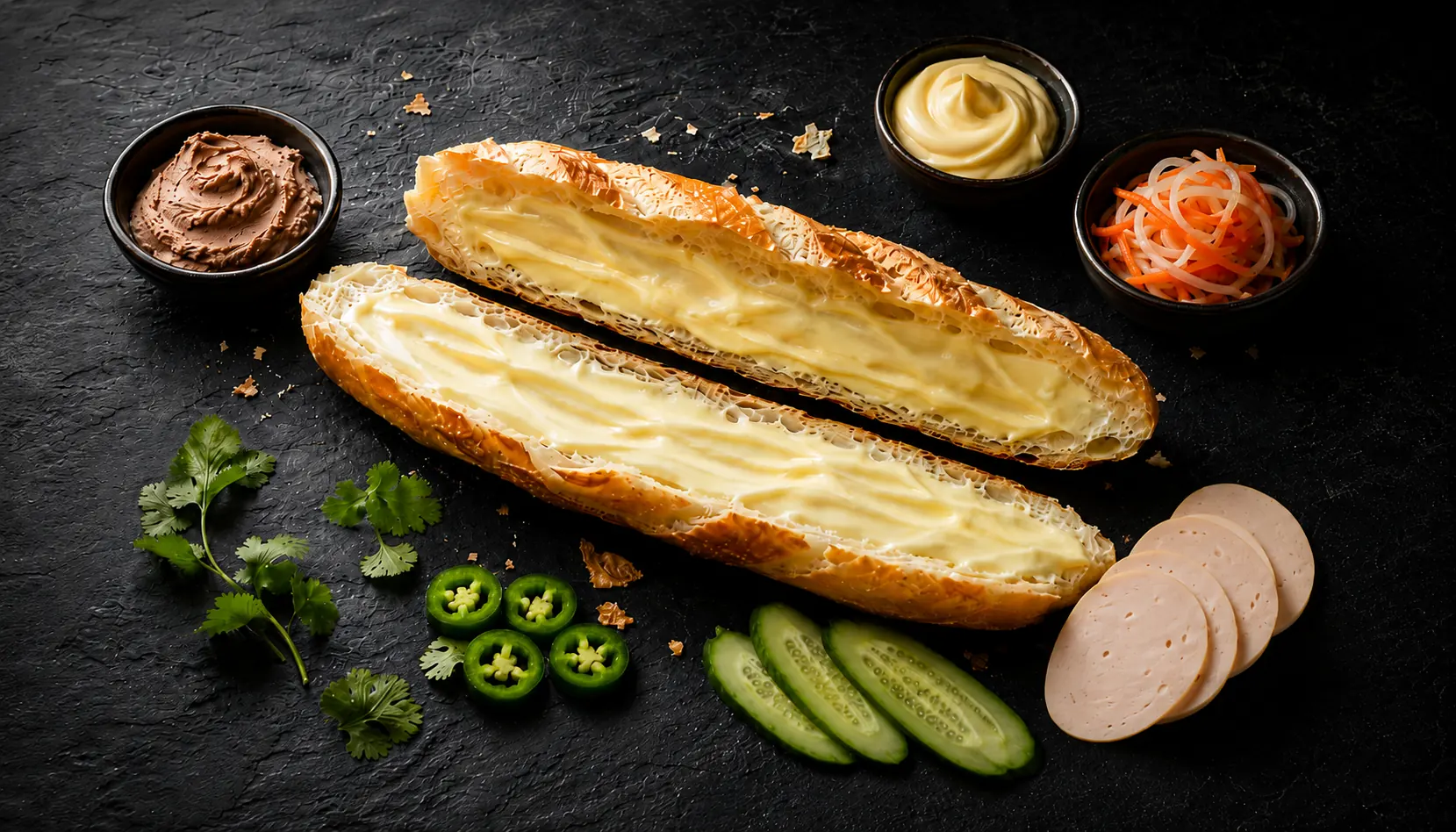
These are the components of a classic bánh mì thịt nguội, the cold cut combination that forms the baseline for everything on this site. Other versions swap the protein but keep the same structural logic. The nutrition figures below reflect this standard build, calculated from the recipe on this site.
The bread. A Vietnamese demi-baguette weighs around 120 grams and contains roughly 280 to 320 calories, almost entirely from carbohydrates. The rice flour blend makes the crust lighter and thinner than a standard baguette, which reduces overall density. The bread accounts for more than half the total calorie count of any bánh mì.
Vietnamese mayonnaise. The recipe uses 60 grams across 4 sandwiches, which is 15 grams per sandwich and around 90 to 100 calories. The whole egg and neutral oil base means it is unsweetened and contains no additives. It is a cleaner fat source than commercial mayonnaise, which often contains sugar and stabilizers.
Pork liver pâté. The recipe uses 60 grams across 4 sandwiches, which is 15 grams per sandwich and around 45 to 55 calories. Small portion, high return. Pâté is a strong source of iron, vitamin B12, and vitamin A. Vegetarians can substitute mushroom pâté, which runs slightly lower in calories and fat while keeping the same fat barrier function.
The cold cuts. The classic thịt nguội uses two proteins together. Chả lụa adds around 60 to 75 calories per 50 gram portion. Chả bì adds around 55 to 70 calories per 37 gram portion. Together they put the protein layer at roughly 115 to 145 calories. This is why the classic version runs higher than single-protein versions. Both are available at Vietnamese grocery stores and most Asian supermarkets.
Đồ chua. Pickled daikon and carrot in a rice vinegar brine. A drained portion adds roughly 20 calories. Most of the sugar in the brine stays in the liquid, not the vegetable. The pickles provide fiber and vitamin C. The rice vinegar brine is an acid pickle, not a fermented one. There are no live cultures in a standard đồ chua. The nutritional benefit is in the vegetables themselves and the acidity that keeps them crisp and bright.
Fresh vegetables. Persian cucumber slices, cilantro, and jalapeño together add fewer than 15 calories. They contribute vitamin C, vitamin K, and the anti-inflammatory compounds found in fresh herbs. These are the highest-nutrition, lowest-calorie elements in the sandwich.
Maggi Seasoning Sauce. Three to four drops used as a finishing element adds negligible calories. It does add sodium, around 160 mg per teaspoon, and three drops is well under a teaspoon.
[ THE SODIUM QUESTION ]
Sodium is the one area where bánh mì warrants attention. A fully assembled sandwich built from the recipe on this site runs between 800 and 1,000 mg of sodium. That is roughly 35 to 45 percent of the recommended daily limit of 2,300 mg.
The sources are spread across multiple components. The đồ chua brine contains salt. The chả lụa contains salt as a preservative. The chả bì contains salt as a preservative. The pâté contains fish sauce, which is high in sodium. The Maggi Seasoning Sauce adds a small amount at the end.
This is not unusual for a sandwich with multiple seasoned components. A standard deli sub with processed meats and condiments runs 1,200 to 1,800 mg of sodium. A bánh mì made from scratch at home with the recipes on this site sits well below that range.
If you are managing sodium intake, the practical levers are the cold cut portions and the pâté. Reducing both by a third and skipping the Maggi finish brings the total down to around 600 mg without removing any of the five structural elements that make the sandwich work.
[ WHAT MAKES IT HEALTHIER THAN MOST SANDWICHES ]
Fresh herbs as a primary ingredient. Most sandwiches use herbs as a garnish. A bánh mì uses a full handful of cilantro as a structural ingredient. Fresh cilantro provides vitamin K, vitamin C, and antioxidant compounds. At the quantity used in a bánh mì it makes a measurable contribution.
Pickled vegetables instead of a condiment. The đồ chua is not a condiment. It is a significant portion of the filling. Rice vinegar pickling preserves most of the original nutrients in the daikon and carrot. Vinegar also slows how quickly the body absorbs carbohydrates from the bread. Think of it like a speed limiter on your blood sugar. The pickles are doing more work than they look like they are doing.
A lighter bread. The Vietnamese baguette is less dense than a French baguette or a sub roll of the same length. The rice flour in the blend reduces the gluten network, which produces a lighter crumb and a thinner crust. Less density means fewer calories per centimeter of bread.
[ THE FAQ ]
How many calories are in a bánh mì? A classic bánh mì thịt nguội built from the recipe on this site runs between 520 and 600 calories per sandwich. The bread accounts for 280 to 320 of those calories. Single protein versions using grilled chicken drop to around 370 to 420 calories. Fatty protein versions like bánh mì heo quay can exceed 700 calories depending on portion size.
Is bánh mì good for weight loss? It depends on the filling and portion. At 520 to 600 calories with substantial protein from two cold cuts, it is a filling meal. A single protein version with grilled chicken, a full portion of đồ chua, and a generous amount of fresh herbs performs well as a satisfying lower-calorie meal in the 370 to 420 calorie range.
Is the bread in bánh mì healthier than regular bread? The Vietnamese demi-baguette is lighter and less dense than a standard French baguette or sub roll. The rice flour in the blend reduces overall carbohydrate density. It is still a refined flour product and not a low-carb option, but calorie for calorie it is lighter than most sandwich breads of the same length.
Is bánh mì high in sodium? A standard sandwich built from the recipes on this site runs 800 to 1,000 mg of sodium. That is meaningful but not extreme for a sandwich with multiple seasoned components. Most of the sodium comes from the cold cuts, pâté, and đồ chua brine. Homemade versions contain significantly less sodium than restaurant or commercial versions.
Can you make a lower-calorie bánh mì? Yes. Use grilled chicken instead of the cold cut combination. Use a half portion of pâté. Double the đồ chua and fresh herbs. Skip the Maggi finish. Those changes bring a standard sandwich from around 520 to 600 calories down to around 370 to 420 without removing any of the five structural elements that make the sandwich work.
Is bánh mì gluten free? No. The Vietnamese baguette is made from a blend of bread flour and rice flour. The bread flour contains gluten. There is no wheat-free version of this bread that produces the correct Glass Crust texture.
[ WHAT TO READ NEXT ]
The Is Bánh Mì Gluten Free guide covers every ingredient in the sandwich that contains wheat, including some that most people do not think about. It is the most detailed breakdown of what is actually in the sandwich from a dietary restriction standpoint.
The Classic Bánh Mì Thịt Nguội recipe is the baseline sandwich this page references for nutrition figures. Building it from scratch at home gives you full control over every ingredient and every gram.
The Vietnamese Mayonnaise recipe covers the whole egg and neutral oil version used on this site. It contains no sugar, no stabilizers, and fewer additives than any commercial mayonnaise.