IS BÁNH MÌ DAIRY-FREE?
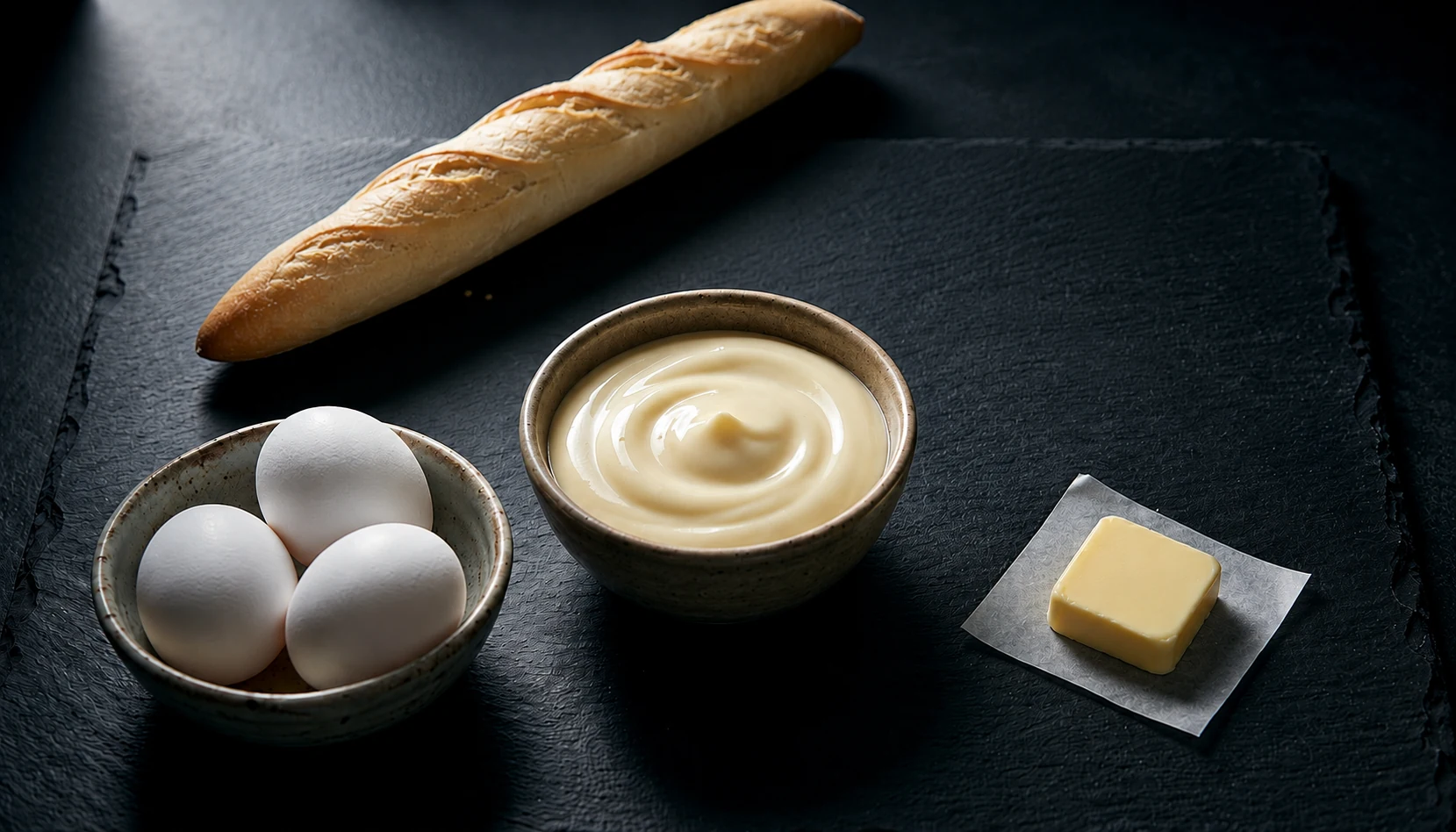
A traditional bánh mì made from scratch contains no dairy. The bread is made from flour, water, yeast, sugar, and oil. The Vietnamese mayonnaise is made from eggs and oil, not cream or butter. The pâté is made from pork liver and fat. The pickled daikon and carrot, fresh cucumber, cilantro, and jalapeño contain no animal products at all.
Dairy is not a traditional ingredient in Vietnamese cooking. It entered the cuisine through French colonial influence and remained mostly in coffee and pastries, not in street food. A bánh mì built correctly from the recipes on this site is dairy-free.
The watch points are butter, which some vendors spread on the bread as a French-influenced addition, and store-bought baguettes, which sometimes contain milk solids. If you are making it at home from this site, neither applies.
[ WHAT IS AND IS NOT DAIRY ]
This distinction matters for anyone managing a dairy intolerance or allergy.
Dairy refers to products made from animal milk. Butter, cream, milk, cheese, and yogurt are dairy. Eggs are not dairy. They come from chickens, not from milk. This is a common source of confusion.
Vietnamese mayonnaise contains eggs. It does not contain dairy. A person who is dairy-free but not egg-free can eat Vietnamese mayonnaise without any substitution needed.
This separates the dairy-free question from the vegan question. A fully vegan bánh mì requires replacing the mayonnaise and the pâté. A dairy-free bánh mì built from the recipes on this site requires no substitutions at all.
[ WHAT IS NATURALLY DAIRY-FREE ]
Every component in a traditional bánh mì built from scratch is dairy-free.
The bread. The Glass Crust bánh mì baguette on this site is made from bread flour, rice flour, water, salt, yeast, sugar, and neutral oil. No butter, no milk, no dairy of any kind.
Vietnamese mayonnaise. Made from whole eggs, egg yolk, neutral oil, and rice vinegar. No cream, no butter, no dairy. Eggs are not a dairy product.
Pork liver pâté. Made from pork liver, fatback, fish sauce, and five spice. No dairy ingredients.
Mushroom pâté. Made from dried shiitake mushrooms, fresh cremini mushrooms, firm tofu, shallots, garlic, and Maggi Seasoning Sauce. No dairy. The tofu version specifically is dairy-free. The butter substitution noted in the recipe notes is not dairy-free.
Đồ chua. Made from daikon, carrot, rice vinegar, water, sugar, and salt. Entirely dairy-free.
Fresh components. Persian cucumber, cilantro, jalapeño, and Maggi Seasoning Sauce are all dairy-free.
[ WHERE DAIRY CAN APPEAR ]
Two situations introduce dairy into a bánh mì build.
Butter on the bread. Some Vietnamese vendors and restaurants spread a thin layer of butter on the inside of the baguette before adding the other components. This is a legacy of French culinary influence that persisted in some regional styles. It is not standard in the recipes on this site. If ordering from a restaurant, ask whether butter is used.
Store-bought baguettes. Not all baguettes are dairy-free. Some commercial bakeries use butter or milk solids in their dough for flavor and softness. The Glass Crust baguette recipe on this site contains no dairy. If buying bread rather than baking it, check the ingredient list. French-style baguettes from a Vietnamese bakery are typically dairy-free, but confirming is worth the effort.
[ THE SCIENCE ]
Vietnamese cuisine evolved largely without dairy because the region had no tradition of cattle herding for milk production. The fat in Vietnamese cooking comes from pork, neutral oils, and coconut milk in southern dishes. The rich, creamy texture in bánh mì comes from egg-based mayonnaise and pork fat in the pâté, not from dairy.
French colonization introduced butter and cream to Vietnamese cooking in the 19th century, but these remained primarily in coffee culture and French-influenced pastries. The bánh mì absorbed the baguette format from the French but replaced the butter and cheese filling logic entirely with Vietnamese ingredients. The result is a sandwich that is naturally dairy-free at its core.
[ THE FAQ ]
Is Vietnamese mayonnaise dairy-free? Yes. Vietnamese mayonnaise is made from eggs, neutral oil, and rice vinegar. Eggs are not a dairy product. The mayonnaise on this site contains no butter, cream, or milk of any kind.
Is the bánh mì baguette dairy-free? The Glass Crust baguette recipe on this site is dairy-free. It contains bread flour, rice flour, water, salt, yeast, sugar, and neutral oil. Store-bought baguettes vary. Some contain butter or milk solids. Check the label before using one.
Is pork liver pâté dairy-free? Yes. Pork liver pâté is made from pork liver, fatback, fish sauce, and five spice. No dairy ingredients. Store-bought pâté varies by brand. Check the label on any commercial product.
Can someone with a dairy allergy eat bánh mì? A bánh mì built from the recipes on this site is dairy-free. The only watch point when ordering from a restaurant is butter, which some vendors apply to the bread. Ask whether butter is used before ordering.
Is bánh mì dairy-free and gluten-free? No. The bread contains wheat flour and is not gluten-free. This site has a full guide covering exactly where gluten appears in a bánh mì and what is naturally safe.
Is bánh mì dairy-free and vegan? Not by default. A traditional bánh mì is dairy-free but not vegan because it contains eggs in the mayonnaise and meat in the protein and pâté. This site has a full guide covering exactly what needs to change for a vegan build.
[ WHAT TO READ NEXT ]
The Vietnamese Mayonnaise recipe is the component most often questioned on a dairy-free diet. It is made entirely from eggs and oil. No cream, no butter, no dairy. The full recipe covers the technique and the exact ratio that produces the correct texture.
The Glass Crust Bánh Mì Baguette recipe is the bread this site is built around. It contains no dairy and no butter. Understanding what goes into it also explains why store-bought baguettes sometimes fall short on texture.
The Is Bánh Mì Vegan guide covers the full plant-based question. Dairy-free and vegan are different requirements. That guide explains exactly what additional swaps are needed beyond dairy-free.
The Is Bánh Mì Gluten Free guide covers the other major dietary question. Both guides together give a complete picture of which dietary requirements a traditional bánh mì meets and which it does not.