BEST FOOD PROCESSOR FOR BÁNH MÌ
A food processor is the tool that turns cooked liver, sautéed mushrooms, and seasoned pork into bánh mì pâté. Without one, you are pushing ingredients through a sieve by hand or accepting a texture that is nothing like what a Vietnamese sandwich requires.
The pork liver pâté needs to be smooth enough to spread in a thin layer without tearing the bread. The mushroom pâté needs to be processed to a consistent paste without becoming watery. Both jobs require a bowl large enough to hold a full batch, a blade that reaches the bottom of that bowl, and a pulse function precise enough to stop exactly where you want the texture to stop.
This page covers the three best food processors for bánh mì at every price point, why bowl capacity matters more than most home cooks expect, and exactly what to look for when buying.
[ WHY THE FOOD PROCESSOR MATTERS FOR BÁNH MÌ SPECIFICALLY ]
Several recipes on this site require a food processor. The pork liver pâté and the mushroom pâté are the two where it matters most. Both are spread components. Texture is not a preference. It is a technical requirement.
Pork liver pâté needs to be smooth enough to spread across the bottom half of the baguette in a single pass without resistance. If the texture is coarse, the spread drags across the bread and the fat layer tears instead of sealing. The fat barrier is what keeps the Vietnamese mayonnaise from soaking into the crumb. Break that barrier and the sandwich goes soggy within minutes.
Mushroom pâté has a different requirement. The mushrooms release water when cooked. Process them too long and that water gets worked back into the mixture, producing a loose paste that slides off the bread instead of holding in place. The pulse function is what gives you control over where the texture stops. A responsive pulse button that stops instantly when released is not a luxury feature. It is the difference between a spreadable pâté and a wet paste.
Bowl size matters because both recipes are made in batches. The pork liver pâté recipe on this site yields enough for six to eight sandwiches. A small food processor bowl cannot hold a full batch without the mixture climbing above the blade and processing unevenly. A 7-cup bowl or larger handles both recipes correctly without multiple passes.
[ THE RECOMMENDATION ]
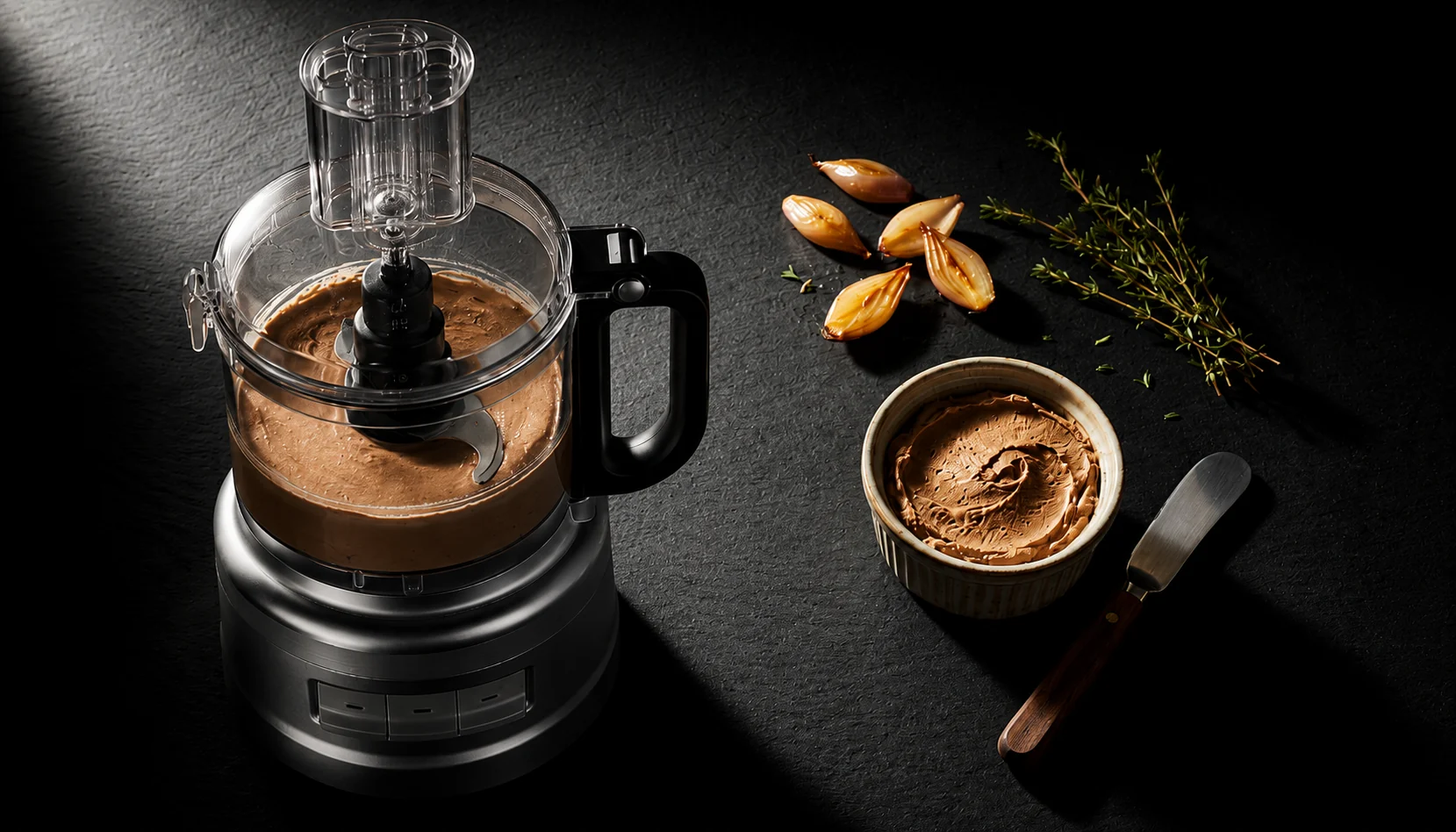
The KitchenAid 7-Cup Food Processor is the correct tool for this job. The bowl is large enough for a full batch of pâté. The blade sits close to the base so nothing escapes processing. The three-speed control includes a dedicated pulse setting that stops the moment you release the button, which is the specification that matters most for pâté work. The one-click twist-free bowl assembly makes it significantly easier to clean after working with liver than processors that require aligning multiple locking points.
It is the processor that does exactly what bánh mì pâté requires, built to a standard that holds up to regular use.
[ THE THREE OPTIONS ]
[ BEST OVERALL ] KitchenAid 7-Cup Food Processor — around $100. The recommendation above. 7-cup bowl, responsive pulse control, one-click assembly. The correct processor for anyone making bánh mì pâté regularly.
[ ALTERNATIVE ] Cuisinart 7-Cup Pro Classic — around $170. The extra-large feed tube handles whole ingredients without pre-cutting and the 600-watt motor pushes through dense mixtures without stalling. The honest weakness is size: it is larger and heavier than the KitchenAid, which matters if counter and storage space is limited. For a kitchen where the food processor sees daily use across multiple tasks, the Cuisinart justifies the investment.
[ BUDGET ] Hamilton Beach 12-Cup Food Processor — around $70. A 12-cup bowl at an entry-level price, which suits bigger batches and larger households. The honest weakness is pulse responsiveness: the motor takes a fraction longer to stop after releasing the button, which makes precise texture control slightly harder for pâté work. For someone starting out who wants maximum capacity at minimum cost, it is the honest entry point.
[ THE SCIENCE ]
A food processor blade works by moving fast enough that ingredients hit the edge before they can move out of the way. The blade on a well-designed processor sits close to the base of the bowl so that even small amounts of mixture stay in contact with the cutting edge. When the blade is too high, ingredients pool underneath and never get processed. That is why blade height matters more than motor wattage for pâté work. The pulse function gives you single-rotation control over texture by cutting power to the motor instantly. For mushroom pâté, the difference between three pulses and five is the difference between a spreadable texture and an over-processed paste.
[ THE FAQ ]
Can I use a blender instead of a food processor for bánh mì pâté? A blender processes from the bottom up and requires liquid to pull ingredients into the blade. Pâté is too thick for a standard blender to process evenly. You end up with a mixture that is liquid at the base and unprocessed at the top. A food processor processes from the center outward and handles thick mixtures without needing added liquid.
What size food processor do I need for bánh mì pâté? A 7-cup bowl is the minimum for a full batch. The pork liver pâté recipe on this site yields enough for six to eight sandwiches. A smaller bowl requires splitting the batch, which means two separate processing cycles and an uneven final texture.
Can I use a food processor to julienne daikon and carrot for đồ chua? Technically yes, using a julienne disc attachment. In practice the julienne disc on most home food processors cuts thicker than the 3mm standard the đồ chua recipe on this site requires. A mandoline slicer produces more accurate results for the pickle. Use the food processor for pâté and the mandoline for the pickle.
Do I need to cool the liver before processing? Yes. Processing hot liver traps steam inside the bowl and the mixture emulsifies unevenly. Let the cooked liver cool for 10 minutes before transferring to the food processor. The butter should be at room temperature when added so it incorporates smoothly rather than seizing against the warm liver.
How do I clean a food processor after making pâté? Rinse the bowl and blade immediately after use before the fat sets. Warm soapy water handles both. Never leave the blade soaking in a sink of water. The edge dulls faster submerged than it does in regular use.
[ WHAT TO READ NEXT ]
The Pork Liver Pâté recipe is the primary recipe this processor was built for. That is where the bowl capacity and pulse control make the difference between a smooth spread and a coarse paste.
For the vegetarian alternative that uses the same equipment, see the Mushroom Pâté recipe, where texture control is the entire challenge.
For the complete breakdown of every tool a serious bánh mì kitchen requires, see The Equipment page.
The How to Make Bánh Mì guide covers the full sandwich assembly where the pâté layer this processor produces does its job inside the sandwich.