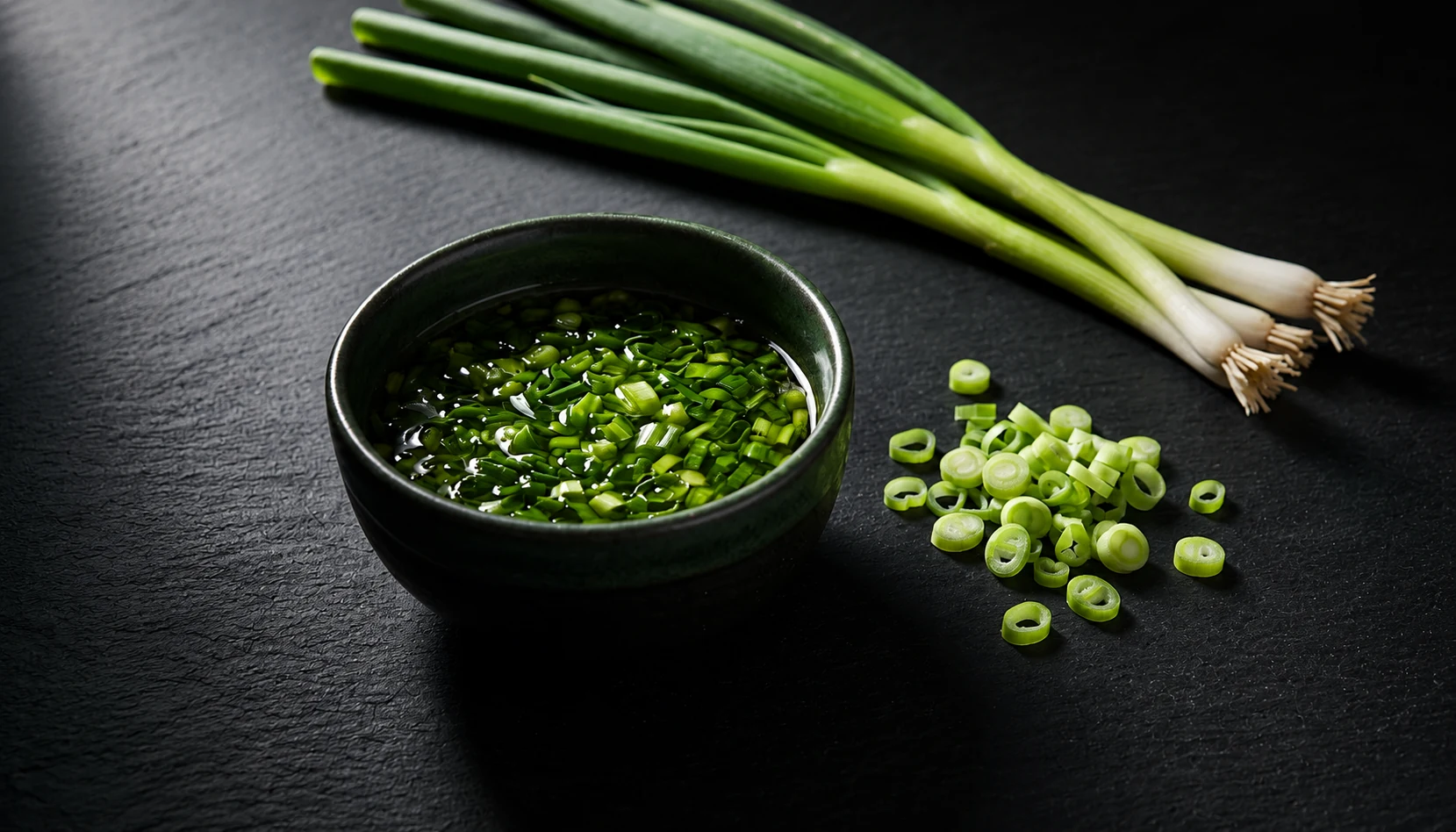
scallion oil banh mi (Vietnamese scallion oil mỡ hành) with fresh scallions on dark slate

Mỡ Hành (Vietnamese Scallion Oil)

Mỡ hành is scallion oil. It is one of the most used finishing touches in Vietnamese cooking and one of the least discussed. Hot neutral oil is poured over finely sliced scallions. The heat wilts the scallions, releases their aroma, and infuses the oil with a clean onion fragrance in under a minute. The result is spooned or brushed over the filling of grilled meat bánh mì just before the sandwich is closed.

It does three things. It adds a layer of fragrant oil that carries the scallion aroma into every bite. It adds color, a bright green that sits on top of the grilled meat and signals freshness. And it adds just enough richness to bridge the gap between the dry char of the grilled protein and the fat barrier of the Vietnamese mayonnaise and pâté. Five minutes from start to finish. No equipment beyond a small pan and a heatproof bowl.

scallion oil banh mi (Vietnamese scallion oil mỡ hành) with fresh scallions on dark slate
L. Nguyen

Mỡ Hành (Vietnamese Scallion Oil)

Hot neutral oil poured over finely sliced scallions. The finishing touch on grilled meat bánh mì. Adds fragrance, color, and a thin layer of richness to the filling in under 5 minutes. [ BEGINNER ]
Prep Time 5 minutes
Total Time 5 minutes
Servings: 4 bánh mì
Course: Condiment
Cuisine: Vietnamese

Ingredients
  

The Scallion Oil
  • 4 scallions, green parts only, finely sliced into 3mm rounds
  • 3 tbsp neutral oil
  • ¼ tsp fine salt
  • ¼ tsp sugar

Equipment

  • Small saucepan
  • Heatproof bowl

Method
 

Make the Scallion Oil
  1. Place the sliced scallions, salt, and sugar in a heatproof bowl. Stir to combine. The salt draws a small amount of moisture out of the scallions and seasons them evenly before the oil goes in.
  2. Heat the neutral oil in a small saucepan over medium heat. The oil is ready when a single piece of scallion dropped into the pan sizzles immediately on contact. This takes about 2 minutes. Do not let the oil smoke. Smoking oil has passed the correct temperature and will scorch the scallions rather than wilt them.
  3. Pour the hot oil directly over the scallions in the heatproof bowl. The scallions will sizzle, wilt, and turn bright green immediately. Stir once to coat everything evenly. Use immediately or let cool and store in a sealed jar in the refrigerator for up to 3 days.

Notes

On the scallions: Use the green parts only. The white parts are too dense and do not wilt correctly when the hot oil hits them. Slice the green tops into 3mm rounds. Even slices wilt at the same rate and look cleaner in the finished dish.
On the oil temperature: The oil must be hot enough to sizzle on contact with the scallions but not so hot that it smokes. A smoking oil scorches the scallions and produces a bitter result. Test with one piece of scallion before pouring the full amount.
On storage: Best used immediately while the scallions are bright green and fragrant. If making ahead, store in a sealed jar in the refrigerator for up to 3 days. The scallions will darken slightly but the flavor remains correct.
On quantity: This recipe makes enough scallion oil for 4 portions. The ratio is 1 tablespoon of oil per serving. Double the recipe if making a larger batch.
On using it: Spoon the scallion oil directly over grilled meat just before closing the sandwich. One tablespoon per sandwich is correct. It appears on grilled meat versions including Bánh Mì Thịt Nướng and Bánh Mì Gà Nướng. It is not used on cold cut or braised meat versions. It goes on last.

[ THE SCIENCE ]

When hot oil hits the sliced scallions, two things happen at once. The heat wilts the cell walls of the scallion, releasing the aromatic compounds locked inside. At the same time, those compounds dissolve into the oil, which carries them directly onto whatever the oil touches. Think of it like making tea. The hot water pulls the flavor out of the leaves and holds it in the liquid. Hot oil does the same thing with scallions. The oil becomes the carrier and the scallion becomes the source. This is why the oil temperature matters. Oil that is too cool does not extract the aromatics efficiently. Oil that is too hot scorches the scallions and destroys the compounds before they can dissolve into the oil.

[ THE FAQ ]

Can I use sesame oil instead of neutral oil? A small amount of toasted sesame oil added to neutral oil produces a richer result. Use 2½ tablespoons neutral oil and ½ tablespoon toasted sesame oil. Do not use sesame oil alone. Pure sesame oil has a smoke point that is too low for this technique and an aroma strong enough to overpower the scallion.

Can I use the white parts of the scallion? The green parts are correct for this recipe. The white parts are denser and do not wilt at the same rate as the green tops. They also have a sharper, more pungent flavor that does not suit the finishing role of mỡ hành. Use the white parts in stir fries or marinades where their stronger flavor is an asset.

Which bánh mì recipes use scallion oil? Scallion oil appears on grilled meat bánh mì. It is most natural on Bánh Mì Thịt Nướng and Bánh Mì Gà Nướng. It is not used on cold cut versions or braised meat versions. It is an optional finishing element rather than a required component.

How do I know if the oil is the right temperature? Drop one piece of sliced scallion into the hot oil. If it sizzles immediately and turns bright green, the oil is ready. If nothing happens, the oil is too cool. If the scallion browns within a few seconds, the oil is too hot. Remove from heat, let cool for 30 seconds, and test again.

Can I make this in the microwave? Yes. Combine the scallions, oil, salt, and sugar in a microwave-safe bowl. Microwave on high for 30 seconds. Stir and microwave for another 30 seconds. The result is slightly less aromatic than the stovetop method because the heat is less direct but it is a practical option when speed is the priority.

[ THE EQUIPMENT ]

A small saucepan heats the oil evenly and gives enough control over the temperature to pull it off the heat at the right moment. A heatproof bowl is essential. Do not pour hot oil into a plastic bowl or a thin glass bowl. Ceramic or tempered glass is correct.

The full equipment list with specific recommendations is on the Equipment page.

[ WHAT TO READ NEXT ]

Bánh Mì Thịt Nướng is the recipe where scallion oil is most natural in the archive. Grilled pork shoulder charred at the edges, the scallion oil spooned over the top just before the sandwich closes. The recipe covers the marinade, the grilling technique, and the full assembly sequence.

Bánh Mì Gà Nướng is the grilled chicken version where scallion oil works in the same finishing role. Bone-in chicken thighs marinated in fish sauce and black pepper, grilled until the skin chars. The scallion oil goes on last.

The Glass Crust Bánh Mì Baguette is the bread that holds all of it together. The paper thin crust and cloud-light crumb are what make a finishing element like scallion oil work. A dense bread absorbs the oil and loses the effect. The correct bread keeps it on the surface where it belongs.