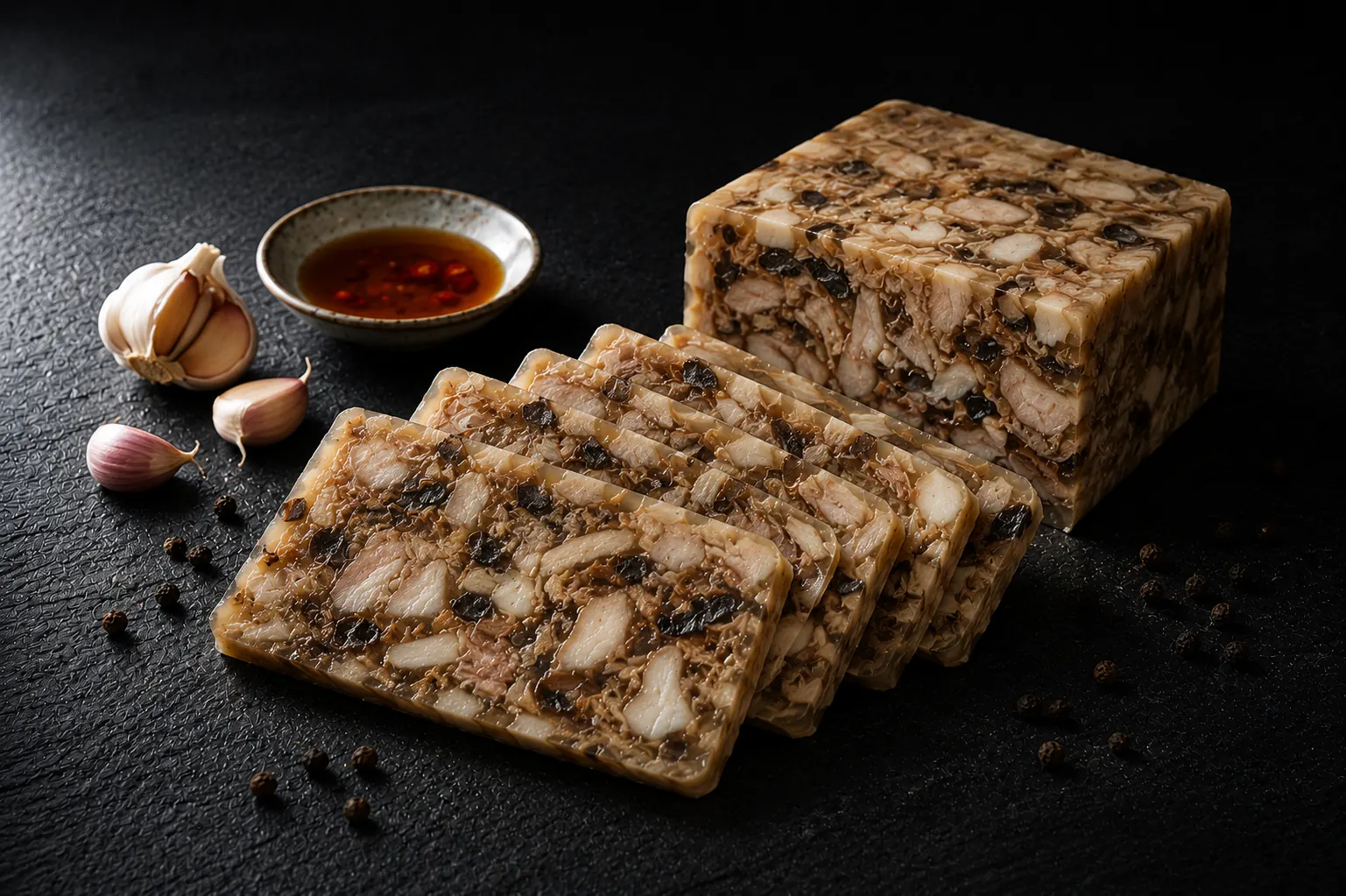
Ingredients
Equipment
Method
Prepare the Meat
- Rinse pig's ear and pork skin under cold running water. Place in a large pot, cover with cold water, and bring to a boil. Boil for 5 minutes. Drain and rinse thoroughly. This removes impurities and produces a cleaner tasting terrine.
- Return the ear and skin to the pot with the poaching liquid ingredients. Bring to a boil, then reduce to a steady simmer. Cook for 1 hour to 1 hour 15 minutes until the ear is completely tender when pierced with a knife and the skin is soft. The ear should have no resistance when you cut through it.
- Remove ear and skin from the liquid. Reserve 120ml of the poaching liquid. Discard the rest.
- Let the ear and skin cool until they can be handled comfortably, about 15 minutes. Do not let them cool completely. They are easier to slice while still warm.
Prepare the Filling
- Slice the pig's ear into thin strips approximately 3mm wide and 3 to 4cm long. Slice the pork skin into similar sized pieces. The uniform size ensures even distribution throughout the terrine.
- Heat neutral oil in a wide pan over medium heat. Add garlic and shallots. Cook until softened and fragrant, 2 minutes.
- Add the sliced ear and skin to the pan. Add fish sauce, sugar, white pepper, and black pepper. Stir to coat everything evenly. Cook for 3 to 4 minutes until the mixture is fragrant and well seasoned.
- Add the sliced wood ear mushrooms. Stir to combine. Add the reserved poaching liquid. Cook for 2 more minutes until the liquid is mostly absorbed. Taste and adjust fish sauce for salt.
Press and Chill
- Line a loaf pan or any deep rectangular container with plastic wrap, leaving enough overhang to fold over the top.
- Pack the mixture firmly and evenly into the lined container. Press down with your hands to eliminate air pockets. The mixture should be packed tightly.
- Fold the plastic wrap over the top to cover completely. Place a second container or a flat weight directly on top of the mixture. Add something heavy on top. A full can of beans works well.
- Refrigerate for a minimum of 4 hours. Overnight produces the cleanest slices and the firmest texture.
- To unmold, lift out using the plastic wrap overhang. Peel away the plastic. Slice with a sharp knife into pieces approximately 3 to 4mm thick. Wipe the knife clean between slices for the neatest result.
Notes
On sourcing the pig's ear: Pig's ear is available at most Asian grocery stores and many butcher shops. Ask the butcher to clean it if it is not already cleaned. If the ear still has hair on it, singe it off with a kitchen torch or pass it briefly over a gas flame before the first blanching step.
On the wood ear mushrooms: Dried wood ear mushrooms are available at any Asian grocery store. They expand significantly when soaked. 50g dried produces about 150g soaked. Do not substitute with fresh mushrooms. The texture is different and they release too much water into the mixture.
On pressing: The pressing step is what gives giò thủ its firm, sliceable texture. Skipping it or using insufficient weight produces a loose terrine that falls apart when sliced. Use the heaviest weight you can balance safely on the container. Overnight pressing produces the best result.
On storage: Giò thủ keeps refrigerated for up to 5 days wrapped tightly in plastic wrap. Do not freeze it. The gelatin structure breaks down when frozen and the texture is lost on thawing.
On yield: One batch produces enough for 8 to 10 bánh mì. The recipe scales well. Double the batch if making for a large gathering.