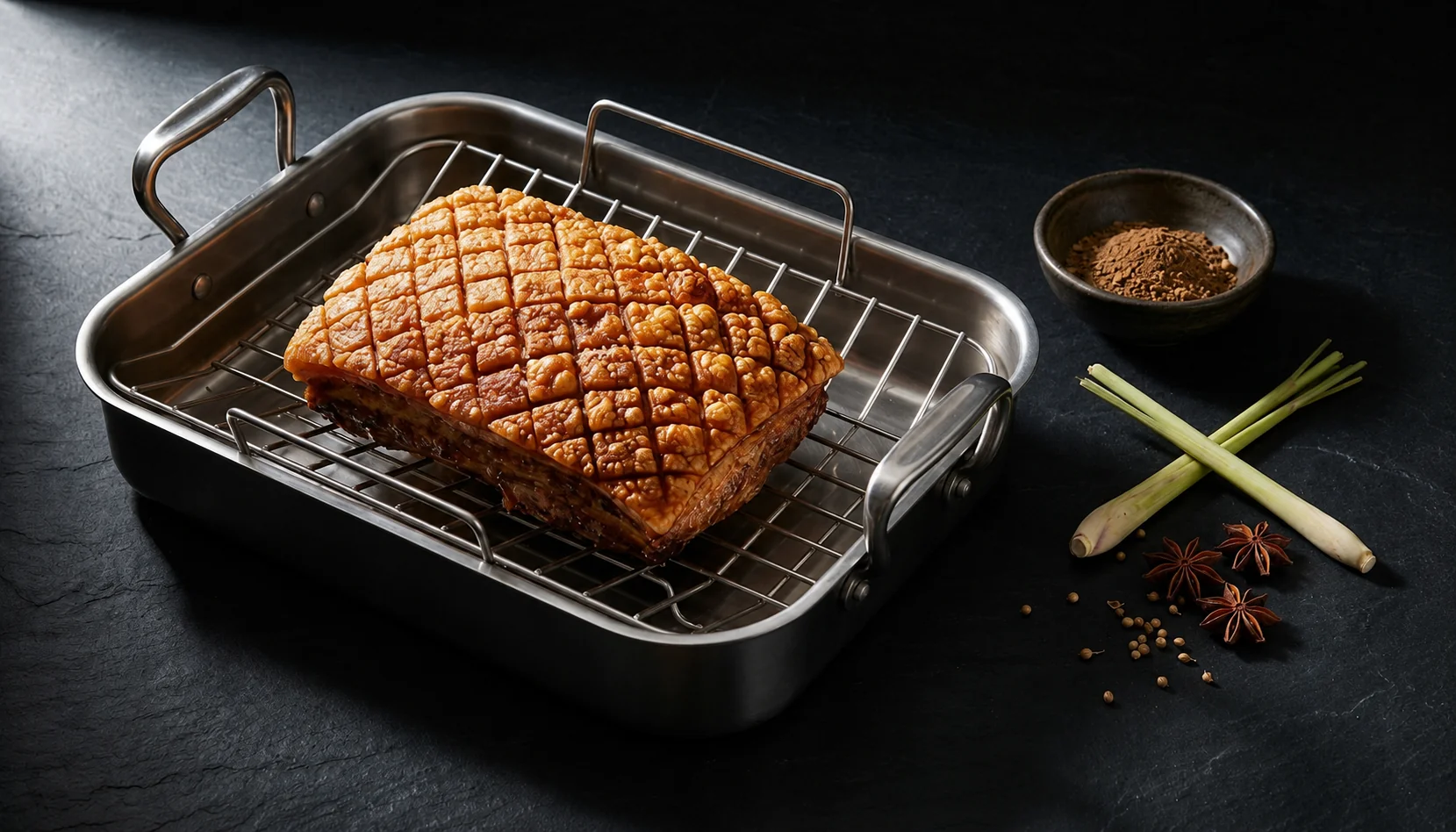
BEST ROASTING PAN WITH RACK FOR BÁNH MÌ
A roasting pan with a rack is the tool that makes bánh mì heo quay possible at home. Vietnamese roast pork belly requires high, dry oven heat applied evenly across the entire surface of the skin. The rack elevates the pork above the pan so hot air circulates underneath as well as above. Without that elevation, the underside of the belly sits in rendered fat and steams instead of roasts. The skin never blisters. The crackling never forms.
The same pan handles bánh mì vịt quay. Roast duck requires the same elevated rack setup for the same reason. Any recipe where rendered fat needs to drain away from the protein during cooking belongs in a roasting pan with a rack.
This page covers the three best roasting pans for bánh mì at every price point, why pan size matters more than most home cooks expect, and exactly what to look for when buying.
[ WHY THE ROASTING PAN MATTERS FOR BÁNH MÌ SPECIFICALLY ]
Bánh mì heo quay is one of the most technically demanding recipes in the archive. The pork belly skin needs to reach a temperature high enough to blister and crackle without the meat underneath drying out. That balance requires two things: a pan large enough to hold the belly flat without folding the edges, and a rack that keeps the skin exposed to dry heat from all sides.
A pan without a rack produces a different result entirely. The fat that renders out of the pork belly during the first hour of cooking pools in the bottom of the pan. The underside of the belly sits in that fat and essentially deep-fries from below while the top roasts from above. The skin blisters unevenly. The meat absorbs rendered fat rather than losing it. The final texture is heavier and less clean than what a properly elevated roast produces.
Pan size is the specification that most home cooks underestimate. A standard pork belly for four to six bánh mì sandwiches requires a pan at least 14 inches long. A pan that is too small forces you to fold or trim the belly, which changes how the skin renders and blisters. A 16-inch pan gives you the space to lay the belly flat and still have room for the rack handles.
The rack itself needs to be sturdy enough to hold a 3 to 4 pound pork belly without flexing. A flimsy rack that sags under weight drops the belly into the fat drippings and defeats the purpose of using a rack at all.
[ THE RECOMMENDATION ]
The Cuisinart 16-Inch Roasting Pan with Rack is the correct pan for this job. The 16-inch length handles a full pork belly flat without trimming. The stainless steel rack sits firmly inside the pan and holds the protein elevated above the drippings for the full cook time. The pan walls are deep enough to contain the fat that renders during a two-hour roast without spilling.
The stainless steel construction handles the high oven temperatures that heo quay requires. The two loop handles on the short ends give you a secure grip when moving a heavy pan from a 450°F oven to a resting surface. The rack lifts out separately for cleaning, which matters after a full pork belly roast.
It is the roasting pan that does exactly what Vietnamese roast pork requires, at a price point that makes it the right choice for most home kitchens.
[ THE THREE OPTIONS ]
[ BEST OVERALL ] Cuisinart 16-Inch Roasting Pan with Rack — around $60. The recommendation above. 16-inch length, stainless steel rack, deep walls, secure loop handles. The correct pan for anyone making bánh mì heo quay or vịt quay regularly.
[ ALTERNATIVE ] All-Clad HA1 Hard Anodized Roasting Pan with Rack — around $130. Hard anodized aluminum distributes heat more evenly than stainless steel, which means the fat in the pan heats uniformly and the roast cooks at the same rate across its full surface. The nonstick interior makes cleanup after a pork belly roast considerably faster than stainless. The honest weakness is price: at around $130 it is a significant step up from the Cuisinart. For a kitchen where the roasting pan sees regular use and easy cleanup matters, the All-Clad justifies the investment.
[ BUDGET ] Farberware Nonstick Roaster with Rack — around $40. A nonstick roasting pan with flat rack at an entry-level price. The honest weakness is size: at 11 by 15 inches it is smaller than the Cuisinart and may require trimming a full pork belly to fit. For smaller roasts and occasional use it is sufficient. For a full heo quay, a shorter pan means trimming the belly before roasting, which reduces the yield per batch.
[ THE SCIENCE ]
A roasting rack works by separating the protein from the pan surface so hot air can circulate underneath as well as above and around it. In a standard oven, heat comes from elements at the top and bottom of the cavity. Without a rack, the bottom of the roast sits on a solid surface and receives conducted heat from the pan rather than convected heat from the air. Conducted heat is slower and less even than convected heat, which produces a roast that cooks faster on the bottom than the top. The rack equalizes that by exposing every surface of the protein to the same moving air. For pork belly specifically, the elevated position also allows rendered fat to drain away from the skin rather than pooling around it, which is what allows the skin to dry out enough to blister and crackle.
[ THE FAQ ]
Can I roast pork belly without a rack? You can place the belly directly on the pan surface but the underside will not crackle correctly. The rendered fat pools around the skin and the bottom stays soft while the top blisters. A rack is not optional for bánh mì heo quay if you want an even crackling across the full surface.
What size roasting pan do I need for bánh mì heo quay? A pan at least 14 inches long is the minimum for a full pork belly that serves four to six people. A 16-inch pan gives you room to lay the belly flat with space for the rack handles. A smaller pan forces you to trim or fold the belly, which affects how the skin renders.
Can I use the same pan for bánh mì vịt quay? Yes. Roast duck uses the same elevated rack setup for the same reason as pork belly. The fat renders away from the skin during roasting and the elevated position allows even air circulation around the bird.
Do I need a nonstick roasting pan? Not necessarily. Stainless steel is easier to deglaze for pan sauces and handles higher temperatures without concern about coating degradation. Nonstick makes cleanup faster but requires more care at the high temperatures heo quay demands. Both work correctly for the recipe.
How do I clean a roasting pan after a pork belly roast? Let the pan cool completely before adding water. Pour off the rendered fat into a container for disposal or save it for cooking. Soak the pan in hot soapy water for 20 minutes before scrubbing. For stainless steel, a paste of baking soda and water removes baked-on fat without scratching the surface.
[ WHAT TO READ NEXT ]
The Bánh Mì Heo Quay recipe is the primary recipe this pan was built for. It is the Vietnamese roast pork belly where the rack makes the difference between crackling skin and a soft one.
For the roast duck filling that uses the same equipment and the same technique, see the Bánh Mì Vịt Quay recipe, where elevated roasting is equally essential.
For the complete breakdown of every tool a serious bánh mì kitchen requires, see The Equipment page.
The Glass Crust Baguette recipe is the bread this filling belongs in. The shattering crust and cloud-light crumb are what make the contrast with the crackling pork skin work.