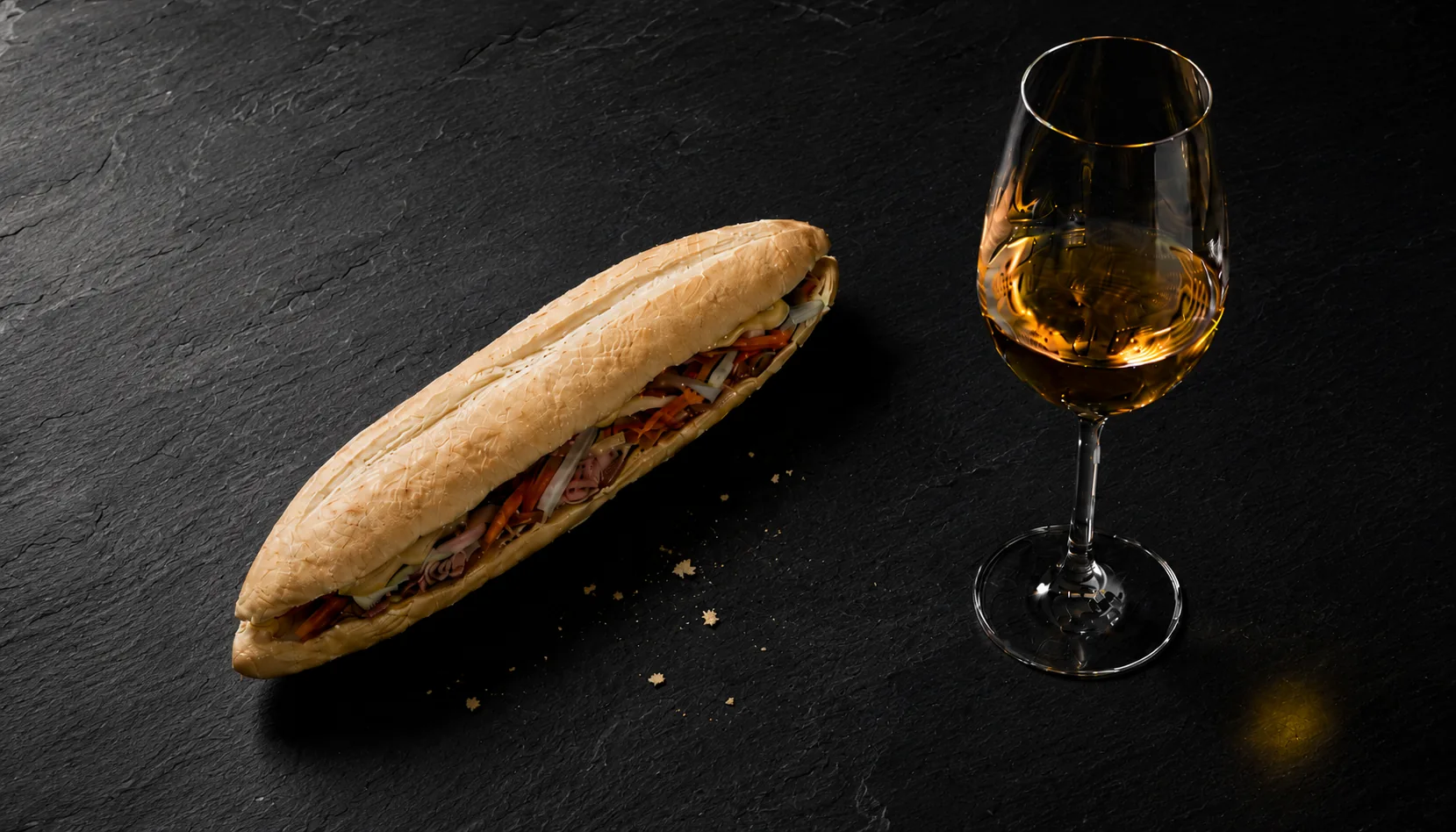
BÁNH MÌ AND WINE: THE RIGHT BOTTLE CHANGES EVERYTHING
Wine works with bánh mì because the sandwich is built on the same principles wine pairing is built on: fat needs acid, heat needs sweetness, salt needs freshness. The challenge is that no single bánh mì exists. The classic cold cut combination is a different pairing problem than a grilled pork sandwich, which is a different problem than a braised beef version. The wine that works for one can actively fight another.
The key variable across all bánh mì varieties is fish sauce and the pickled daikon and carrot. Red wines high in tannin, the compound that leaves a dry, gripping sensation in your mouth after a sip, interact badly with that saltiness, producing a bitter metallic finish that overwhelms everything else on the palate. This is why the reliable starting point for almost every bánh mì is a high-acid white, a dry rosé, or a light-bodied red with minimal tannin. The acidity does what the pickled daikon does inside the sandwich: it cuts through fat and resets the palate.
This guide covers the five major bánh mì flavor profiles and the specific wines that work for each one, with the reasoning behind every recommendation.
[ WHY WINE WORKS WITH BÁNH MÌ ]
The bánh mì is a French-Vietnamese hybrid and wine is a French inheritance. That is not a coincidence. The same colonial moment that brought the baguette to Vietnam also brought wine culture to Indochina. French colonists drank wine with pâté. Vietnamese cooks rebuilt the sandwich around that pâté. The pairing has roots that predate any food media coverage of it.
The mechanics are straightforward. The bánh mì’s fat layer, pâté and Vietnamese mayonnaise, needs something acidic to cut through it. The pickled daikon and carrot are already doing that job from inside the sandwich. A high-acid wine does it from outside, amplifying the contrast rather than fighting it. The result is a palate that stays fresh across the whole sandwich rather than becoming saturated with fat by the third bite.
The one consistent rule across all bánh mì varieties is to avoid heavy red wines with high tannin. Tannin, the compound that makes your mouth feel dry and gripped after a sip of bold red wine, binds with the proteins and salt in fish sauce and produces a bitter, drying finish that makes the wine taste harsh and the sandwich taste flat. Big Cabernet Sauvignon, heavy Syrah, and full Bordeaux blends are the wines to leave out of this pairing entirely. They are not bad wines. They are the wrong wines for this sandwich.
[ THE CLASSIC COLD CUT COMBINATION ]
This category covers bánh mì đặc biệt (special combination), bánh mì thịt nguội (cold cuts), and any version built around chả lụa, chả bì, giò thủ, and pâté. These are the highest fat versions of the sandwich. Three layers of cured meat, a full spread of pâté, and Vietnamese mayonnaise on the bread before anything else goes in.
The wine this sandwich needs most is acidity. Specifically, a wine with enough acid to cut through the pâté and Vietnamese mayonnaise without being so aromatic that it competes with the cilantro and jalapeño.
Dry Riesling from Germany is the strongest recommendation here. Look for Mosel on the label. The wine’s high acidity and citrus and mineral character work precisely against the fat of the pâté. It is widely available and easy to find in any wine shop. If the sandwich is built with extra jalapeño, look for Kabinett on the label, which indicates a touch of natural sweetness left in the wine after fermentation. That sweetness dials back the heat without making the pairing feel soft.
Dry Provençal rosé is the second strong option. Look for Grenache-dominant bottles. Whispering Angel and Miraval are the benchmark examples most shops carry. The wine’s bright acidity and restrained red fruit complement the savory cold cuts without overwhelming the fresh herbs. It is the most versatile choice for a table where multiple bánh mì varieties are being eaten at once.
Pinot Grigio from Italy is the third recommendation. Clean, crisp, and widely available in every price range. It handles the fat with high acidity and stays neutral enough that it does not compete with the sandwich’s herbs and pickled vegetables.
[ GRILLED AND CHARRED PROTEINS ]
This category covers bánh mì thịt nướng (grilled pork), bánh mì gà nướng (grilled chicken), and bánh mì nem nướng (grilled pork meatballs). These are the versions where caramelization and char are the dominant flavors. The lemongrass and fish sauce marinade produces a sweet, smoky crust that changes the pairing problem entirely.
The char on grilled protein is one of the few contexts where a light red wine enters the conversation for bánh mì. Cabernet Franc, served slightly chilled, has the red fruit character to reinforce the caramelized crust, the acidity to handle the fish sauce, and low enough tannin to avoid the bitter reaction. It is less common than Pinot Noir but most wine shops carry at least one bottle. Ask for it by name.
Beaujolais is the more approachable version of the same logic and easier to find everywhere. Made from the Gamay grape, it is light, bright, and full of cherry fruit. Its high acidity refreshes the palate between bites while complementing the sweet and smoky elements of the marinade. Serve it slightly chilled.
For white wine drinkers, Sauvignon Blanc from Marlborough, New Zealand is the call here. Its herbaceous notes reinforce the lemongrass in the marinade and the fresh cilantro in the sandwich. It is one of the most widely available white wines in any shop and works cleanly against the fish sauce.
[ BRAISED AND SLOW-COOKED PROTEINS ]
This category covers bánh mì thịt kho (caramelized braised pork), bánh mì bò kho (Vietnamese beef stew), and bánh mì xá xíu (Vietnamese BBQ pork). These are rich, sweet, soy and fish sauce-forward fillings where the braising liquid has reduced into a sticky glaze. The fat content is high and the sweetness is prominent.
The braised versions are the one category where a medium-bodied red wine with some structure becomes appropriate. The fat in slow-cooked pork belly or beef stew needs more than acid alone.
Merlot is the right call for bánh mì bò kho specifically. It is one of the most available red wines in the world at every price point. Its round body and soft tannins work with the stew’s star anise and cinnamon aromatics, which taste like similar spices to the ones already present in the wine. Bò kho shares the same aromatic language as French braised beef, lemongrass and star anise in place of thyme and bay leaf, which is why a Bordeaux-style Merlot bridges the two naturally.
For the sweeter versions like bánh mì xá xíu, Pinot Noir is more appropriate than a fuller red. Its earthiness grounds the sweetness of the Chinese BBQ glaze without fighting it. Choose a lighter-bodied Pinot Noir from Oregon or Burgundy rather than a big New World version.
An off-dry Riesling also works well across this entire category. The touch of natural sweetness mirrors the glaze and the high acidity still cuts through the fat effectively.
[ VEGETARIAN ]
Bánh mì chay is vegetarian, not vegan. It uses Vietnamese mayonnaise, which is made with eggs, and its fat profile is lighter than the meat-based versions. The dominant flavors are the mushroom pâté, tofu or other plant proteins, and the standard pickled daikon and carrot, cilantro, and jalapeño.
Without the weight of cured meats or grilled protein, the wine can be lighter. A crisp Sauvignon Blanc is the cleanest pairing here. Choose a New Zealand or French Loire Valley style, both are widely available. The high acidity and mineral character work with the mushroom pâté without overwhelming the lighter filling.
A dry sparkling wine is also an excellent option. Cava from Spain and Prosecco from Italy are both easy to find and affordable. The carbonation acts as a palate cleanser between bites in the same way the pickled vegetables do internally. It keeps the meal feeling light and the palate feeling fresh throughout.
[ SEAFOOD ]
This category covers bánh mì chả cá (Vietnamese fish cake), bánh mì tôm (shrimp), and bánh mì cá mòi (sardine). These are the most delicate versions of the sandwich. The proteins are lighter, the fat content is lower, and the fish sauce presence is more direct.
The rule here is restraint. A heavy wine in any direction overwhelms the seafood. Dry Riesling is the single strongest recommendation across all seafood bánh mì. Its high, clean acidity refreshes the palate against the fish sauce, its citrus notes complement the seafood without competing with it, and it has enough presence to hold up against the pickled vegetables and jalapeño. Look for German or French Alsace Riesling labeled dry or trocken.
Pinot Grigio from Italy is the lighter alternative. Clean, mineral, and neutral enough to let the seafood lead without interference. Widely available at every price point.
For these specific versions, even light reds are a risky call. The delicate proteins and direct fish sauce presence make the tannin reaction more pronounced than with grilled or caramelized seafood. If you want to experiment with a light red, a well-chilled Pinot Noir is the only one worth trying, but white wine is the safer and more rewarding choice here.
[ THE SCIENCE ]
Tannin is a naturally occurring compound in grape skins, seeds, and stems. It produces the dry, gripping sensation in your mouth when you drink a bold red wine. Think of it as the wine actively grabbing onto proteins on your tongue. When fish sauce enters the equation, which is extremely concentrated in proteins and salt, that grabbing reaction intensifies sharply. The result is a bitter, metallic finish that ruins both the wine and the food. High-acid white wines and light reds avoid this entirely because their structure comes from acidity rather than tannin. Acidity works with fish sauce the way lime juice works in Vietnamese cooking: it sharpens and brightens everything around it rather than fighting it.
[ THE FAQ ]
Can you drink red wine with bánh mì? Yes, but the choice matters. Big tannic reds like Cabernet Sauvignon and Syrah interact badly with fish sauce and produce a bitter finish. Light-bodied, low-tannin reds like Beaujolais, Cabernet Franc, and Pinot Noir work well, particularly with grilled and braised versions of the sandwich. Serve them slightly chilled, around 55 degrees Fahrenheit.
What is the single most versatile wine for bánh mì? Dry Provençal rosé. It has enough acidity to cut through the fat layer, enough fruit to complement the savory proteins, and a neutral enough profile that it does not fight the cilantro, jalapeño, or pickled vegetables. Whispering Angel and Miraval are the two most widely available examples. It works across almost every bánh mì variety except the most delicate seafood versions.
Does sparkling wine work with bánh mì? Yes, particularly with lighter versions like bánh mì chay or seafood bánh mì. The carbonation acts as a palate cleanser in the same way the pickled daikon and carrot do internally. Cava from Spain and Prosecco from Italy are the most accessible and affordable options.
Why does Riesling come up so often in Vietnamese food pairing? Riesling has some of the highest natural acidity of any major white grape variety. That acidity is precisely what Vietnamese food needs against fat and fish sauce. It also shares flavor notes, citrus, lime, and mineral, with the lemongrass, lime, and fresh herbs used throughout Vietnamese cooking. The two amplify each other rather than competing.
Should the wine be chilled? White wines and rosé should be served cold, around 45 to 50 degrees Fahrenheit. Light reds recommended for bánh mì, Beaujolais and Cabernet Franc specifically, benefit from being served slightly chilled, around 55 degrees. This works particularly well against the warmth of a freshly made sandwich.
What about sweet wines? A Riesling with a touch of natural sweetness, look for Kabinett on a German bottle, is useful specifically when the sandwich is spicy. The sweetness dials back the jalapeño’s heat without making the pairing feel heavy. Fully sweet dessert wines are too rich for bánh mì and would overpower everything in the sandwich.
[ WHAT TO READ NEXT ]
Dry Riesling makes the strongest case when the sandwich has three proteins, pâté, and Vietnamese mayonnaise all working together. The bánh mì đặc biệt recipe is that sandwich, and it is the version this guide returns to most.
Cabernet Franc and Beaujolais both come into the conversation when the protein is grilled. The bánh mì thịt nướng recipe covers the lemongrass and fish sauce marinade that makes the char on this sandwich the dominant flavor.
Wine is not the original pairing for bánh mì. That distinction belongs to cà phê sữa đá, and the Vietnamese iced coffee pairing guide covers why the two ended up on the same street cart and why the contrast logic is identical to the one this guide is built on.
Fat is why the wine pairing is necessary in the first place. The pork liver pâté recipe covers where that fat comes from, how it is built, and why the Riesling pairing makes complete sense once you understand the pâté.