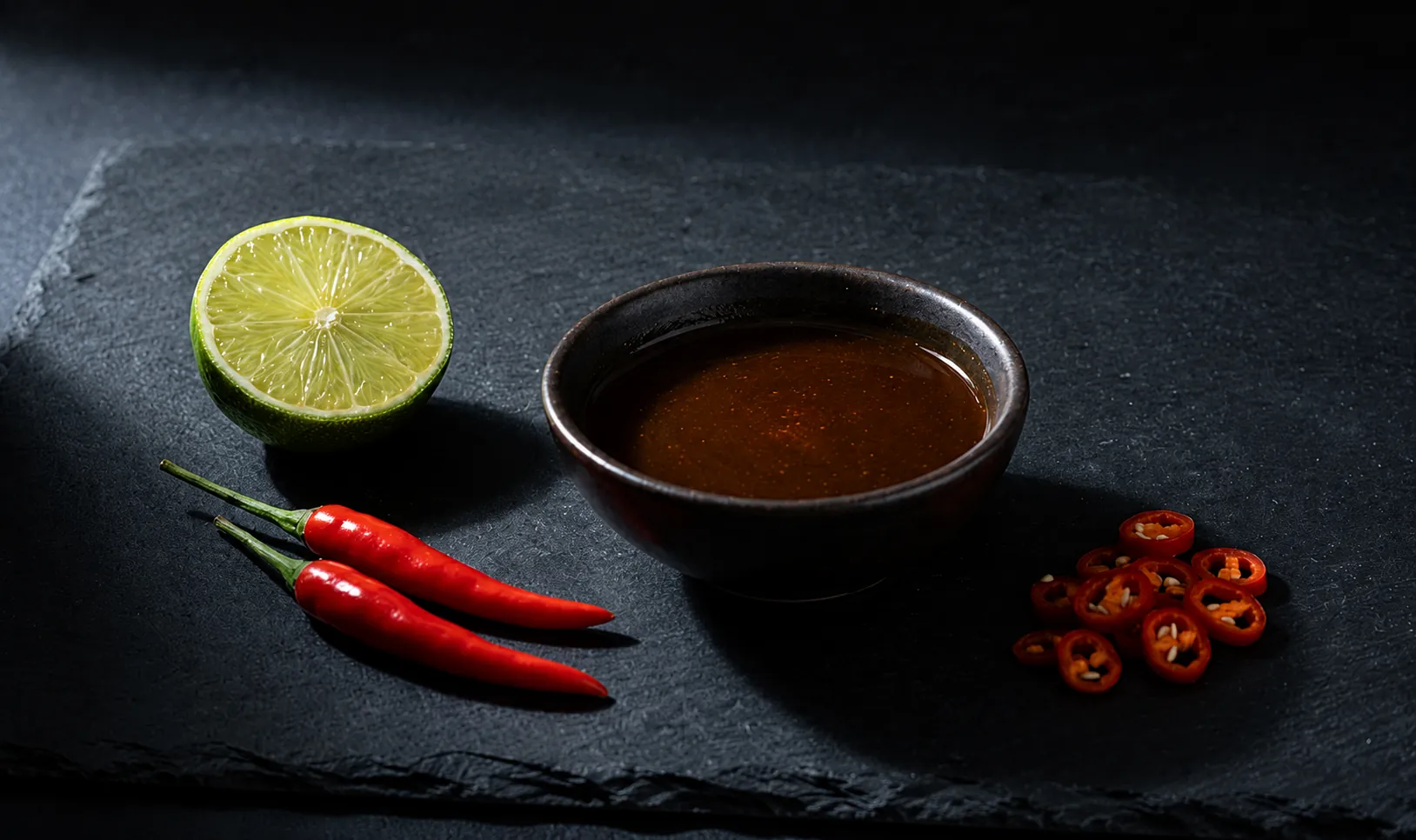
Ingredients
Equipment
Method
Make the Sauce
- Combine Maggi Seasoning Sauce, lime juice, sugar, and water in a small bowl. Stir until the sugar dissolves completely. Taste it. You are looking for salty first, then sour, then a faint sweetness underneath. Too sharp, add a few more drops of water. Too flat, add a few more drops of Maggi. This takes about 30 seconds to get right and it is worth doing properly.
- Add the sliced chilli and minced garlic if using. Stir once and let the sauce sit for two minutes before serving. The chilli and garlic need a little time to open up and release into the liquid.
- Serve in a small dish alongside the sandwich. Dip each bite directly or spoon a small amount onto the filling before you close the sandwich. Either way works.
Notes
On Maggi Seasoning Sauce: Not all Maggi is the same. The version sold at Asian grocery stores, produced for the Vietnamese and Southeast Asian market, is the correct one. It is darker, more intensely savoury, and less sweet than the European version sold at standard supermarkets. Look for the bottle with Vietnamese text or simply buy it from a Vietnamese grocer. The difference in flavour is significant and worth the extra trip.
On chilli: Fresh red chilli is the right call. Bird's eye chilli for serious heat. Fresno or red jalapeño for something milder. Start with one and taste before adding more. The sauce should have heat but it should not take over the sandwich.
On garlic: Optional but recommended. A small amount of raw minced garlic adds a sharp edge that works well with the Maggi. Do not use garlic powder. Raw only.
On storage: Best made fresh. If preparing ahead, combine the Maggi, water, and sugar and refrigerate for up to 3 days. Add the fresh lime juice, chilli, and garlic no more than 30 minutes before serving.
For the full sandwich that this sauce was made for, see the Classic Bánh Mì Thịt Nguội recipe. For the other essential condiment in the sandwich, see the Vietnamese Mayonnaise recipe.