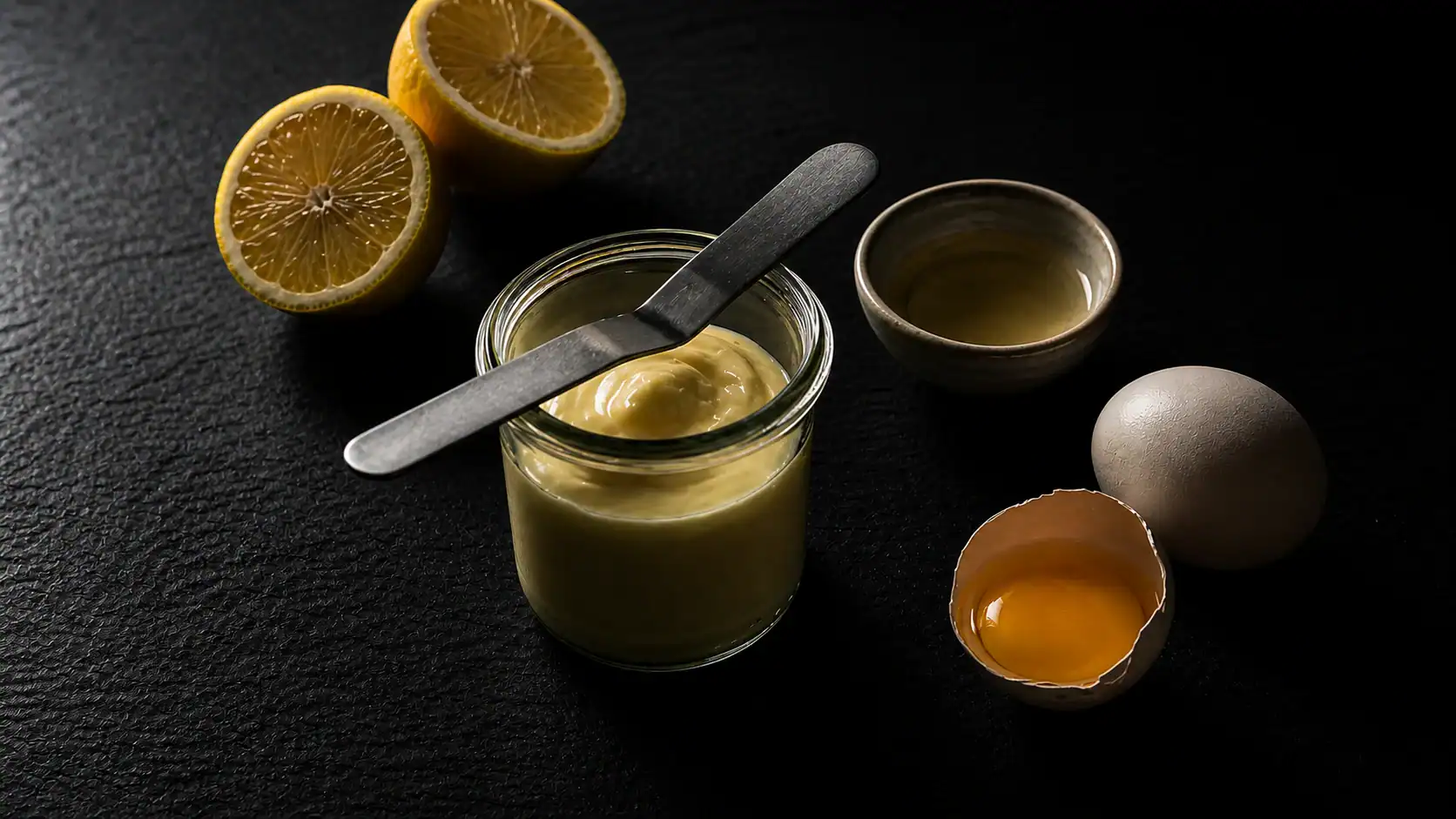
Homemade Vietnamese mayonnaise in a glass jar with eggs and lemon on dark slate

Vietnamese mayonnaise is not Hellmann’s. It is not a substitute for store-bought. It is a specific condiment with a specific job. Richer than Western mayonnaise. Slightly looser. A clean egg flavour that does not compete with the pâté or the pickles sitting next to it in the sandwich.

The difference comes down to two things. Vietnamese mayonnaise uses whole eggs rather than yolks only, which produces a lighter, less dense emulsion. And it uses a neutral oil. Not olive oil, which would overpower everything else in the sandwich.

The technique is simple. A stick blender and two minutes. No whisking by hand. No tempering. No special equipment beyond what is already in your kitchen.

One batch makes enough for eight to ten sandwiches and keeps refrigerated for five days. Make it the day before you need it. The flavour settles and improves overnight.

L. Nguyen

Vietnamese Mayonnaise

The condiment every bánh mì depends on. Whole egg, neutral oil, and rice vinegar. Stick blender method. Ready in 5 minutes. [ BEGINNER ]
Prep Time 5 minutes
Rest Time 1 hour
Total Time 1 hour 5 minutes
Servings: 240 ml
Course: Condiment
Cuisine: Vietnamese

Ingredients
  

The Base
  • 1 whole egg, room temperature
  • 1 egg yolk, room temperature
  • 1 tbsp rice vinegar
  • 1 tsp fresh lemon juice
  • 1 tsp sugar
  • ½ tsp fine salt
The Oil
  • 240 ml neutral oil (vegetable, canola, or sunflower. Not olive.)

Equipment

  • Stick blender
  • Tall straight-sided jar, 500ml minimum
  • Instant-read thermometer

Method
 

Before You Start
  1. Take the egg and egg yolk out of the refrigerator 30 minutes before you begin. Cold eggs break emulsions. Room temperature eggs hold them.
  2. Place your jar on a flat, stable surface. A jar with straight sides works better than a bowl. It keeps the blender head fully submerged during the first few seconds, which is where the emulsion forms.
Build the Base
  1. Crack the whole egg and the egg yolk into the jar. Add the rice vinegar, lemon juice, sugar, and salt.
  2. Do not stir. Do not mix. Leave everything exactly as it landed.
Add the Oil
  1. Pour all 240ml of oil directly over the egg mixture in a slow, steady stream. Do not rush this. The oil should sit on top of the eggs in a distinct layer before you begin blending.
Blend
  1. Place the stick blender at the bottom of the jar. Press it all the way down until it touches the base. Turn it on.
  2. Do not move it for the first 10 seconds. Keep it completely still while the emulsion forms at the bottom of the jar. You will see white, thick mayonnaise forming around the blender head.
  3. After 10 seconds, begin moving the blender slowly upward in a straight line, drawing the oil down into the emulsion. This takes 20 to 30 seconds. Stop when the mixture is uniform. Thick, pale, and smooth with no visible oil.
Taste and Adjust
  1. Dip a clean spoon and taste. The mayonnaise should be rich, slightly tangy, and just barely sweet. If it needs more acid, add rice vinegar in half teaspoon increments. If it needs more salt, add a small pinch and blend for five seconds.
Rest
  1. Transfer to a sealed container. Refrigerate for a minimum of one hour before using. Overnight is better. The flavour of the raw egg mellows and the emulsion firms slightly into a consistency that spreads cleanly without tearing the bread.

Notes

Kewpie mayonnaise is the correct store-bought substitute if you do not have time to make this from scratch. It is made with rice vinegar and egg yolks, which gives it a richer, slightly tangier flavour than standard Western mayonnaise. Available in most Asian grocery stores and online. Do not substitute standard mayonnaise. The flavour profile is different enough to affect the finished sandwich.
The emulsion can break if the oil is added too fast or the eggs are too cold. To fix a broken mayonnaise: crack a fresh egg yolk into a clean jar, add one tablespoon of the broken batch and blend until combined, then slowly stream in the rest while blending. The fresh yolk re-emulsifies the mixture.
This recipe keeps for 5 days refrigerated in a sealed container. Do not freeze it. Freezing breaks the emulsion permanently.
If you are pregnant, elderly, immunocompromised, or cooking for young children, use pasteurised eggs. The recipe works identically.

[ THE SCIENCE ]

Classic French mayonnaise uses yolks only. The yolk contains lecithin, a molecule that acts as a bridge between water and oil, forcing them to combine instead of separate. Adding a whole egg brings in the egg white, which is mostly water. That extra water makes the emulsion slightly looser and lighter. In a bánh mì, where the mayonnaise needs to spread thinly across both cut surfaces of the bread without competing with the pâté or the pickles, that lighter texture is exactly what you want. A yolk-only mayonnaise sits too heavy.

Temperature matters because fat behaves differently when it is cold. Cold oil does not break into small enough droplets to stay suspended in the egg. The emulsion fails before it starts. Thirty minutes on the counter is all it takes. Do not skip it.

Oil carries flavour whether you want it to or not. Olive oil has aromatic compounds strong enough to come through in a finished mayonnaise. In a sandwich already carrying pâté, pickled vegetables, fish sauce, and cilantro, that is one flavour too many. Neutral oil does the job without adding its own voice to the room.

[ THE FAQ ]

Q: Can I use a food processor or stand mixer instead of a stick blender? A food processor works. Use the same method. Eggs and seasoning first, then stream the oil in through the feed tube with the processor running. A stand mixer with the whisk attachment also works but takes longer and requires you to stream the oil in very slowly. The stick blender method is faster and produces a more consistent result with less chance of the emulsion breaking.

Q: My mayonnaise broke. It looks thin and oily. What happened? The emulsion failed. This usually means the oil was added too fast or the eggs were too cold. To fix it: crack a fresh egg yolk into a clean jar. Add one tablespoon of the broken mayonnaise and blend until combined. Then slowly stream in the rest of the broken batch while blending. The fresh yolk provides enough new lecithin to re-emulsify the mixture.

Q: How long does it keep? Five days refrigerated in a sealed container. Label the container with the date you made it. After five days, discard and make a fresh batch. Do not freeze it. Freezing breaks the emulsion permanently.

Q: Is it safe to eat raw egg? Vietnamese mayonnaise contains raw egg. The same is true of every mayonnaise made from scratch. The risk is low when using fresh, refrigerated eggs from a reliable source. If you are pregnant, elderly, immunocompromised, or cooking for young children, use pasteurised eggs. The recipe works identically.

Q: Can I use apple cider vinegar instead of rice vinegar? You can. Apple cider vinegar has a slightly more assertive flavour that will be detectable in the finished mayonnaise. Rice vinegar is mild and clean. It provides the acid the emulsion needs without contributing its own character. If rice vinegar is unavailable, white wine vinegar is a closer substitute than apple cider vinegar.

Q: What if I don’t have time to make it from scratch? Kewpie mayonnaise is the correct store-bought substitute. It is made with rice vinegar and egg yolks, which gives it a richer, slightly tangier flavour than standard Western mayonnaise. Available in most Asian grocery stores and online. Do not substitute standard mayonnaise. The flavour profile is different enough to affect the finished sandwich.

[ THE EQUIPMENT ]

A stick blender is the only tool that matters for this recipe. A tall straight-sided jar with at least 500ml capacity keeps the blender head submerged during the first ten seconds, which is where the emulsion forms. An instant-read thermometer is optional but useful if you want to confirm your eggs are at room temperature before you start.

The full equipment list with specific recommendations is on the The Equipment page

[ WHAT TO READ NEXT ]

The pickles are the next component to master. The Pickled Daikon and Carrot recipe covers the exact brine ratio and cut that every bánh mì on this site depends on.

This mayonnaise was made for one sandwich above all others. The Classic Bánh Mì Thịt Nguội recipe is where it belongs.

The bread that holds all of it together is built from scratch on the Glass Crust Bánh Mì Baguette page.