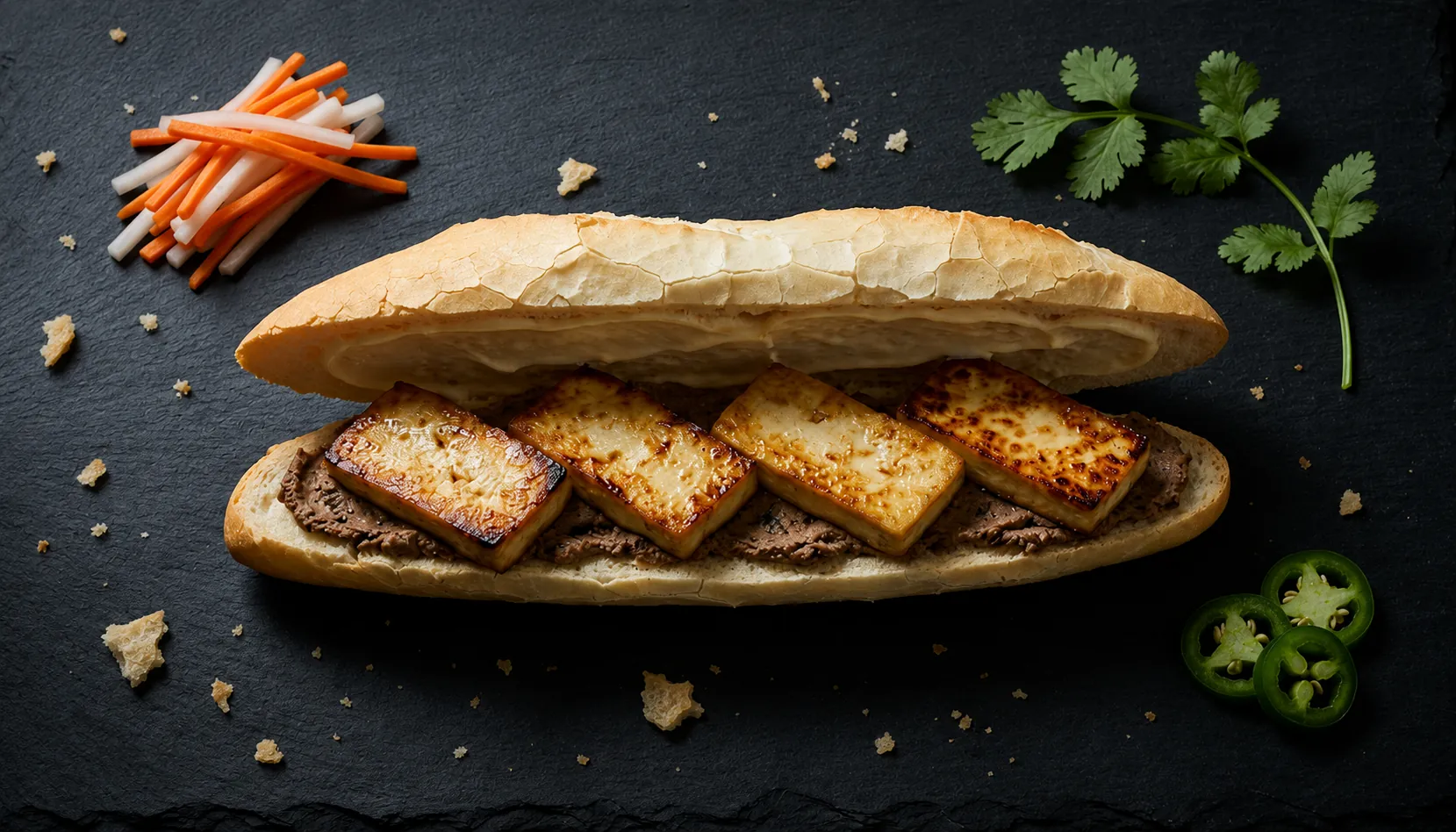
IS BÁNH MÌ VEGAN?
A traditional bánh mì is not vegan. The standard build includes pork liver pâté, Vietnamese mayonnaise made from eggs, and meat proteins. Chả lụa, chả bì, grilled pork, or roasted meats depending on the variety. None of these are plant-based.
But a vegan bánh mì is not a compromise or a workaround. It is a real category with deep roots. In Vietnam, the chay tradition, plant-based eating tied to Buddhist practice, has existed for centuries. Millions of Vietnamese observe meat-free days on the 1st and 15th of each lunar month. Bánh mì chay was built for those days. It uses tofu, mushroom-based spreads, pickled vegetables, and plant-based proteins developed to mirror the textures of the originals. The structure is the same. The balance of fat, acid, heat, and crunch is the same. Only the proteins change.
The bánh mì chay recipe on this site is vegetarian, not fully vegan. The Vietnamese mayonnaise contains eggs. One additional swap makes it completely plant-based.
[ THE TRADITIONAL BUILD ]
Every standard bánh mì starts with three non-vegan layers: pâté spread on the bottom inner bread surface, Vietnamese mayonnaise spread on the top, and a meat protein in the center. Each one does a specific job.
Pork liver pâté provides the fat-forward, savory depth that anchors the sandwich. Without it, the sandwich lacks the richness that holds all the sharper flavors together. Vietnamese mayonnaise, made from whole eggs, egg yolk, and a neutral oil, adds a creamy binding layer that carries the flavors of everything it touches. The meat proteins, whether chả lụa, chả bì, grilled pork, or roasted meats, provide the structural filling.
The pickled daikon and carrot, Persian cucumber, jalapeño, cilantro, and the bread itself are all vegan. The non-vegan components are the pâté, the mayonnaise, and the protein. Three elements. That is what needs to change.
[ THE CHAY TRADITION ]
Chay is the Vietnamese word for vegetarian or plant-based eating. It is not a modern concept. Buddhist practice in Vietnam has included regular meat-free days for centuries, observed on the 1st and 15th of each lunar month. On those days, street vendors, restaurants, and home kitchens across Vietnam produce entirely plant-based versions of everyday dishes, including bánh mì.
Bánh mì chay found in Vietnam is not simplified. Street vendors in Ho Chi Minh City and Hà Nội sell versions filled with vegan chả, Vietnamese-style sausage made from tofu or plant protein, vegan pork floss, mushroom-based spreads, and pickled vegetables. The goal is not to remove flavor. It is to maintain the full architecture of the sandwich using only plant-based materials.
This is the correct lens for approaching vegan bánh mì. Not substitution. Tradition.
[ WHAT CHANGES IN A VEGAN BUILD ]
Three swaps cover the entire gap between traditional and vegan.
The pâté. Pork liver pâté is replaced with mushroom pâté. A well-made mushroom pâté uses dried shiitake mushrooms, fresh cremini mushrooms, firm tofu, shallots, garlic, and Maggi Seasoning Sauce to build a deep, savory spread that fills the same functional role as the original. It applies the same way, sits on the same surface, and delivers fat and depth into every bite.
The mayonnaise. Vietnamese mayonnaise is made from whole eggs, egg yolk, and neutral oil. It is not vegan. The simplest swap is a plant-based mayonnaise with a neutral flavor. Kewpie makes a vegan version that is widely available. Any store-bought plant-based mayonnaise works as long as it is not heavily seasoned. It goes on both inner bread surfaces in the same thin even layer as the original.
The protein. Firm tofu marinated in lemongrass, soy sauce, sesame oil, and garlic, then pan-fried until golden, is the protein in the bánh mì chay recipe on this site. It provides a satisfying texture against the crunch of the bread. The pan must be hot before the tofu goes in. A cold pan produces soft tofu, not crisp. Press the tofu for at least 15 minutes before cooking to remove excess moisture.
[ THE BREAD ]
The Glass Crust bánh mì baguette is vegan. It contains bread flour, rice flour, water, salt, yeast, and a small amount of neutral oil. No eggs. No dairy. No animal products of any kind.
This matters because the bread is the hardest component to replicate at home, and it is fully accessible to anyone following a vegan diet. Store-bought baguettes vary. Some contain butter or milk solids. Checking the label takes 30 seconds and is worth doing. A French-style baguette from a bakery is typically vegan, but not always.
The bread is the one element that never changes regardless of the filling. Vegan build or not, the Glass Crust is the correct bread.
[ WHAT TO WATCH FOR ]
Two hidden non-vegan ingredients appear in bánh mì builds that are easy to miss.
Fish sauce. Maggi Seasoning Sauce is sometimes confused with fish sauce. It is not fish sauce. It is made from wheat-fermented glutamates, contains no animal products, and is vegan. It does contain gluten, worth noting for anyone who is both vegan and gluten intolerant. Actual fish sauce, used in some marinade recipes, is not vegan. Always check ingredient lists when marinating proteins for a vegan build.
Mayonnaise. Any recipe that calls for mayonnaise without specifying vegan mayo will contain eggs. This includes many store-bought sriracha mayo blends. Read labels before using any pre-made sauce in a vegan bánh mì build.
[ THE FAQ ]
Is bánh mì chay vegan? The bánh mì chay recipe on this site is vegetarian, not fully vegan. It uses Vietnamese mayonnaise, which contains eggs. To make it fully vegan, substitute the Vietnamese mayonnaise with a plant-based mayonnaise. Kewpie vegan mayonnaise is the closest match in flavor and texture. Confirm the mushroom pâté label contains no dairy or egg if using a store-bought version.
Is the bánh mì baguette itself vegan? Yes. The Glass Crust bánh mì baguette is made from bread flour, rice flour, water, salt, yeast, and a neutral oil. No eggs, no dairy. Store-bought baguettes may contain butter or milk solids. Check the label before using one.
Is đồ chua vegan? Yes. Đồ chua is made from daikon, carrot, salt, sugar, water, and unseasoned rice vinegar. Every ingredient is plant-based. It needs no adjustment for a vegan build.
Is Maggi Seasoning Sauce vegan? Yes. Maggi Seasoning Sauce is made from hydrolyzed wheat protein and contains no animal products. It is often confused with fish sauce due to its similar bottle and dark color. The two are not related.
What protein works best in a vegan bánh mì? Firm tofu marinated in lemongrass and soy sauce, then pan-fried until golden, is the protein used in the bánh mì chay recipe on this site. Press it for at least 15 minutes before cooking. A hot pan is essential. Crowding the pan drops the temperature and the tofu steams instead of crisping.
Is bánh mì chay an authentic Vietnamese dish? Yes. Bánh mì chay is a real and established category of Vietnamese street food rooted in the Buddhist chay tradition. It predates the modern vegan movement by decades. It is sold at dedicated chay restaurants and street stalls across Vietnam, particularly on the 1st and 15th of each lunar month.
[ WHAT TO READ NEXT ]
Bánh Mì Chay is the vegetarian version built around the components covered here. Lemongrass and soy marinated tofu pan-fried until golden, layered with mushroom pâté, Vietnamese mayonnaise, pickled daikon and carrot, and fresh herbs on a Glass Crust baguette. Substitute the Vietnamese mayonnaise with a plant-based version to make it fully vegan.
The mushroom pâté recipe is the component that makes the vegan build work. It uses dried shiitake mushrooms and fresh cremini mushrooms to build the savory depth that anchors the sandwich. It goes on the bottom half of the bread in the same position as pork liver pâté.
Đồ Chua is the pickled daikon and carrot that every bánh mì depends on, vegan or not. The recipe produces the clean sharp brine and the correct 3mm julienne that gives the sandwich its defining crunch.
The Glass Crust Bánh Mì Baguette is the foundation. It is vegan, it is the correct bread, and no other recipe on this site assumes anything different.