THE ANATOMY
The bánh mì looks simple. It is not.
Every component has a function. Every technique has a reason. The bread is not just bread. The fat layers are not just condiments. The pickles are not just garnish. Each element was placed there deliberately, refined over decades on the streets of Sài Gòn.
This section takes the sandwich apart piece by piece.
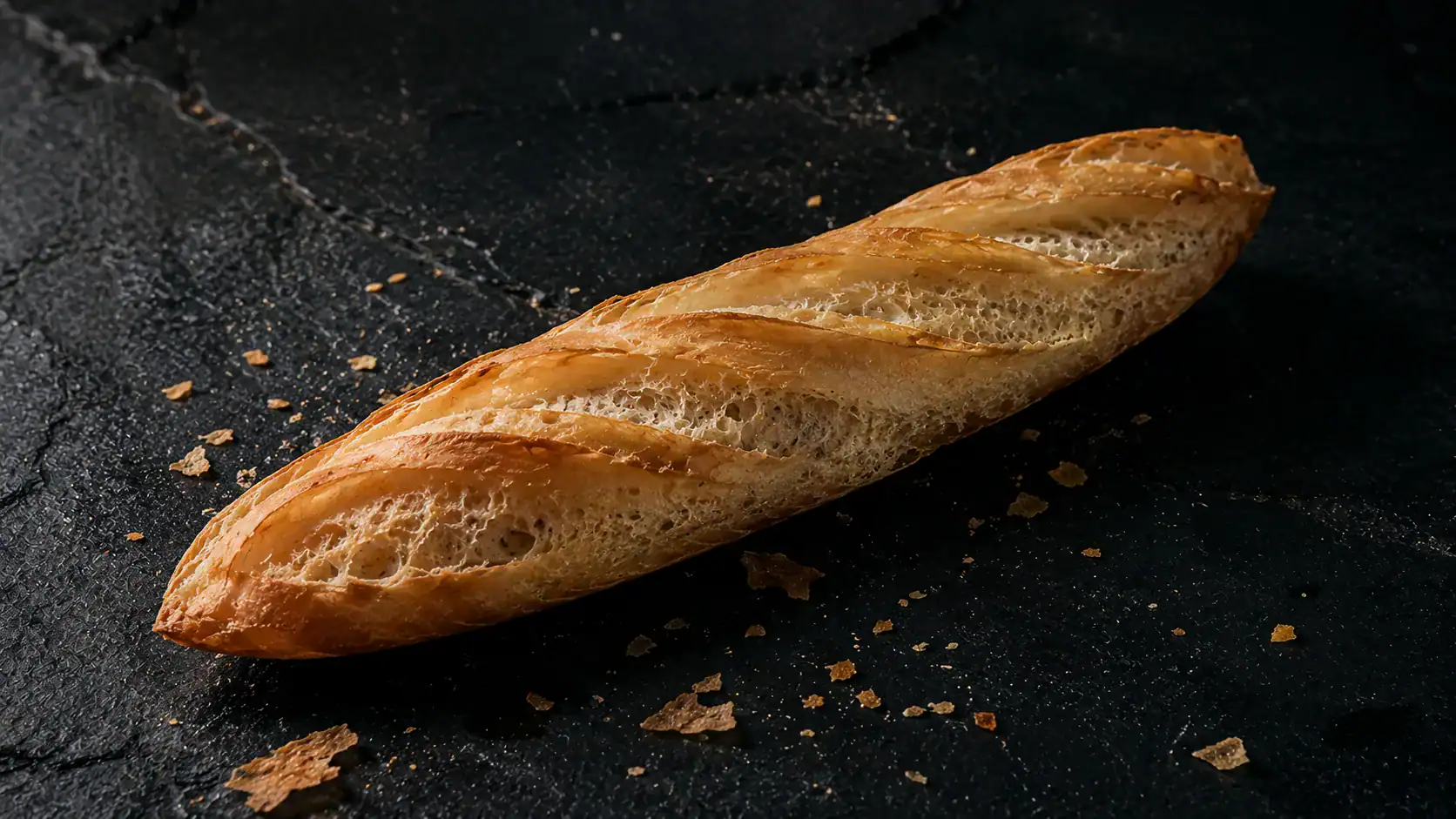
[ THE BREAD ]
Most people assume the bánh mì baguette is just a smaller French baguette. It is not. It is a different object built for a different purpose.
A French baguette uses 100% wheat flour. The thick, chewy crust is intentional. Designed to be torn apart and eaten with butter or cheese. It is a side dish. It was never meant to hold anything.
The Vietnamese baguette uses a blend of bread flour and rice flour. Rice flour contains no gluten. When it is worked into the outer layer of the dough, it breaks up the gluten network and produces a crust that is thin, brittle, and almost translucent when held to the light. It shatters when you bite it.
That is not a flaw. That is the entire point.
The crust has to shatter so the fillings can do their job. A thick, chewy crust fights back. A shattering crust yields. Every ingredient inside the sandwich lands on your palate cleanly, in sequence, without the bread getting in the way.
Size matters too. The Vietnamese baguette is smaller than its French counterpart. Sized for one person, one meal, eaten standing up. The proportions are not arbitrary. A longer bread throws off the filling ratio and breaks the balance.
Get the bread wrong and nothing else matters.
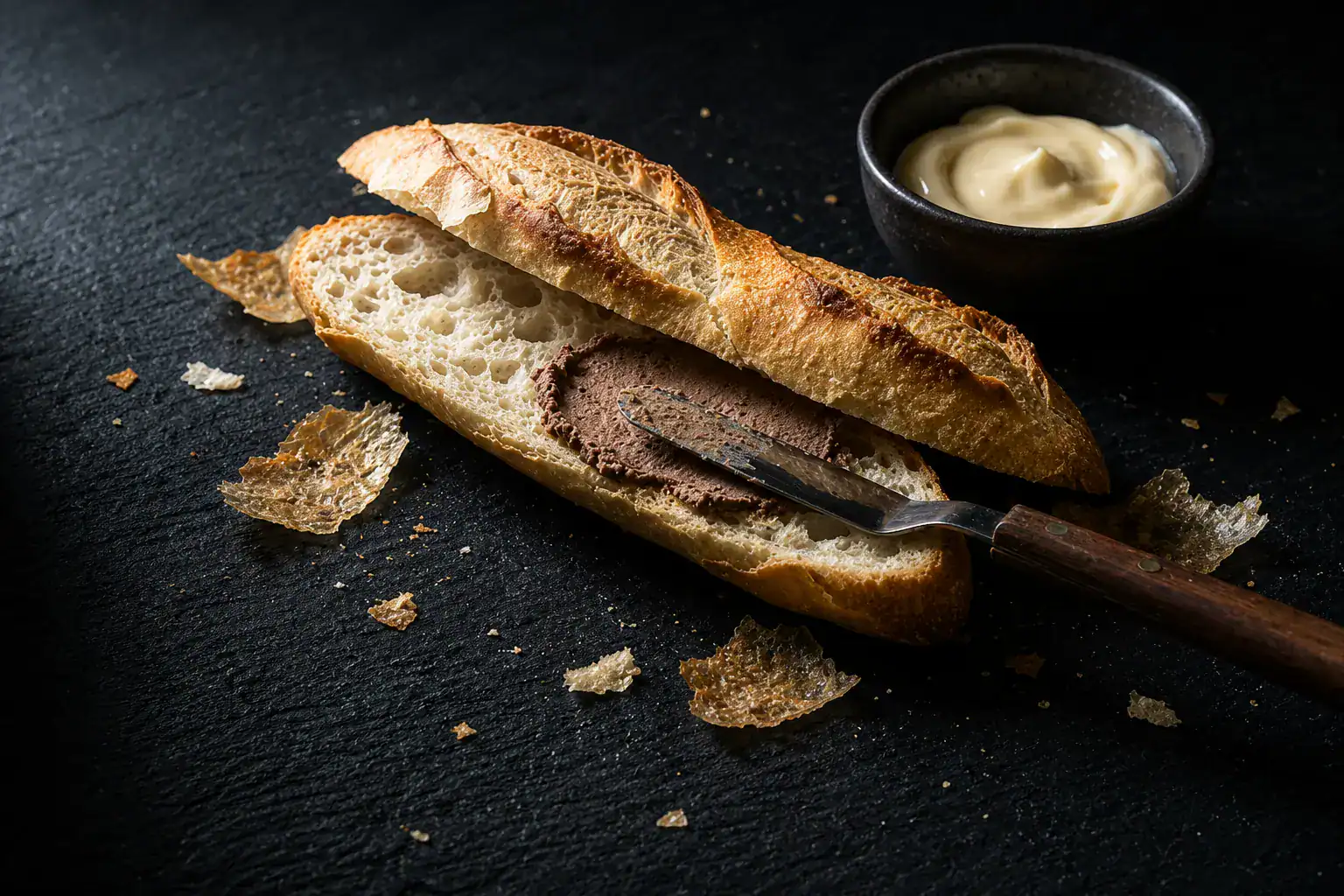
[ THE FAT BARRIER ]
The bánh mì is a wet sandwich. Pickled vegetables. Fresh herbs. Jalapeño. If you assemble it without thinking about moisture, the bread goes soft within minutes and the whole thing falls apart.
Vietnamese street cart vendors solved this problem decades ago. Two layers of fat between the bread and the wet ingredients.
Vietnamese mayonnaise goes on both inner surfaces first. Every surface. The top half and the bottom half. Mayonnaise is an emulsion. Fat and egg yolk combined into a stable barrier that water cannot easily penetrate. It coats the bread and buys time.
Pâté goes on the bottom half only, on top of the mayonnaise. A second fat layer. The pickled vegetables sit on top of the pâté. The fat absorbs the brine before the brine reaches the bread.
With both layers in place, the sandwich stays structurally sound for up to thirty minutes after assembly. That is why bánh mì vendors wrap and hand you the sandwich immediately. The clock starts when the bread is cut. Thirty minutes is generous. Most people do not wait that long.
Skip the fat barrier and the bread softens in under five minutes. Skip the pâté and the pickles win. The sequence is not a suggestion. It is engineering.
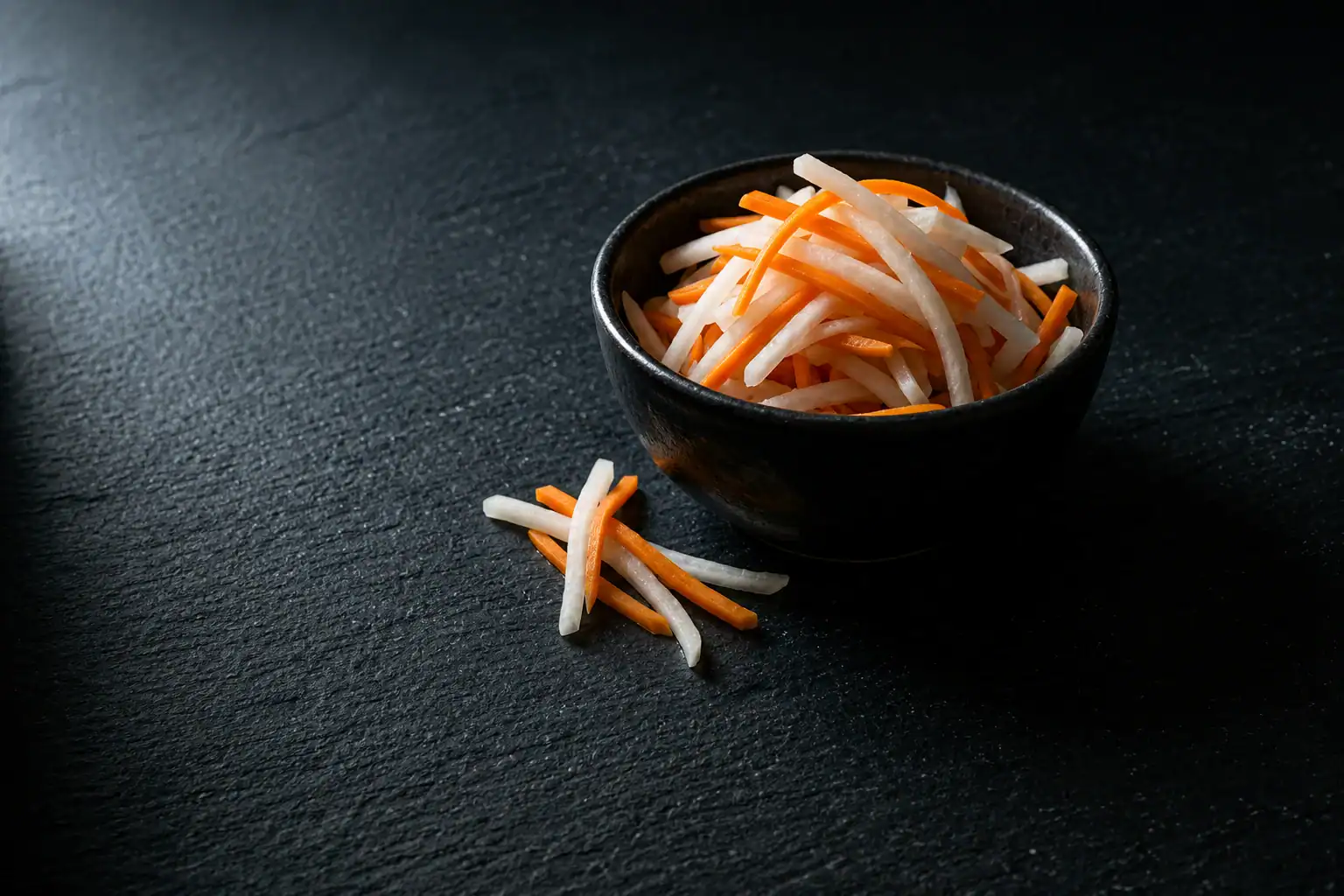
[ THE PICKLE ]
The pickle in a bánh mì is not decoration. It is the acid counterweight to everything else on the sandwich.
The fat barrier is rich. The pâté is dense. The cold cuts are savory. Without something sharp cutting through all of that, the sandwich becomes heavy after the first bite. The pickle is what keeps you eating.
The brine ratio is specific. One part rice vinegar. One part water. Sugar at 25% of the total liquid weight. That ratio produces a pickle sharp enough to register immediately but not so acidic it takes over. Adjust the vinegar up and the sandwich tastes sour. Adjust it down and the pickles taste flat. The numbers exist for a reason.
The vegetables matter. Đồ Chua (Vietnamese pickled daikon and carrot), julienned thin and uniform. Daikon has a clean, slightly bitter edge that cuts through fat without adding sweetness. Carrot brings color and a mild sweetness that softens the vinegar. Together they work. Separately they are less than half as effective.
The pickle needs time. Thirty minutes minimum at room temperature. Two weeks maximum in the refrigerator. Fresh pickles taste sharp and unfinished. Rested pickles taste balanced. The difference is obvious in the first bite.
This is not a garnish. It is load-bearing.
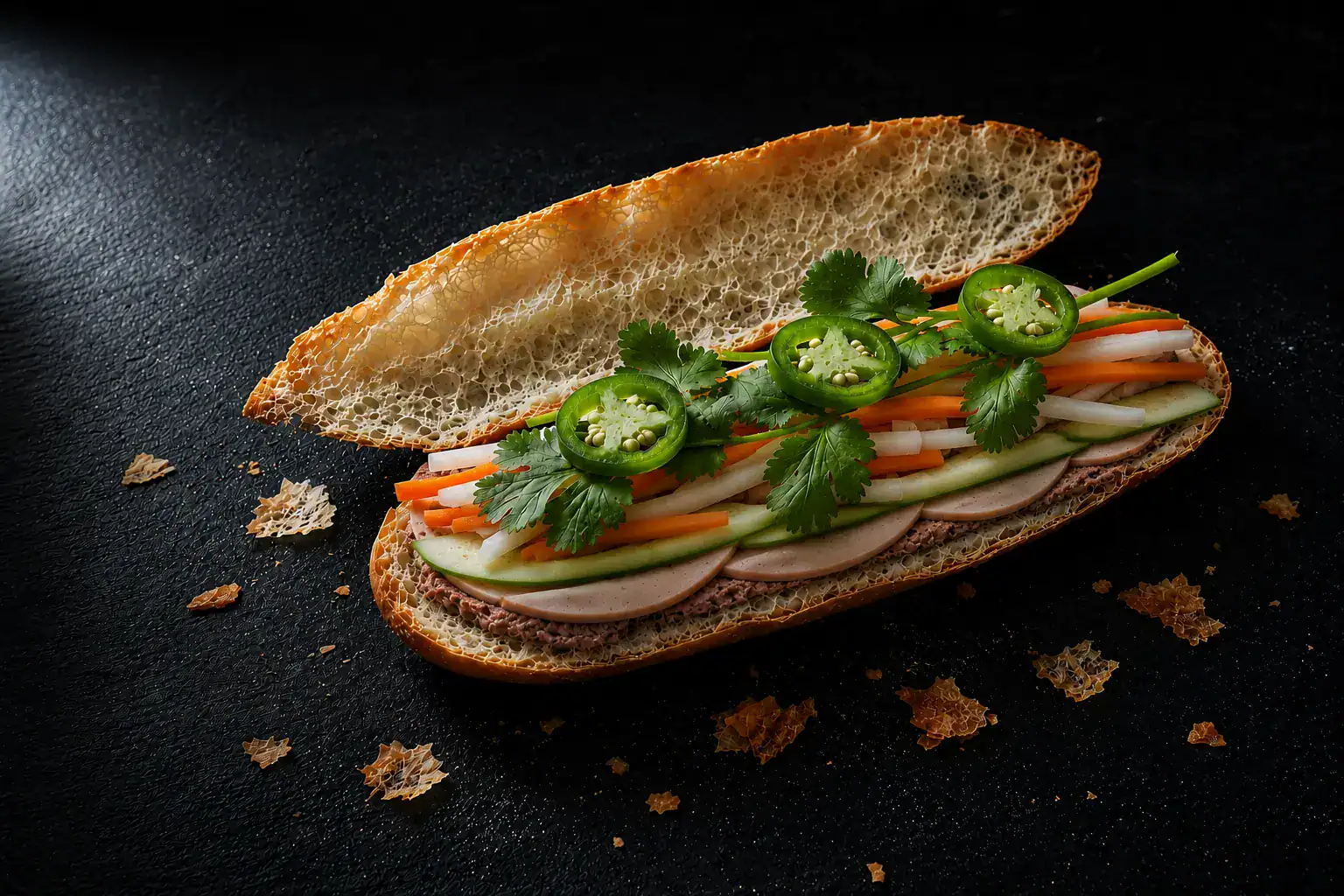
[ THE ASSEMBLY ]
The order of assembly is not a suggestion. It is the difference between a sandwich that holds together and one that falls apart before the second bite.
Start with the bread. Cut it lengthwise, three quarters of the way through. Do not cut all the way. The hinge keeps the sandwich together and maintains the filling ratio on every bite.
Mayonnaise goes on both inner surfaces first. Every surface. Top and bottom. Do not skip this step.
Pâté goes on the bottom half only, on top of the mayonnaise. Spread it thin and even. This is the second fat layer.
Cold cuts go on the pâté. Lay them flat and cover the full length of the bread without stacking too thick in any one spot. Even distribution matters. A thick pile in the middle means the first and last bites are different sandwiches.
Cucumber goes in next, sliced thin lengthwise along the full length of the bread.
Pickled daikon and carrot go on top of the cucumber. Drain them before adding. Excess brine accelerates the softening of the bread.
Fresh cilantro goes in whole. Not chopped. Lay the sprigs across the top.
Jalapeño goes on last. Three to four slices. More if you want more heat. It sits at the top where it hits first on the palate.
Close the sandwich and press down firmly with your palm. Serve immediately. The clock started when you cut the bread.
[ NOW BUILD IT ]
The architecture is documented. The logic is clear.
The Archive has the recipes. Start with the bread. Everything else follows from there.