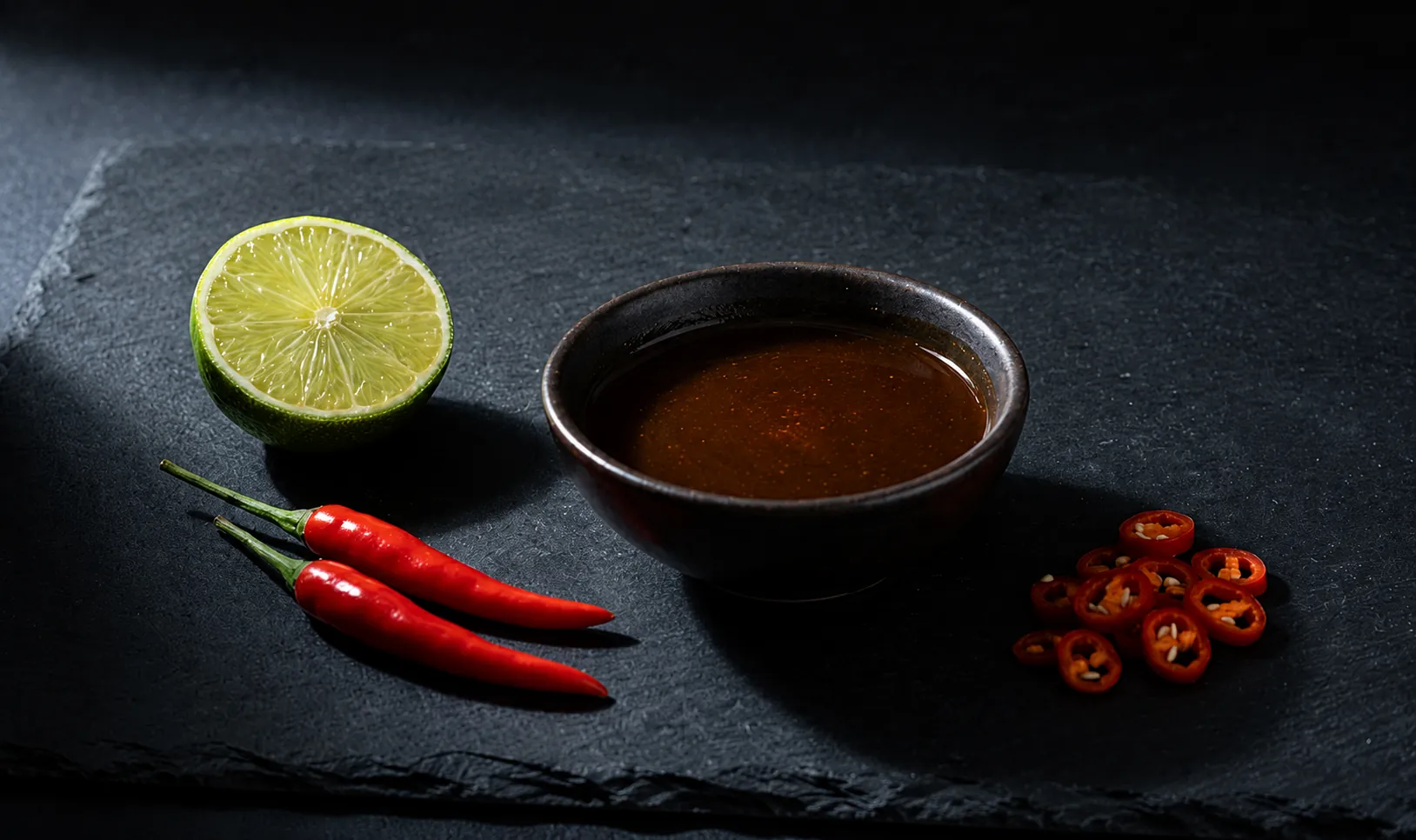
Maggi dipping sauce for bánh mì in a small dark bowl with fresh chilli and lime on a slate surface

Maggi Dipping Sauce for Bánh Mì

If you have ever eaten a bánh mì at a good Vietnamese sandwich shop and wondered why it tasted better than the one you made at home, there is a good chance Maggi was involved. A few drops go directly onto the filling just before the sandwich is closed. It is not listed on the menu. Most people never notice it is there. But take it out and the sandwich tastes flat.

This dipping sauce takes that same ingredient and turns it into something you serve on the side. Fresh lime juice, sliced chilli, a small amount of sugar, and water to bring it all into balance. Five minutes from start to finish. No cooking required. The result is sharp, salty, deeply savoury, and exactly what every bite of bánh mì wants alongside it.

L. Nguyen

Maggi Dipping Sauce for Bánh Mì

The five minute dipping sauce that makes every bánh mì better. Maggi Seasoning Sauce, fresh lime, chilli, and sugar. Sharp, salty, and deeply savoury. [ BEGINNER ]
Prep Time 5 minutes
Total Time 5 minutes
Servings: 4 bánh mì
Course: Condiment
Cuisine: Vietnamese

Ingredients
  

The Sauce
  • 2 tbsp Maggi Seasoning Sauce
  • 1 tbsp fresh lime juice (approximately ½ lime)
  • 1 tsp sugar
  • 2 tbsp water
  • 1 fresh red chilli, thinly sliced
  • 1 small garlic clove, finely minced (optional)

Equipment

  • Small bowl
  • Spoon

Method
 

Make the Sauce
  1. Combine Maggi Seasoning Sauce, lime juice, sugar, and water in a small bowl. Stir until the sugar dissolves completely. Taste it. You are looking for salty first, then sour, then a faint sweetness underneath. Too sharp, add a few more drops of water. Too flat, add a few more drops of Maggi. This takes about 30 seconds to get right and it is worth doing properly.
  2. Add the sliced chilli and minced garlic if using. Stir once and let the sauce sit for two minutes before serving. The chilli and garlic need a little time to open up and release into the liquid.
  3. Serve in a small dish alongside the sandwich. Dip each bite directly or spoon a small amount onto the filling before you close the sandwich. Either way works.

Notes

On Maggi Seasoning Sauce: Not all Maggi is the same. The version sold at Asian grocery stores, produced for the Vietnamese and Southeast Asian market, is the correct one. It is darker, more intensely savoury, and less sweet than the European version sold at standard supermarkets. Look for the bottle with Vietnamese text or simply buy it from a Vietnamese grocer. The difference in flavour is significant and worth the extra trip.
On chilli: Fresh red chilli is the right call. Bird's eye chilli for serious heat. Fresno or red jalapeño for something milder. Start with one and taste before adding more. The sauce should have heat but it should not take over the sandwich.
On garlic: Optional but recommended. A small amount of raw minced garlic adds a sharp edge that works well with the Maggi. Do not use garlic powder. Raw only.
On storage: Best made fresh. If preparing ahead, combine the Maggi, water, and sugar and refrigerate for up to 3 days. Add the fresh lime juice, chilli, and garlic no more than 30 minutes before serving.
For the full sandwich that this sauce was made for, see the Classic Bánh Mì Thịt Nguội recipe. For the other essential condiment in the sandwich, see the Vietnamese Mayonnaise recipe.

[ THE SCIENCE ]

Maggi Seasoning Sauce is built around glutamates, the same family of compounds responsible for the deep savoury quality in soy sauce, fish sauce, and aged parmesan. The difference is that Maggi uses wheat-fermented glutamates rather than soy or fish-derived ones. The result is a cleaner, more direct hit of umami with less of the funk that fish sauce brings. That is why it works so well as a finishing sauce. It adds depth without adding a competing flavour identity that fights with the rest of the sandwich.

The lime juice is doing more than adding acidity. The citric acid in fresh lime interacts with the glutamates in the Maggi and makes them taste brighter and more distinct. This is the same principle behind squeezing lime over a bowl of pho. The acid does not change the savoury flavour. It amplifies it. Which is why bottled lime juice does not work as well. It lacks the volatile aromatic compounds that make fresh lime do what it does.

The sugar is the most misunderstood ingredient in this recipe. It is not there to make the sauce sweet. It is there to round the sharp edges of the Maggi and lime without dulling either one. Take it out and the sauce tastes harsher than it should. Keep it and everything lands in balance. One teaspoon is all it takes.

[ THE FAQ ]

Q: Can I use soy sauce instead of Maggi? You can, but the result is a different sauce. Soy sauce has more sweetness and a more complex fermented character. Maggi is sharper, more concentrated, and more intensely savoury. If Maggi is genuinely unavailable, use a light soy sauce and reduce the quantity by about a quarter since it is less concentrated than Maggi.

Q: Which Maggi should I buy? The version produced for the Vietnamese and Southeast Asian market. It comes in a dark glass or plastic bottle and is noticeably darker and more intense than the European version. Look for Vietnamese text on the label or buy it from a Vietnamese grocery store. That is the one this recipe was built around.

Q: How spicy should it be? Entirely your call. One bird’s eye chilli gives a noticeable heat that builds slowly. Two makes it properly hot. A Fresno or red jalapeño keeps the flavour without as much fire. There is no wrong answer as long as the heat complements the sandwich rather than overpowering it.

Q: Do I have to use fresh lime juice? Yes. Bottled lime juice is too sweet and lacks the brightness that makes this sauce work. Half a lime is all you need and the difference is immediately obvious in the finished sauce.

Q: Can I make a bigger batch? Yes. The recipe scales up easily. Double or triple the quantities and store in a sealed jar in the refrigerator for up to 3 days without the fresh aromatics. Add the chilli, garlic, and lime juice fresh each time you serve it.

Q: Where does Maggi come from? Maggi was created by Julius Maggi in Switzerland in 1886 as an affordable protein supplement for the working class. It spread across Europe through French colonial trade routes and arrived in Vietnam during the colonial period. Vietnamese cooks adopted it immediately and made it their own. It is now one of the defining flavour notes of the bánh mì.

[ THE EQUIPMENT ]

A small bowl and a spoon. That is everything this recipe needs. For the tools that make the rest of the bánh mì kitchen work, the full equipment list with specific recommendations is on the Equipment page.

[ WHAT TO READ NEXT ]

Maggi Seasoning Sauce is also used directly inside the sandwich, not just as a dipping sauce. The Classic Bánh Mì Thịt Nguội recipe covers exactly how and where it goes in the assembly.

For the other essential condiment layer in the sandwich, see the Vietnamese Mayonnaise recipe.

The What Goes in a Bánh Mì guide covers every component of the sandwich including the full role Maggi plays in the flavour architecture.