Ingredients
Equipment
Method
Prepare the Vegetables
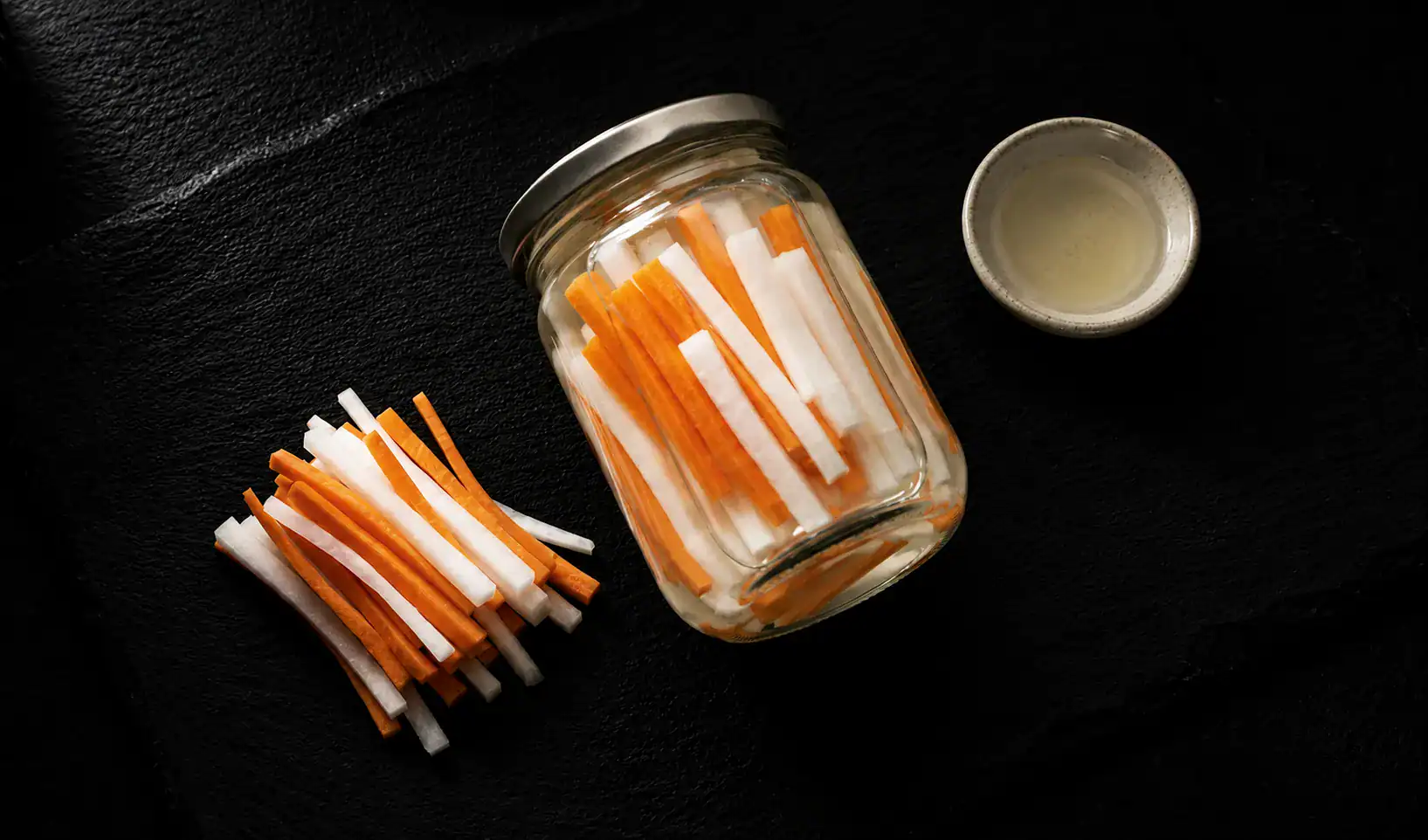
- Peel the daikon and carrots. Cut them into matchsticks 3mm wide and 6 to 7cm long. Consistent size matters. Pieces cut at different widths pickle at different rates. Some will be sharp and fully pickled while others are still raw. A mandoline produces more consistent results. A sharp knife works but requires more time and attention to keep the width even.
- Place the julienned daikon and carrot in a bowl. Add 1 tsp salt and 1 tsp sugar. Toss to combine. Let sit for 10 minutes. The salt draws moisture out of the vegetables. You will see liquid pooling at the bottom of the bowl.
- After 10 minutes squeeze the vegetables firmly with your hands over the sink. Remove as much liquid as you can. Then rinse them under cold water and squeeze again. Dry them with a clean kitchen towel.
- This step is not optional. Removing the moisture first means the brine penetrates the vegetables faster and more evenly. Skip it and the pickles will take twice as long and taste diluted.
Make the Brine
- Combine the rice vinegar, water, sugar, and salt in a small saucepan over medium heat. Stir until the sugar and salt dissolve completely. This takes 2 to 3 minutes. Do not boil. Remove from heat and let cool to room temperature, about 15 minutes.
- Do not pour hot brine over the vegetables. Hot liquid cooks them slightly and produces a soft, limp pickle instead of a crisp one.
Pickle
- Pack the squeezed vegetables into a clean jar or container. Pour the cooled brine over them. Press the vegetables down so they are fully submerged. If they are not fully submerged add water in small increments until they are covered.
- Seal the container and refrigerate for a minimum of 2 hours. The pickles are ready when they taste sharp and clean with a slight crunch still present. Overnight is better. The flavor deepens and the texture settles into exactly what the sandwich needs.
Notes
The 1:1 brine ratio is not flexible. Too much vinegar and the pickles overpower the cold cuts. Too little and they taste flat. Measure by weight, not volume, for a consistent result every time.
These keep for two weeks refrigerated in a sealed container. After two weeks the vegetables begin to soften and the brine becomes overly sharp. Make a fresh batch.
Rice vinegar is the correct acid for this recipe. White wine vinegar is an acceptable substitute. Apple cider vinegar has too strong a flavor of its own. Distilled white vinegar is too harsh. If rice vinegar is unavailable white wine vinegar is the closest substitute.
The salt and sugar pre-treatment is not optional. Skipping it produces a diluted, slower pickle that never develops the same crispness or depth.
These pickles are used in every bánh mì recipe on this site. Make a full batch and keep them in the refrigerator. They are ready whenever you need them.