Ingredients
Equipment
Method
Marinate the Beef
- Combine oyster sauce, soy sauce, fish sauce, dark brown sugar, minced garlic, sesame oil, and white pepper in a bowl. Add the sliced beef and toss until every piece is evenly coated. Cover and leave to marinate for 30 minutes at room temperature. Do not marinate longer than 1 hour. The sugar in the marinade begins to break down the protein structure after that point and the beef loses its texture when seared.
Build the Skillet
- Heat a cast iron skillet over high heat for 2 to 3 minutes until very hot. Add 1 tablespoon of butter. It should foam immediately and begin to brown. Add the sliced onion and cook for 2 minutes without moving until the edges begin to char. Push the onion to the edges of the pan.
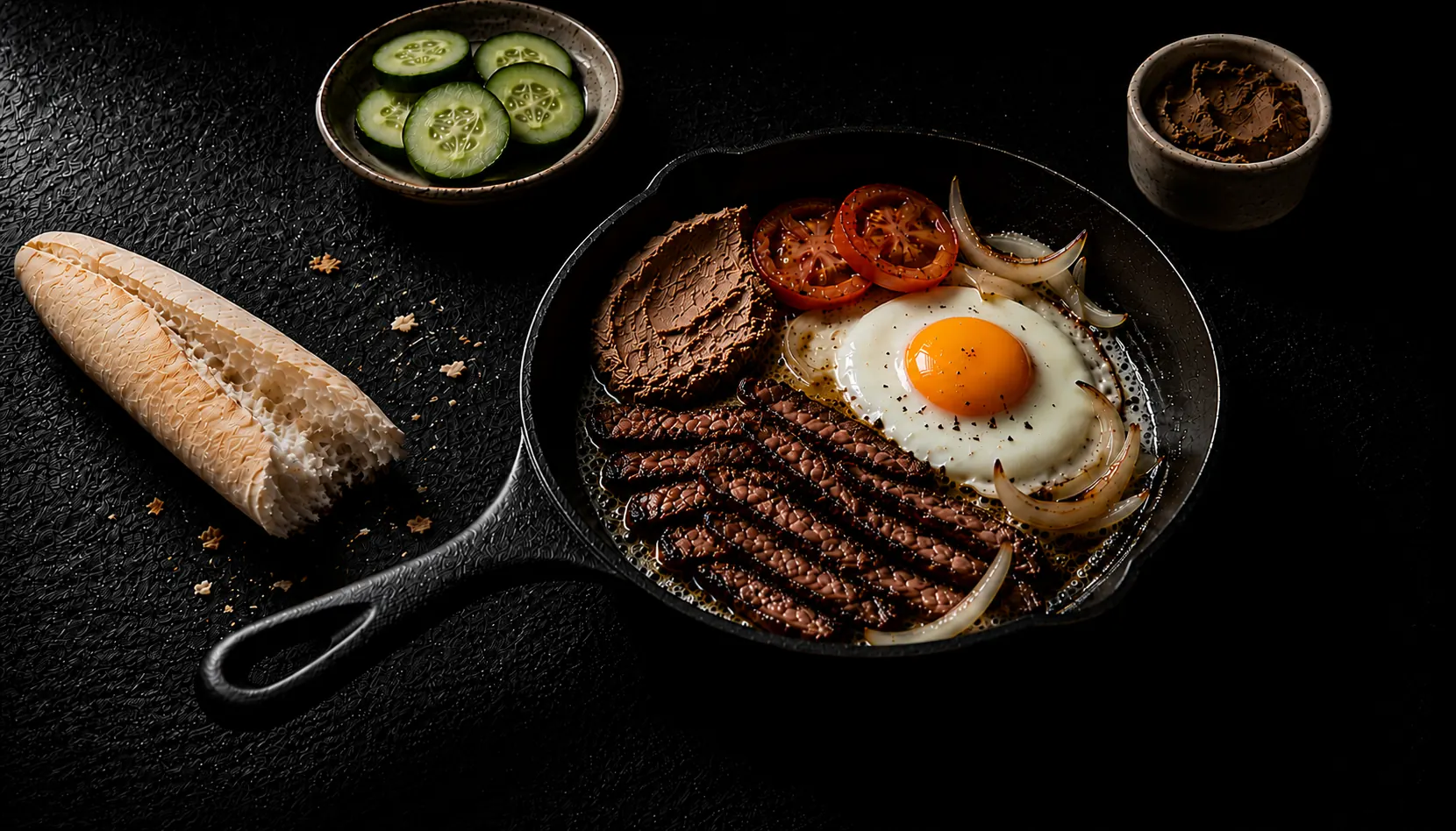
- Add the marinated beef to the center of the pan in a single layer. Do not stir. Sear for 1 minute without moving until the underside chars and caramelizes. The dark brown sugar in the marinade creates a lacquered char on the beef surface. This is correct. Flip and sear for 30 seconds on the second side. Push to the edges alongside the onion.
- Reduce heat to medium. Add the remaining tablespoon of butter to the center of the pan. Add the tomato slices in a single layer. Cook for 1 minute until they begin to soften and release their juice into the butter.
- Add the pork liver pâté to the pan beside the tomatoes. It will begin to melt at the edges immediately. Do not stir it into the other ingredients. It should sit as a distinct smear on the pan surface.
- Crack the eggs directly into the pan over the tomatoes. Do not stir. Cook for 2 to 3 minutes until the whites are fully set and the yolks are still runny. The runny yolk is not optional. It breaks when the bread presses into the pan and combines with the butter, beef marinade, and melted pâté into a unified sauce. A fully cooked yolk loses this entirely.
- Remove from heat. Add three drops of Maggi Seasoning Sauce across the pan. Finish with freshly ground black pepper.
Serve
- Bring the pan directly to the table while it is still sizzling. Place the warm baguettes alongside. Tear the bread into pieces roughly 5cm wide. Press each piece flat side down into the pan to soak up the butter, beef marinade, and egg yolk. Use the bread to scoop the beef, egg, and pâté directly from the pan. Eat immediately while the pan is still hot.
Notes
On the beef cut: Sirloin and flank steak are the correct cuts for bò né. Both are lean enough to char correctly at high heat without releasing too much fat into the pan. Ribeye works but produces a greasier result. Whatever cut you use, slice against the grain at 3mm thickness. Slicing with the grain produces chewy strips that do not absorb the marinade correctly.
On the butter: Butter is not optional in bò né. It is what distinguishes this dish from every other Vietnamese skillet preparation. The milk solids in butter brown during searing and add a nutty richness that neutral oil cannot replicate. Use unsalted butter. The marinade and Maggi Seasoning Sauce provide all the salt the dish needs.
On the marinade time: 30 minutes at room temperature is correct. Less than 15 minutes and the beef does not absorb enough flavor. More than 1 hour and the sugar breaks down the protein structure and the beef becomes soft rather than charring correctly at high heat.
On the char: The dark brown sugar in the marinade creates a lacquered char on the beef surface during searing. This char is not burnt. It is caramelized sugar and a browning reaction happening at the same time. The same reaction that turns bread golden in a toaster, but happening much faster at cast iron temperatures.
On the eggs: Two eggs per person is the standard. Sunny side up with a runny yolk is correct. The yolk breaks into the butter and beef marinade when the bread presses into the pan and becomes part of the sauce. Watch the eggs closely. The residual heat in the cast iron pan continues to cook the eggs after you remove it from the heat.
On serving in the pan: Bò né is served in the individual cast iron skillet it was cooked in, not plated. One skillet per person. The cast iron retains heat and keeps the butter bubbling at the table. This recipe serves 2 using two individual skillets cooked simultaneously. For 4 people cook two batches or use four individual skillets.
On the tomato: Fresh tomato slices are a standard component of bò né. They soften in the butter during cooking and provide acidity that cuts through the richness of the beef and pâté. Do not skip them. They are not decoration.
On make-ahead: The beef can be marinated overnight in the refrigerator. Remove from the fridge 15 minutes before cooking to take the chill off. Cold beef dropped into a hot pan lowers the temperature and produces a pale steam rather than a char.