Ingredients
Equipment
Method
Marinate and Dry the Duck
- Combine garlic, oyster sauce, soy sauce, hoisin sauce, five spice powder, sesame oil, sugar, white pepper, and salt in a small bowl. Mix into a paste. Rub the marinade thoroughly inside the cavity of the duck. Do not put any marinade on the skin. Marinade on the skin prevents it from drying correctly and produces a soft rather than lacquered result.
- Place the duck breast-side up on a wire rack set over a tray. Do not cover. Refrigerate for a minimum of 8 hours, ideally overnight. The refrigerator's dry air removes moisture from the surface of the skin. Dry skin is essential for the lacquered crust. A duck that goes into the oven with wet skin steams rather than crisps.
Make the Maltose Glaze
- Combine maltose syrup, soy sauce, rice vinegar, and water in a small saucepan over low heat. Stir until the maltose dissolves completely, 2 to 3 minutes. Remove from heat. The glaze should be thin enough to brush easily but thick enough to coat the back of a spoon. This glaze is what produces the mahogany color and lacquered texture that defines vịt quay. Honey produces a similar result but a less deeply colored crust.
Glaze and Roast
- Remove the duck from the refrigerator 30 minutes before roasting. Preheat the oven to 200°C / 400°F. Place the duck breast-side up on a wire rack set over a roasting tray lined with foil.
- Brush the maltose glaze evenly across the entire surface of the duck skin. Apply a second coat immediately. Two coats before the oven is the minimum. The glaze layers build the lacquered color during roasting.
- Roast at 200°C / 400°F for 30 minutes. Remove from the oven and brush another coat of glaze across the entire skin surface. Return to the oven and roast for a further 30 minutes.
- Increase the oven temperature to 220°C / 425°F. Brush one final coat of glaze. Roast for a further 15 to 20 minutes until the skin is deeply mahogany and crackling when tapped. The internal temperature of the thigh should reach 74°C / 165°F on an instant-read thermometer.
- Remove from oven. Rest the duck on the rack for 15 minutes before carving. Do not skip the rest. The juices redistribute during this time. A duck carved immediately after roasting loses most of its moisture onto the cutting board rather than staying in the meat.
Carve and Assemble
- Carve the breast and leg meat into thin slices roughly 5mm thick. Each slice must include both skin and meat. The skin is not a garnish. It is the defining element of this sandwich. A slice of vịt quay without skin is just roast duck.
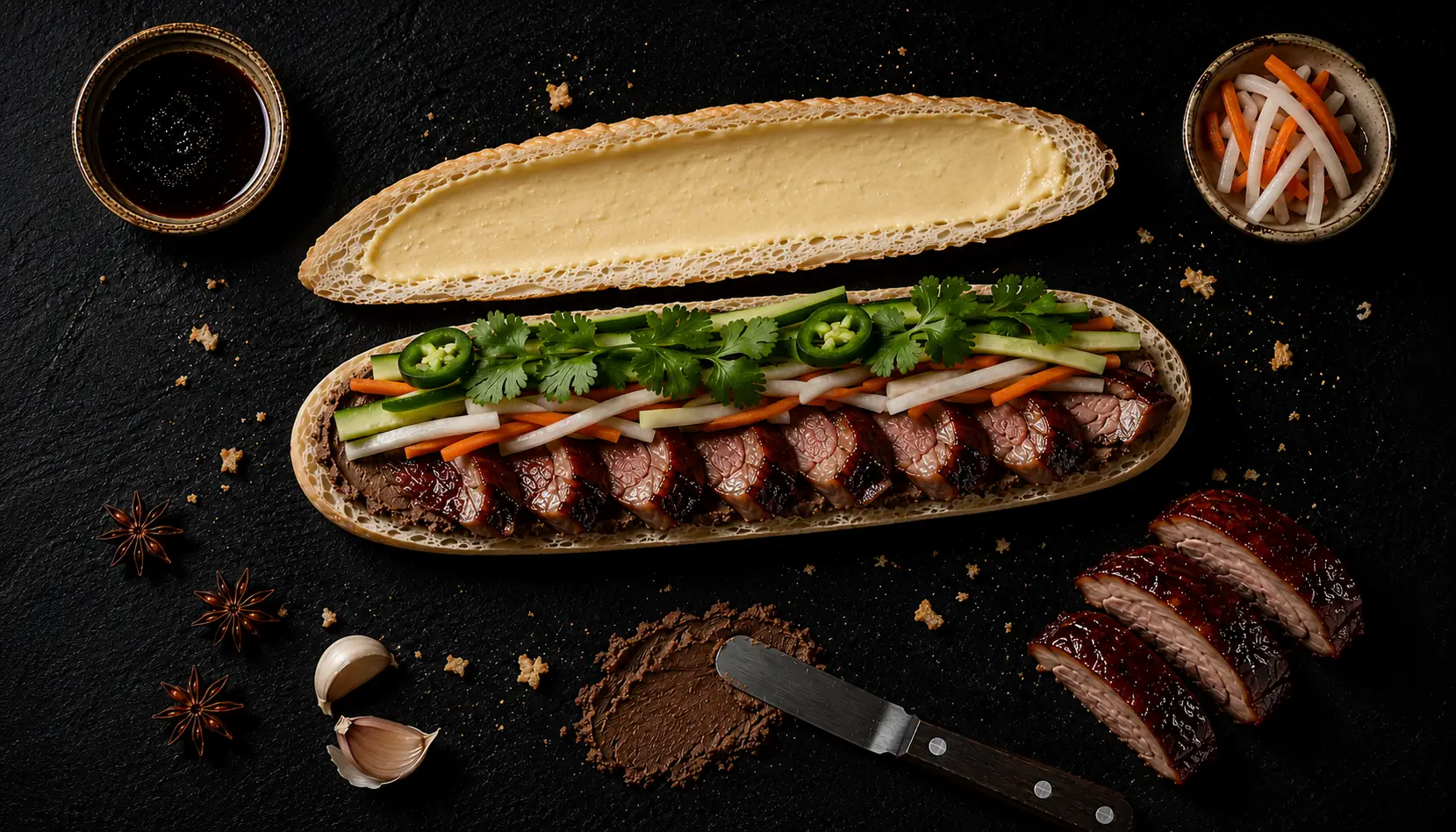
- Split each baguette lengthwise, cutting three-quarters through. Do not cut completely. Open the bread. Apply Vietnamese mayonnaise to both cut surfaces. This is the fat barrier. It seals the bread and counterbalances the richness of the duck fat.
- Spread pork liver pâté on the bottom half only.
- Lay the carved duck slices along the full length of the bread over the pâté. The slices should overlap slightly and cover the bread from end to end. Do not pile them too high. The duck is rich. Three to four slices per sandwich is correct.
- Add Persian cucumber strips across the duck. Add the drained đồ chua on top of the cucumber. Excess brine will make the sandwich soggy.
- Add cilantro in whole sprigs. Do not chop it. Add jalapeño slices. Two to three per sandwich is correct. Add three drops of Maggi Seasoning Sauce across the top. Close the sandwich and press down firmly. Serve immediately.
Notes
On drying the duck: The overnight dry in the refrigerator is the most important step in this recipe. It is what separates a lacquered crackling skin from a soft pale one. Eight hours is the minimum. Twelve hours produces a better result. The duck must be completely uncovered on a wire rack so air circulates around all surfaces.
On the maltose glaze: Maltose syrup is available at most Asian grocery stores in the baking section. It is thick and sticky, similar to molasses in texture. Honey is the correct substitute if maltose is unavailable but produces a slightly less glossy result. Do not use sugar syrup. It burns before the duck is cooked through.
On glaze application: Apply the glaze in multiple thin coats rather than one thick coat. Each coat dries slightly before the next one goes on, building depth of color and a more complex lacquered surface. Three to four coats total across the full roasting time is the standard.
On carving: Always include skin with every slice of meat. The skin is the reason this sandwich is worth making. If the skin has softened during resting, place the carved duck under a hot grill for 2 to 3 minutes to re-crisp before assembling the sandwich.
On the duck size: A 2 to 2.5kg duck produces enough meat for 4 generous sandwiches. A smaller duck produces less meat and the skin-to-meat ratio becomes too high. A larger duck takes longer to cook and risks drying out the breast before the legs are done.