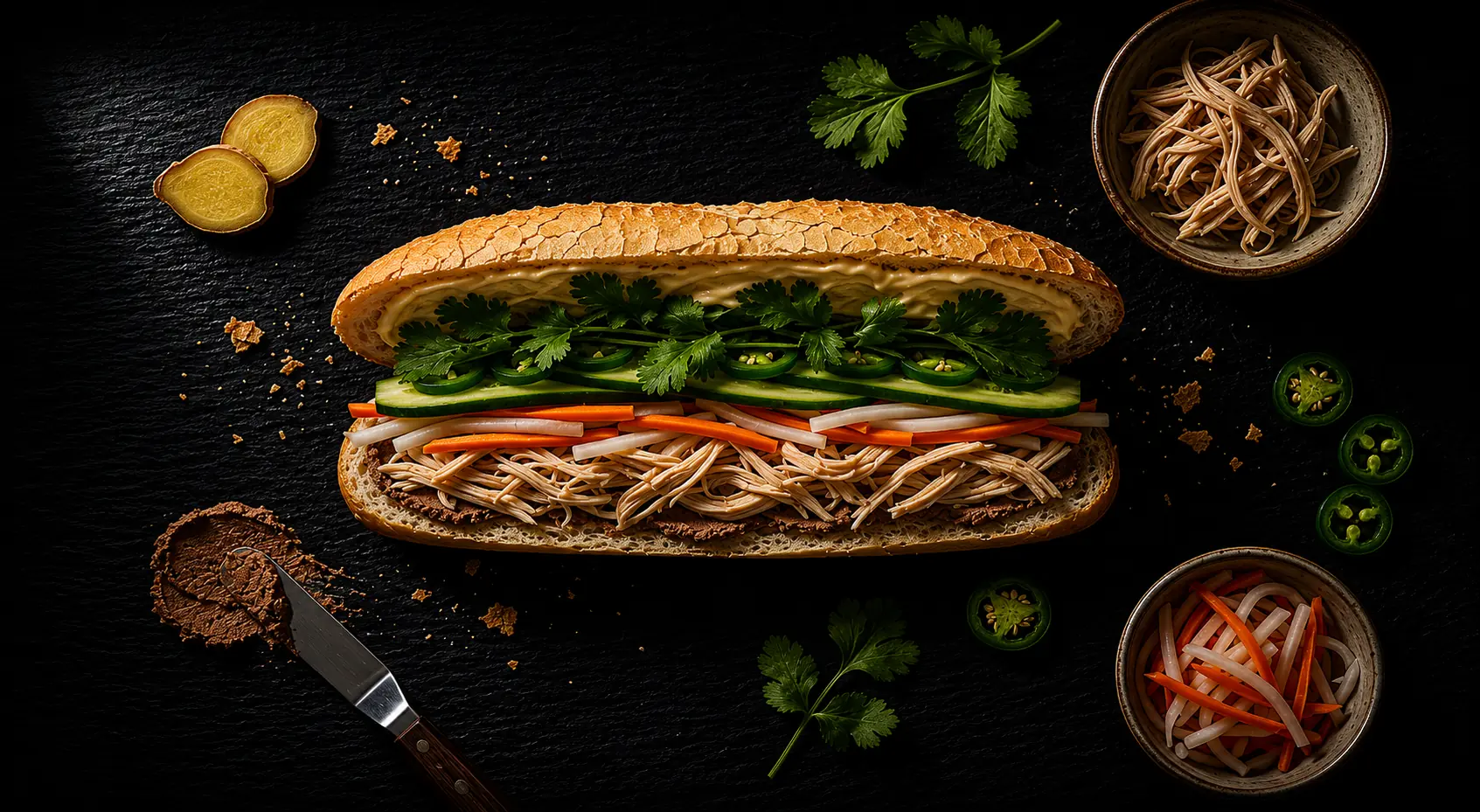
Ingredients
Equipment
Method
Poach the Chicken
- Place chicken thighs in a large pot with ginger slices and salt. Cover with cold water. Bring to a boil over high heat, then reduce to a steady simmer. Cook for 20 to 25 minutes until the thighs are cooked through. The internal temperature should reach 82°C (180°F). At this temperature the connective tissue in the thigh breaks down completely and the meat pulls apart into long moist strands. Pulled at a lower temperature the meat resists shredding and produces short, dry strands.
- Remove the chicken from the liquid and rest for 5 minutes. Do not discard the poaching liquid. Reserve 3 tablespoons for the dressing. The poaching liquid carries concentrated chicken flavor from the ginger and the rendered fat. Adding it to the dressing deepens the flavor of the shredded meat.
- While the chicken is still warm, remove the skin and bones. Shred the meat by hand along the grain into fine long strands. Work quickly. Warm chicken shreds more cleanly than cold chicken. Cold chicken tears unevenly and produces chunky pieces that sit awkwardly inside the sandwich.
Dress the Chicken
- Combine fish sauce, lime juice, sugar, garlic, white pepper, and 3 tablespoons of reserved poaching liquid in a bowl. Stir until the sugar dissolves completely.
- Add the shredded chicken while it is still warm. Toss thoroughly until every strand is coated. Let the dressed chicken rest for 10 minutes. The warm meat absorbs the dressing as it cools. Chicken dressed cold stays wet on the surface rather than absorbing the flavor through the fibers.
Assemble
- Split each baguette lengthwise, cutting three-quarters of the way through. Do not cut completely. The hinge holds the sandwich together.
- Spread the pâté across the bottom half of each baguette. Cover the full surface. The pâté provides the savory depth the delicate shredded chicken needs beneath it.
- Spread the Vietnamese mayonnaise across the top half of each baguette.
- Pile the dressed shredded chicken generously across the pâté. Use enough to cover the full length of the bread in a loose, generous layer.
- Add the đồ chua directly on top of the chicken. Drain it thoroughly. The acidity cuts through the richness of the pâté and the fat in the dressing.
- Add cucumber strips along the length of the sandwich.
- Add a small bundle of cilantro. Do not chop it. Whole sprigs only.
- Lay jalapeño slices across the top. Three drops of Maggi Seasoning Sauce along the length. No more. Close the sandwich, press down firmly with your palm, and serve immediately.
Notes
On the chicken cut: Bone-in skin-on thighs produce the most flavorful poaching liquid and the most moist shredded meat. The fat renders into the liquid during poaching and keeps the meat moist. Boneless skinless thighs work but produce a less rich result. Chicken breast produces drier, stringier shreds with less flavor. It is not the correct cut for this recipe.
On poaching temperature: A steady simmer is correct for poaching chicken. A rolling boil toughens the proteins and produces dry, rubbery meat. The water should be moving gently with small bubbles breaking the surface. If the water is boiling hard, reduce the heat immediately.
On shredding warm: Shred the chicken while it is still warm, not hot and not cold. Hot chicken is difficult to handle and the meat has not relaxed enough to shred cleanly. Cold chicken has tightened and produces uneven chunks. Warm chicken at around 50°C (120°F) shreds into long clean strands with minimal effort.
On dressing warm: The dressing must be applied while the chicken is warm. Warm meat has open fibers that absorb liquid. As the chicken cools the fibers tighten and the dressing sits on the surface rather than penetrating the meat. The difference in flavor between chicken dressed warm and chicken dressed cold is significant.
On the poaching liquid: Do not discard the poaching liquid. Reserve it for the dressing and also keep the rest for soup, congee, or noodles. The ginger-infused chicken stock is too valuable to discard.
On make-ahead: The dressed shredded chicken keeps refrigerated for up to 2 days. The flavor improves overnight as the dressing penetrates further into the fibers. Bring to room temperature before assembling the sandwich.