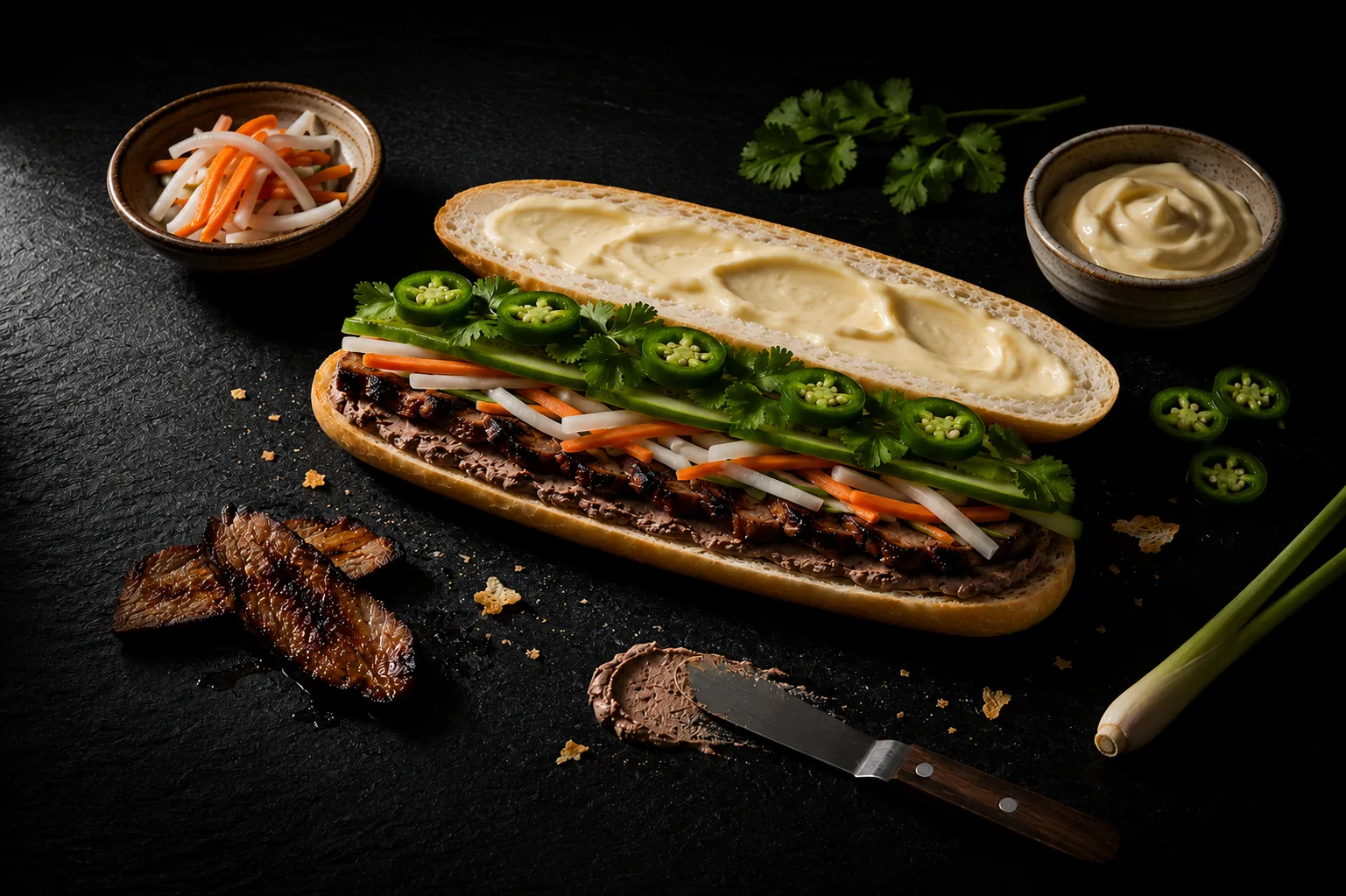
Ingredients
Equipment
Method
Marinate the Beef
- Slice the beef 3mm thin against the grain. Cutting against the grain shortens the muscle fibers. The beef stays tender when it hits high heat rather than tightening into a tough chew.
- Combine lemongrass, garlic, shallots, fish sauce, neutral oil, sugar, and white pepper in a bowl. Add the beef and toss until every slice is coated. Cover and refrigerate for a minimum of 1 hour. Two hours produces a better result. Do not marinate overnight. The fish sauce breaks down the protein too far and the texture goes soft.
Make the Pickles
- Combine rice vinegar, water, sugar, and salt in a small saucepan over medium heat. Stir until sugar and salt dissolve completely, 2 to 3 minutes. Do not boil. Remove from heat and let cool to room temperature, 15 minutes.
- Pack daikon and carrot into a clean jar. Pour brine over vegetables. The brine should cover the vegetables completely. Seal and refrigerate for a minimum of 1 hour. Two hours produces a better result. The pickles will keep for 2 weeks refrigerated.
Sear the Beef
- Heat a cast iron skillet over high heat for 3 minutes. The pan must be fully preheated before the beef goes in. A pan that is not hot enough steams the beef rather than searing it. Steamed beef has no char, no caramelization, and no depth.
- Add neutral oil to the pan. It should shimmer immediately. If it does not, the pan is not hot enough. Wait another minute.
- Add the beef in a single layer. Do not crowd the pan. Cook in two batches if necessary. Crowding drops the pan temperature and the beef steams instead of sears.
- Sear without moving for 45 seconds. The edges should begin to char. Toss once and cook for another 30 seconds. Remove from heat immediately. The beef should be charred at the edges and caramelized across the surface. It should not be cooked through completely. The residual heat finishes it.
Assemble
- Split each baguette lengthwise, cutting three-quarters of the way through. Do not cut completely. The hinge holds the sandwich together.
- Spread the pâté across the bottom half of each baguette. Cover the full surface. The pâté is the fat anchor. It seals the bread against moisture from the beef and vegetables above it.
- Spread the Vietnamese mayonnaise across the top half of each baguette. The mayonnaise binds the upper layer and adds acidity that cuts through the richness of the beef.
- Layer the beef across the pâté. It should cover the full length of the bread without stacking too thick in any one spot.
- Add the đồ chua directly on top of the beef. Drain it first. Excess brine combined with the beef juices will oversaturate the bread.
- Add cucumber strips along the length of the sandwich.
- Add a small bundle of cilantro. Do not chop it. Whole sprigs only.
- Lay jalapeño slices across the top. Three drops of Maggi Seasoning Sauce along the length. No more. Close the sandwich, press down firmly with your palm, and serve immediately.
Notes
On the beef cut: Sirloin and flank steak both work. Flank has more flavor and slightly more chew. Sirloin is more tender and more forgiving on the slice. Both must be sliced 3mm thin against the grain. A partially frozen piece of beef is easier to slice thin by hand. Thirty minutes in the freezer produces the right firmness.
On the lemongrass: Use only the white part of the stalk. The green outer layers are too fibrous and do not break down in the marinade. Mince it as fine as possible. Large pieces of lemongrass in the finished beef are unpleasant to eat.
On marinating time: 1 hour minimum. 2 hours is better. Do not exceed 4 hours. The fish sauce continues to break down the protein past the point of benefit and the beef loses its texture.
On pan temperature: High heat is not negotiable. The char and caramelization are what make bánh mì bò distinct from a plain beef sandwich. A medium heat pan produces grey, steamed beef with none of the flavor that the high heat creates.
On serving: This sandwich does not hold. The beef goes in hot and the bread begins softening immediately. Build it and eat it within 5 minutes.