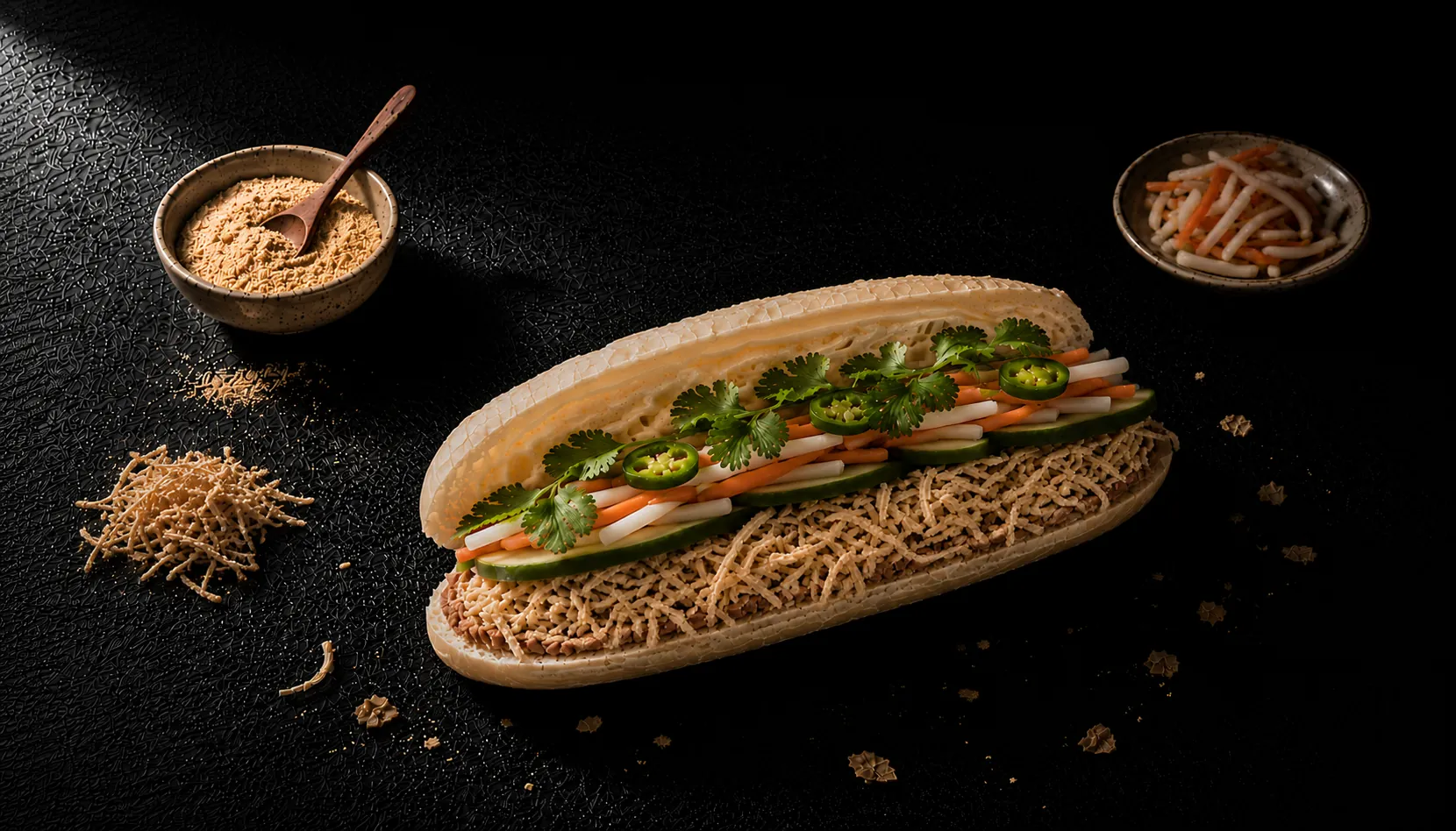
Ingredients
Equipment
Method
Make the Rice Powder
- Place the raw rice in a dry skillet over medium heat. Toast, stirring constantly, for 8 to 10 minutes until the grains turn deep golden brown and smell nutty. Do not walk away. The rice goes from golden to burnt in under a minute. Remove from heat immediately when the color is right.
- Transfer to a mortar and pestle or food processor. Grind to a fine powder. It should look like very fine breadcrumbs, pale tan in color. Sift through a fine mesh strainer if needed to remove any large pieces. Set aside. This powder is the defining ingredient of bì. It coats every strand of pork skin and meat and gives the filling its signature dry, nutty flavor and texture.
Prepare the Pork
- Place the pork skin in a large pot of cold water. Bring to a boil and blanch for 5 minutes. Drain and rinse under cold water. This removes excess fat and any impurities from the surface. Repeat once more with fresh cold water, bringing to a boil and simmering for 15 minutes until the skin is just tender but still has some resistance when pressed. It should not be soft or gelatinous at this stage.
- Remove the pork skin and lay flat on a tray. Refrigerate uncovered for 1 hour until completely cold and firm. Cold pork skin slices cleanly into thin strands. Warm pork skin tears unevenly and produces a greasy result.
- Using a sharp knife or mandoline slicer, cut the chilled pork skin into strands roughly 3mm wide and 4 to 5cm long. They should look like thin noodles. Set aside.
- Place the pork loin slices in a small bowl. Add fish sauce, sugar, white pepper, and minced garlic. Mix well and leave to marinate for 15 minutes.
- Heat neutral oil in a pan over medium heat. Add the marinated pork loin and cook for 3 to 4 minutes per side until cooked through and lightly colored. Remove from heat and leave to cool completely. Once cool, slice into thin strips matching the width of the pork skin strands.
Make the Fried Garlic
- Heat neutral oil in a small pan over medium-low heat. Add the minced garlic and fry gently, stirring constantly, for 3 to 4 minutes until lightly golden and fragrant. Watch closely. Garlic burns quickly and bitter burnt garlic ruins the bì. Remove from heat the moment it turns pale gold. The residual heat in the oil will continue to cook it slightly.
Make the Scallion Oil
- Place the sliced scallions and salt in a small heatproof bowl. Heat the neutral oil in a small pan over high heat until it just begins to smoke. Pour the hot oil directly over the scallions. They will sizzle loudly. Stir once and set aside. The hot oil wilts the scallions and releases their flavor into the oil. This scallion oil is drizzled over the bì just before assembly and provides the fresh aromatic finish the filling needs.
Assemble the Bì
- Combine the shredded pork skin and sliced pork loin in a large bowl. Add the fried garlic with its oil. Add 4 tablespoons of roasted rice powder. Toss together until every strand is evenly coated. The filling should look dry and nutty, not wet or glossy. Add more rice powder one tablespoon at a time if the filling looks too moist. Drizzle the scallion oil over the top and toss once more.
Assemble
- Split each baguette lengthwise, cutting three-quarters through. Do not cut completely. Open the bread. Apply Vietnamese mayonnaise to both cut surfaces. This is the fat barrier. It seals the bread and prevents the bì from making the crumb soggy.
- Spread pork liver pâté on the bottom half only.
- Add a generous layer of bì filling along the full length of the bread. Press it gently into the pâté so it stays in place.
- Add Persian cucumber strips across the bì. Add the drained đồ chua on top of the cucumber. Excess brine will make the sandwich soggy.
- Add cilantro in whole sprigs. Do not chop it. Add jalapeño slices. Two to three per sandwich is correct. Add three drops of Maggi Seasoning Sauce across the top. Close the sandwich and press down firmly. Serve immediately.
Notes
On Vietnamese mayonnaise: Vietnamese mayonnaise is the correct choice here. The recipe is on this site. If you do not have time to make it from scratch, Kewpie is the correct store-bought substitute. Do not use standard mayonnaise. The flavor profile is different enough to affect the finished sandwich.
On the roasted rice powder: Make more than you need and store the excess in an airtight jar. It keeps for up to 3 months at room temperature and is used across multiple Vietnamese recipes including bún bì and cơm tấm. The powder is what makes bì taste like bì. Do not substitute store-bought breadcrumbs or any other powder.
On the rice powder yield: This recipe toasts 100g of raw rice which produces roughly 80g of rice powder. The bì filling uses 4 tablespoons, which is roughly 40g. The remaining powder keeps in an airtight jar for up to 3 months.
On the pork skin: Fresh pork skin is available at most Asian grocery stores. Look for it at the butcher counter, cleaned and scored. Frozen pre-shredded pork skin is also available in the freezer section of Vietnamese grocery stores and saves significant preparation time. If using frozen pre-shredded skin, thaw completely, blanch once in boiling water for 3 minutes, rinse under cold water, and proceed from the chilling step.
On chilling the pork skin: The 1 hour chill is not optional. Warm pork skin is soft and tears rather than slicing cleanly into strands. Cold pork skin holds its structure under a knife and produces the thin uniform strands that define the filling. Do not skip this step.
On the texture: Correctly made bì is dry to the touch, not wet or glossy. If the filling looks wet, add more rice powder one tablespoon at a time until the texture is right. The powder absorbs excess moisture and coats every strand evenly.
On the scallion oil: The scallion oil is a finishing element, not a cooking fat. It goes on last, after everything is assembled in the bowl. The heat of the fresh scallion oil releases aromatic compounds that lift the entire filling. Do not add it during cooking.
On the pickles: The đồ chua recipe on this site produces the correct pickle for this sandwich. Make it at least 1 hour ahead. If you have a jar already made, use it. The pickles keep for 2 weeks refrigerated.
On make-ahead: The rice powder keeps for 3 months. The bì filling keeps for 2 days refrigerated. Assemble the sandwiches to order. Do not pre-assemble.